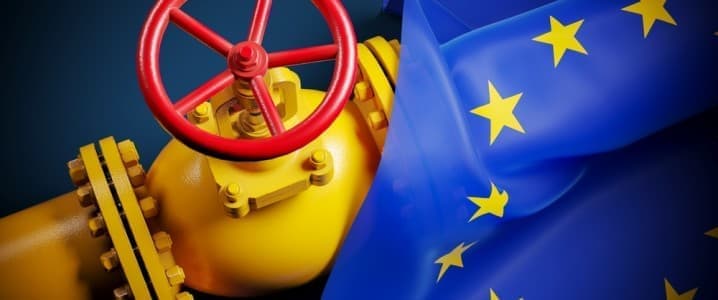
Uniper is not concerned that Europe now gets more than half of its LNG supply from the United States, as it is the most economical solution while buyers seek to diversify imports from other global providers, according to Carsten Poppinga, the German utility giant’s chief commercial officer.
In recent weeks, EU officials, including Energy Commissioner Dan Jorgensen, have said that moves by the U.S. Administration such as President Donald Trump’s promise to “own” Greenland, are a “wake-up call” for Europe not to remain too dependent on one supplier.
“I definitely hear this when speaking to energy ministers and heads of state from all over Europe that there is a growing concern,” Jorgensen said last week.

Europe is looking to diversify LNG supply by buying more fuel from Canada, Qatar, and the North African exporters, Jorgensen said.
In January, U.S. cargoes accounted for 60% of the EU’s total LNG imports, up from 53% in the same month last year, per Kpler data shared with Reuters.
Germany’s Uniper, one of Northwest Europe’s largest LNG importers, doesn’t see an issue with increased U.S. supply, although its chief commercial officer, Poppinga, stressed the need for diversification.
“We are not dealing with an administration, we are dealing with companies operating in a certain system and I trust that system,” the executive told Reuters in an interview at the LNG2026 conference in Doha, Qatar.
“That there will be a dominance of U.S. LNG, I think that’s understandable and right, because it’s the most economical solution,” Poppinga said.
Still, buyers, including Uniper, need to diversify supply sources to manage risks, he added.
At this time last year, Uniper’s CEO Michael Lewis said that additional EU purchases of U.S. LNG would help ease the tightness in global natural gas markets and reduce consumer and industry prices in Germany.
In 2025, cargo arrivals at the German LNG terminals in Wilhelmshaven, Brunsbüttel, Lubmin, and Mukran made up 10.3% of all gas imports into Germany. Total German gas imports were dominated by pipeline gas from Norway, the Netherlands, and Belgium, the German federal network regulator, Bundesnetzagentur, said last month.
By Charles Kennedy for Oilprice.com
More Top Reads From Oilprice.com