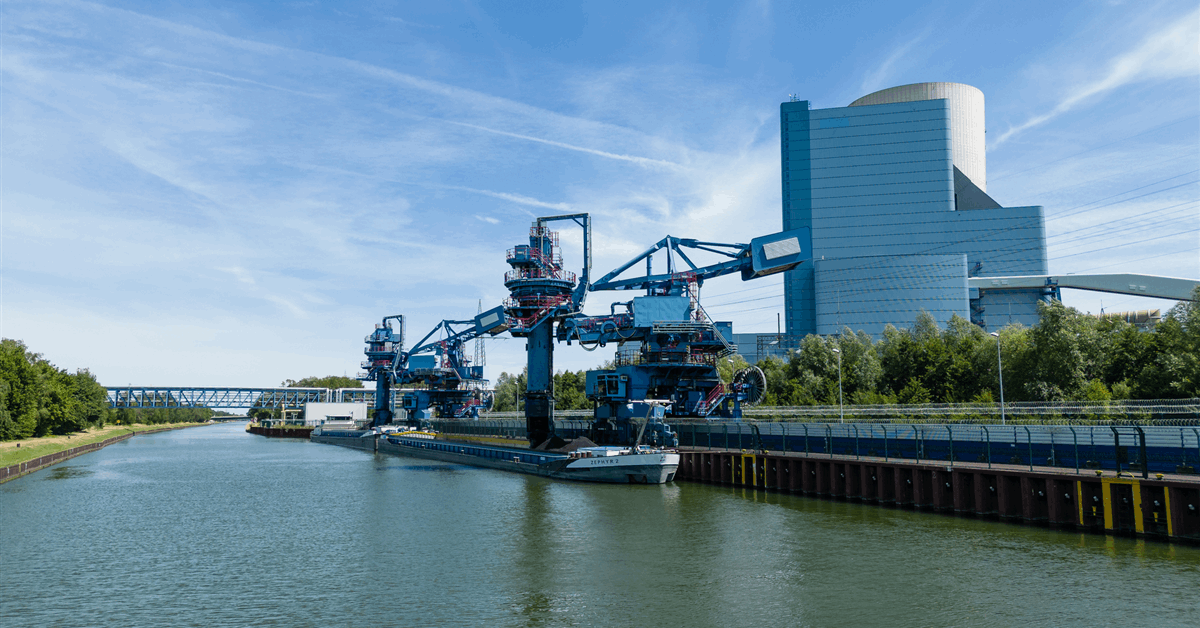
Uniper SE’s recent agreement to divest the Datteln IV coal-run power plant to ResInvest Group AS marks another significant milestone in the German utility’s mandated strategic overhaul. This move, part of the conditions imposed by the European Commission for its 2022 bailout, is not merely a compliance exercise. It represents a broader, long-term pivot by a major European energy player away from legacy fossil fuel assets and towards a decarbonized future, offering valuable insights for investors navigating the complex and often volatile energy markets.
Uniper’s Strategic Realignment Amidst Regulatory Imperatives
The sale of the Datteln IV plant, a facility commissioned as recently as 2020 with a substantial net output of 1,052 megawatts, underscores the forceful shift occurring in Europe’s energy landscape. This plant, crucial for supplying electricity and district heating to households, as well as traction power to Deutsche Bahn, is now transitioning to new ownership, with its over 100 employees transferring to Czechia’s ResInvest. While the purchase price remains undisclosed, the transaction’s strategic importance is undeniable, aligning with Germany’s ambitious Coal Phase-Out Act aiming to close all coal-fired facilities by 2028.
This divestment is far from an isolated event. Uniper has been systematically shedding non-strategic assets globally, driven by the EU’s state aid conditions approved in December 2022. Recent months have seen a flurry of activity: the sale of its district heating network in the Ruhr region to Iqony Fernwaerme GmbH; the disposition of its 18.26 percent stake in AS Latvijas Gaze, a key natural gas player in the Baltics; and the complete exit from its North American power portfolio, which covered extensive power purchase and energy management agreements across ERCOT, WEST, and CENTRAL markets. Earlier this year, Uniper also completed the sale of its 430 MW natural gas-fired power plant in Gonyu, Hungary, and in May 2023, it offloaded its marine fuel trading business in the UAE and its 20 percent indirect stake in the BBL gas pipeline connecting the Netherlands and the UK. These actions collectively paint a clear picture of a company aggressively streamlining its operations, de-risking from fossil fuel exposure, and re-focusing its core business.
Navigating a Volatile Market: The Green Shift’s Imperative
Uniper’s comprehensive divestment strategy unfolds against a backdrop of pronounced market volatility, a factor that only amplifies the rationale for such a green pivot. As of today, Brent crude trades at $90.38, reflecting a significant 9.07% decline within the day, while WTI crude sits at $82.59, down 9.41%. This sharp intraday drop follows a broader downward trend for Brent, which has fallen from $112.78 on March 30 to its current levels. Such rapid price swings underscore the inherent risks associated with traditional fossil fuel investments and the pressures on companies heavily reliant on commodity price exposure.
For investors, this volatility highlights the strategic foresight, albeit regulatory-driven, behind Uniper’s shift. By shedding carbon-intensive and commodity-price-sensitive assets like coal plants and gas trading operations, Uniper is actively reducing its direct exposure to the unpredictable swings of the oil and gas markets. This strategy aims to secure future stability and align the company with long-term energy transition goals, offering a potential blueprint for other energy majors grappling with both market fluctuations and escalating decarbonization demands. The move towards a more diversified, less carbon-intensive portfolio can mitigate financial risks associated with future carbon pricing, stricter environmental regulations, and the eventual decline in global fossil fuel demand.
Future-Proofing Portfolios: Uniper’s Vision and Investor Outlook
The strategic decisions Uniper is making resonate directly with the questions currently dominating investor discourse. Our proprietary reader intent data reveals a keen interest in the future trajectory of the energy market, with investors frequently asking about long-term oil price predictions, such as “What do you predict the price of oil per barrel will be by end of 2026?” and seeking insights into the performance of specific energy companies. Uniper’s actions provide a tangible response to these concerns.
By divesting from assets like Datteln IV, Uniper is actively de-risking its portfolio from assets that face a clear obsolescence timeline under Germany’s coal phase-out. This focus on shedding legacy infrastructure, even profitable ones, signals a commitment to a future where energy generation is increasingly sustainable. For investors, this translates into a potential for more predictable, long-term returns from a business less susceptible to the existential threats facing traditional fossil fuel operations. While the immediate financial impact of undisclosed sale prices remains opaque, the clear strategic direction offers a compelling narrative for those seeking to future-proof their energy investments and align with evolving ESG mandates. The company’s pivot highlights the growing importance of asset quality and future-readiness over sheer scale of traditional energy production.
Upcoming Catalysts and the Broader Energy Landscape
Even as Uniper charts a course towards a greener future, the broader energy market remains highly sensitive to immediate catalysts. Investors are closely monitoring key events that will undoubtedly influence short-to-medium term commodity prices. The upcoming OPEC+ Joint Ministerial Monitoring Committee (JMMC) meeting on April 18 and the Full Ministerial Meeting on April 19 are critical junctures. These meetings will dictate production quotas, directly impacting global crude supply and, consequently, prices, which is a major concern for investors asking about “OPEC+ current production quotas.”
Beyond OPEC+, weekly data releases will continue to offer crucial insights into market dynamics. The API Weekly Crude Inventory report on April 21, followed by the EIA Weekly Petroleum Status Report on April 22, will provide a snapshot of inventory levels, a primary indicator of supply-demand balance. Further, the Baker Hughes Rig Count on April 24 will shed light on drilling activity and future production capacity. While these events will undoubtedly cause ripples across the energy sector, Uniper’s strategic divestments are designed to insulate it from the direct impact of such short-term price volatility. Its shift away from direct commodity exposure positions the company to focus on regulated assets and green energy solutions, offering a different value proposition to investors seeking stability amidst the ongoing energy transition.


