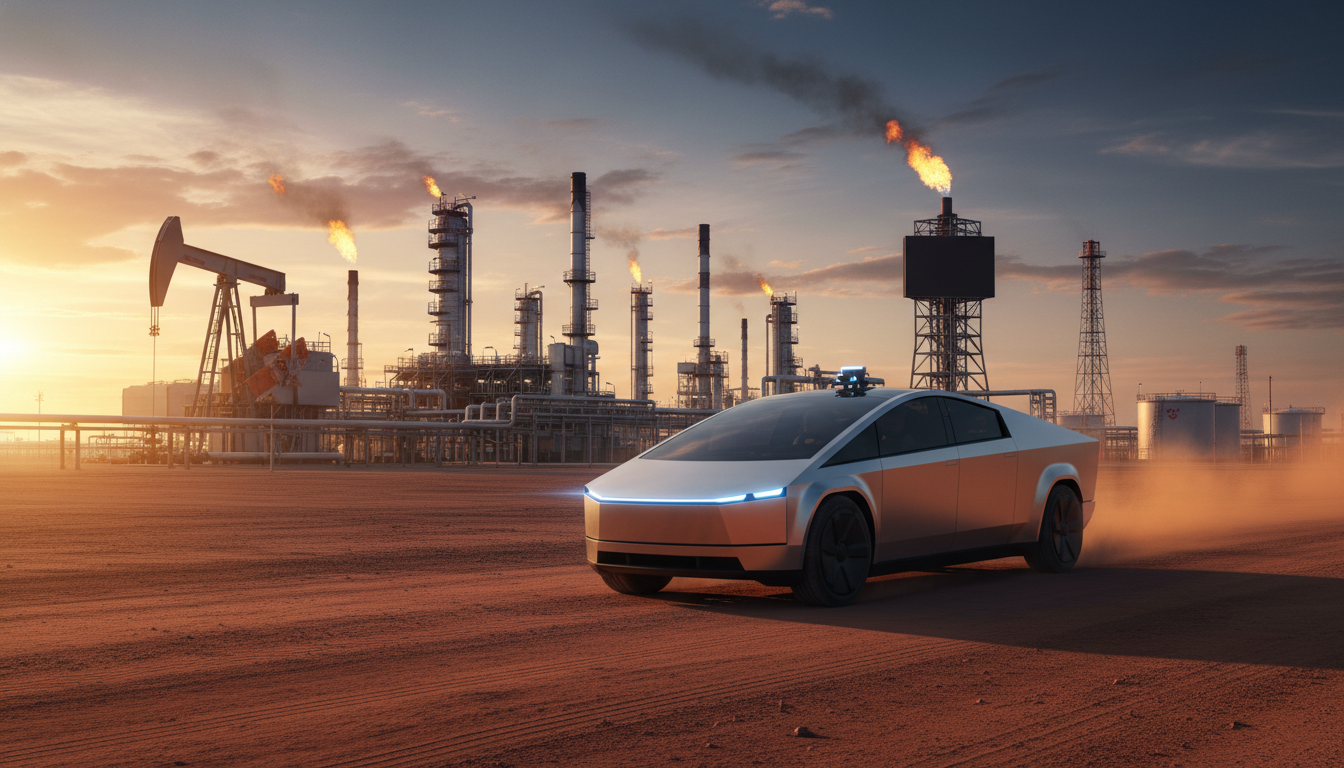
The global energy landscape is undergoing a profound transformation, with technological advancements in transportation frequently signaling potential shifts in long-term demand for traditional hydrocarbons. In a significant development, electric vehicle pioneer Tesla has confirmed that its eagerly anticipated dedicated robotaxi model, dubbed the Cybercab, has entered the production phase. This move marks a critical step in the company’s ambitious strategy to pivot from conventional automotive manufacturing towards an AI-driven autonomous ride-hailing and robotics enterprise.
Recent reports, including a video shared by CEO Elon Musk on X, offer compelling evidence of multiple Cybercab units rolling off the assembly line at Tesla’s Austin, Texas, factory. The footage, captured from within the vehicles as they navigated the factory campus, underscores a tangible progression for a project that has been a cornerstone of Tesla’s future vision. Such advancements in autonomous electric mobility are closely watched by investors across the energy sector, as they hint at the potential pace of the energy transition and its implications for future oil demand.
Tesla’s Multi-Billion Dollar Bet on Autonomous Mobility
At the heart of Tesla’s long-term strategy lies a multi-billion dollar commitment to revolutionize personal transportation through autonomous technology. The Cybercab, a distinctive two-door, two-seat vehicle designed without a steering wheel or pedals, represents a primary pillar of this audacious bet. Its conceptualization as a fully autonomous unit, devoid of human input during operation, positions it as a direct challenge to the conventional ownership model of automobiles and, by extension, the energy infrastructure that supports it.
Just over a month ago, Tesla had announced the construction of its inaugural production Cybercab. The latest visual confirmations, showcasing several units in motion, indicate a ramp-up beyond the initial prototype stage. Further footage, reposted by Musk, even depicted Cybercabs seemingly turning onto public streets, suggesting testing or deployment readiness might be progressing more rapidly than some skeptics anticipated. For oil and gas investors, these developments warrant careful consideration, as widespread adoption of such vehicles could incrementally chip away at gasoline consumption over the coming decades.
Production Milestones Amidst Autonomy Challenges
While the initiation of Cybercab production represents a crucial manufacturing milestone, it is merely one step in a considerably larger and more complex journey. The ultimate success of Tesla’s robotaxi venture hinges on its ability to deliver fully autonomous driving capabilities at scale – a challenge that has proven formidable for the entire industry. This underlying technological hurdle continues to be a significant focus for investors assessing the viability and timeline of widespread autonomous electric vehicle deployment.
During a recent earnings call, Tesla notably omitted specific timelines for the launch of its robotaxi services in five new cities. This adjustment reflects the inherent difficulties in perfecting and deploying autonomous driving technology reliably and safely across diverse urban environments. In contrast, competitors such as Waymo have already established operational driverless ride-hailing services in several cities, illustrating the competitive landscape Tesla navigates. The perceived slowness of this progress, a sentiment Musk himself once echoed by stating the ramp would be “agonizingly slow,” directly influences market expectations regarding the electrification of transportation and its subsequent impact on fossil fuel demand.
Implications for Energy Investors and the Future of Fuel Demand
For investors focused on the oil and gas sector, the trajectory of Tesla’s Cybercab and the broader autonomous electric vehicle market is a critical long-term indicator. Each stride towards a fully electric, autonomous fleet signals a potential erosion of demand for liquid hydrocarbons. While current projections for peak oil demand vary widely, advancements in EV and AV technology provide tangible data points that refine these forecasts.
The successful scaling of robotaxi services could fundamentally alter urban mobility, potentially reducing the total number of vehicles on the road and significantly shifting miles traveled from internal combustion engines to electric powertrains. This shift impacts not only gasoline and diesel consumption but also influences refining margins, infrastructure investment decisions, and the strategic direction of integrated energy companies. Major players in oil and gas are already diversifying into new energy ventures, and the pace of EV innovation, exemplified by Tesla’s Cybercab, directly informs the urgency and scale of these transitions.
Navigating the Evolving Transportation Energy Landscape
The production of the Tesla Cybercab serves as a powerful reminder of the relentless innovation driving the future of transportation. While the challenges of achieving widespread, reliable autonomous driving are immense, the tangible progress in vehicle production cannot be overlooked. Energy investors must continue to monitor these developments closely, understanding that the long-term outlook for oil and gas will be intrinsically linked to the adoption rates and technological maturation of electric and autonomous vehicle solutions.
The “agonizingly slow” ramp that Musk predicted for robotaxi services underscores that the transition away from fossil fuels in transportation will not be instantaneous. However, each Cybercab rolling off the assembly line represents a piece of the puzzle that will ultimately define the energy consumption patterns of tomorrow’s cities. Tracking these shifts in the mobility sector is paramount for investors seeking to position their portfolios effectively within a dynamically evolving global energy landscape, balancing the sustained demand for traditional fuels with the disruptive potential of new energy technologies.


