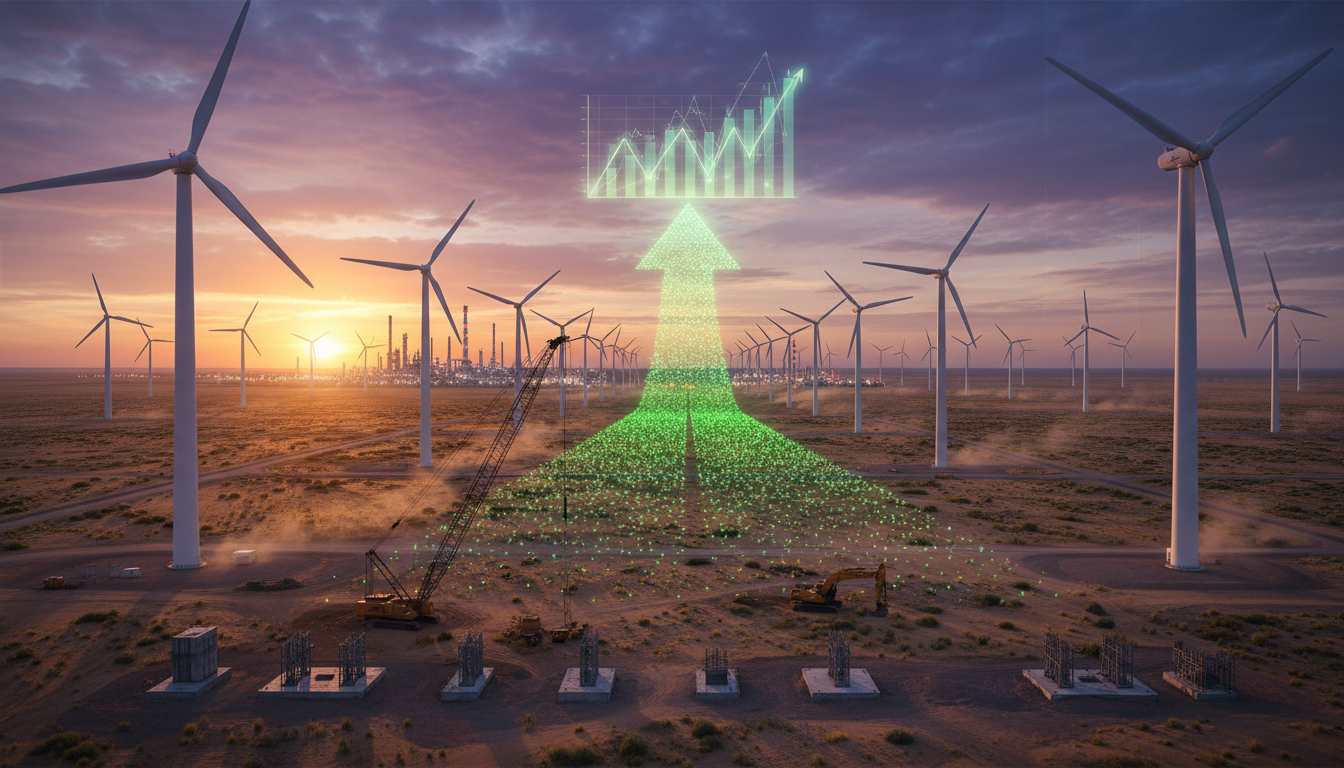
Global energy major TotalEnergies is making a significant strategic play in Central Asia, greenlighting a substantial $1.2 billion investment in Kazakhstan. This landmark Mirny project, integrating a 1 gigawatt (GW) onshore wind farm with a 600 megawatt-hour (MWh) battery storage system, represents a compelling blueprint for large-scale renewable energy deployment within emerging markets. For investors, this move signals a calculated diversification by a traditional hydrocarbon giant, aligning with global energy transition trends while simultaneously de-risking new capital commitments through robust financial structures. Our analysis delves into the strategic rationale, the critical role of advanced storage, and how this investment fits into the broader energy market context, especially as traditional crude markets remain robust.
TotalEnergies’ Green Ambition Amidst Bullish Crude Markets
TotalEnergies’ $1.2 billion commitment to the Mirny wind and storage project in southeast Kazakhstan underscores a clear strategic imperative: to expand its footprint in renewable energy, even as conventional hydrocarbon markets experience significant strength. This substantial investment, which aims to supply clean electricity to approximately one million people, marks a pivotal moment in Kazakhstan’s energy transition, supporting its goal of achieving 15% renewable electricity by 2030 and net-zero emissions by 2060. The sheer scale of the 1 GW wind farm, coupled with its advanced battery storage, positions TotalEnergies as a key player in shaping the future energy mix of Central Asia. This forward-looking investment stands in stark contrast to the immediate market dynamics for crude oil. As of today, Brent Crude trades at $112.77, marking a robust 2.11% gain within the day’s range of $110.26 to $114.66. Similarly, WTI Crude is priced at $108.67, up 1.67%. This strong performance follows a significant 14-day trend where Brent surged by $16.45, or 17.3%, from $95.2 on April 10th to $111.65 on April 29th. Despite these compelling returns in traditional oil, TotalEnergies’ strategic move highlights a long-term vision that prioritizes diversification and sustainability, anticipating a future where renewables play an increasingly dominant role.
De-Risking Capital in Emerging Renewable Markets
A critical component of the Mirny project’s investment appeal is its robust financial framework, specifically designed to mitigate risk and attract long-term capital into an emerging economy. TotalEnergies holds a majority stake alongside state-linked partners Samruk Energy and KazMunayGas, creating a strong local alignment. Crucially, the electricity generated by the 150 wind turbines and stored within the 600 MWh battery system will be sold under a comprehensive 25-year agreement with the Kazakh government. This long-term, sovereign-backed power purchase agreement (PPA) is the cornerstone of the project’s financial viability, providing predictable cash flows that significantly reduce revenue volatility. For institutional investors, such de-risking mechanisms are essential in regions undergoing rapid energy transitions, offering the confidence needed to commit substantial funds to large-scale infrastructure projects that might otherwise carry higher perceived risk premiums. This structure not only unlocks vital capital for sustainable development but also serves as a template for future renewable energy investments across similar markets, ensuring stability for both the developer and the host nation.
Battery Storage: The Linchpin for Grid Resilience and Integration
The integral role of the 600 MWh battery energy storage system is a distinguishing feature of the Mirny development, elevating it beyond a simple wind farm. This sophisticated component is fundamental to the project’s operational value and its ability to effectively integrate into Kazakhstan’s existing power infrastructure. Historically reliant on coal, the nation’s power system exhibits limited flexibility to accommodate the intermittent nature of renewable energy sources like wind. The battery storage system directly addresses this challenge by capturing excess energy during periods of high wind generation and discharging it when demand is high or wind generation is low, thus providing crucial grid stability. This capability ensures a consistent and reliable power supply, minimizing disruptions and maximizing the value of the generated renewable electricity. For investors, the inclusion of such advanced storage technology enhances the project’s long-term viability and its attractiveness, as it addresses one of the primary hurdles in large-scale renewable deployment: grid integration and stability. It demonstrates a holistic approach to energy transition, ensuring that green energy sources are not just added, but seamlessly woven into the national grid.
Navigating Future Volatility: Diversification and Investor Outlook
TotalEnergies’ significant investment in Kazakh wind power comes at a time when our readers are intensely focused on the short-to-medium term dynamics of the crude oil market. Questions such as “Which OPEC+ members are over-producing this month?” and requests to “Build a base-case Brent price forecast for next quarter” frequently surface from our AI assistant, indicating a keen investor interest in supply-demand fundamentals and price trajectory. While these concerns are valid and directly impact immediate trading strategies, TotalEnergies’ move signifies a forward-looking strategy that hedges against the inherent volatility and long-term uncertainties of the hydrocarbon sector. This diversification provides a buffer against potential future price downturns or policy shifts that could impact oil and gas demand. Looking ahead, the energy calendar is packed with events that could sway market sentiment, including the Baker Hughes Rig Count on May 1st and May 8th, the EIA Short-Term Energy Outlook on May 2nd, and the crucial IEA Oil Market Report on May 12th. These reports will offer fresh data points on supply, demand, and inventory levels, influencing short-term price movements and reinforcing the need for long-term strategic investments like Mirny. By investing in large-scale, de-risked renewable projects, TotalEnergies is not just embracing the energy transition; it is building resilience and establishing new revenue streams that are less susceptible to the cyclical nature and geopolitical pressures that often define traditional oil and gas markets, positioning the company for sustained growth in a diversifying global energy landscape.


