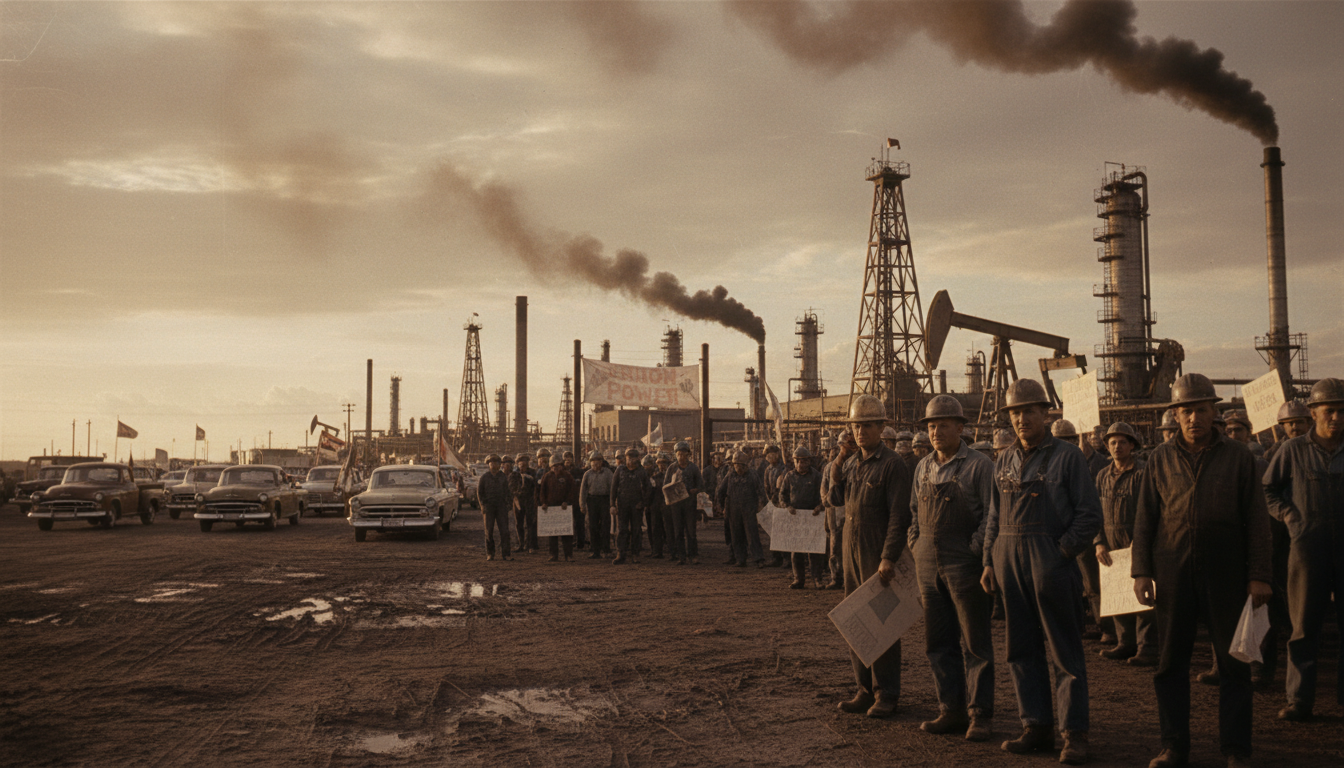
Investment analysis in the modern era extends far beyond mere financial statements and commodity price charts. Savvy investors increasingly recognize that broader societal trends, human capital dynamics, and robust governance practices are inextricably linked to long-term value creation and risk mitigation. The re-evaluation of historical figures and movements, such as the pivotal 1965 farmworker strike in California, offers a profound lens through which to understand the enduring impact of social capital and reputational risk — lessons equally vital for navigating the complex terrain of the oil and gas sector.
The Enduring Relevance of Human Capital in Energy Investment
The historical narrative of Filipino and Mexican American farmworkers, from their initial influx into the U.S. agricultural workforce in the early 20th century to their collective action for fair treatment, provides a compelling case study in human capital migration, exploitation, and empowerment. Filipino immigrants, often English-speaking due to American colonial rule, became integral to various sectors, including agriculture. Despite their significant contributions, these “manong” faced systemic discrimination, substandard wages, and arduous conditions. Their fight, spearheaded by leaders like Larry Itliong and César Chavez, set precedents for worker rights and industry-wide change. In today’s globalized oil and gas sector, companies operate in diverse and often challenging social environments, relying on vast, skilled workforces from various backgrounds. The lessons from these historical labor movements underscore the critical importance of ethical labor practices, fair compensation, and safe working conditions. Companies that fail to prioritize their human capital risk not only operational disruptions but also significant reputational damage, impacting their social license to operate and ultimately, their shareholder value.
Navigating Reputational Risk and Shifting Social Narratives
The recent allegations concerning César Chavez’s conduct and the subsequent re-evaluation of his legacy by community groups highlight how deeply social capital and reputational risk can impact established narratives. Filipino community organizations, for instance, have reconsidered their observances of César Chavez Day, with some states and cities opting to rename it Farmworkers Day. In California, advocates are pushing to broaden the March 31 celebration to acknowledge the collective efforts of all farmworkers, particularly women, and ensure recognition for survivors of alleged abuse. This evolving discourse mirrors the increasing scrutiny faced by corporations, including those in oil and gas. Investors are no longer solely focused on quarterly earnings; they demand transparency in social practices, environmental stewardship, and governance. A company’s perceived social performance, its engagement with local communities, and its track record on human rights and labor relations directly influence its standing with investors, regulators, and the public. As Dillon Delvo of Little Manila Rising emphasizes, centering discussions around trauma and abuse is critical, a principle that applies equally to comprehensive stakeholder engagement and risk assessment in corporate environments.
Market Dynamics and Investor Sentiment: A Forward Look
While social equity and human capital are long-term investment considerations, short-term market dynamics remain crucial for O&G investors. As of today, Brent crude trades at $94.85, marking a significant 4.95% increase, with WTI crude similarly climbing 5.25% to $86.93. This rebound comes after a challenging period, with Brent having declined nearly 20% from $112.78 on March 30th to $90.38 just last Friday, April 17th. Such volatility underscores the dynamic nature of commodity markets, influenced by a confluence of geopolitical events, supply-demand balances, and investor sentiment. Our first-party intent data shows investors are keenly focused on forward price trajectory, with common questions like “is WTI going up or down?” and “what do you predict the price of oil per barrel will be by end of 2026?” dominating queries this week. Clarity on these price movements could come swiftly, with a series of critical events on the horizon. The OPEC+ Joint Ministerial Monitoring Committee (JMMC) Meeting today, April 20th, and the full OPEC+ Ministerial Meeting on April 25th are paramount, as any adjustments to production quotas will have immediate market repercussions. Beyond OPEC+, weekly data like the API and EIA Crude Inventory reports (April 21st, 22nd, 28th, 29th) and the Baker Hughes Rig Count (April 24th, May 1st) will offer granular insights into short-term supply and demand balances, providing essential data points for investors.
Building Resilience Through Comprehensive Stakeholder Engagement
The lessons from the agricultural labor movement extend directly to the oil and gas sector’s need for robust stakeholder engagement. Just as the farmworkers sought collective power and recognition, modern communities and labor groups demand a voice in how energy projects impact their lives and environments. Comprehensive stakeholder engagement, which includes listening to and addressing the concerns of local populations, indigenous groups, and employees, is not merely a moral imperative; it is a strategic business necessity. Companies that proactively manage these relationships, transparently address historical injustices, and commit to fair practices build stronger social capital. This capital translates into reduced project delays, lower regulatory hurdles, and enhanced brand reputation, all of which contribute to a more stable and attractive investment profile. Conversely, ignoring stakeholder concerns or failing to address past grievances can lead to costly conflicts, protests, and a significant erosion of trust. In a capital-intensive industry like oil and gas, where long-term projects require sustained community and government support, the ability to build and maintain robust social capital is as crucial as financial strength or technological prowess.
Investment Implications for a Socially Conscious Future
The ongoing re-evaluation of historical figures and the growing emphasis on social equity signal a broader shift in societal values that profoundly impacts investment decisions across all sectors, particularly energy. For oil and gas investors, this means increasingly incorporating Environmental, Social, and Governance (ESG) factors into their due diligence. Companies demonstrating strong governance, ethical labor practices, and genuine community engagement are better positioned for long-term success. They are less susceptible to reputational crises, regulatory fines, and operational disruptions stemming from social unrest. The struggle of the farmworkers in 1965, and the subsequent re-examination of its leaders, serves as a powerful reminder that human capital and social dynamics are not merely “soft” issues. They are fundamental drivers of risk and return, shaping the investment landscape for decades to come. As the energy transition progresses, the social license to operate will become an even more critical differentiator, making a deep understanding of human capital dynamics and stakeholder engagement an indispensable tool for any discerning oil and gas investor.