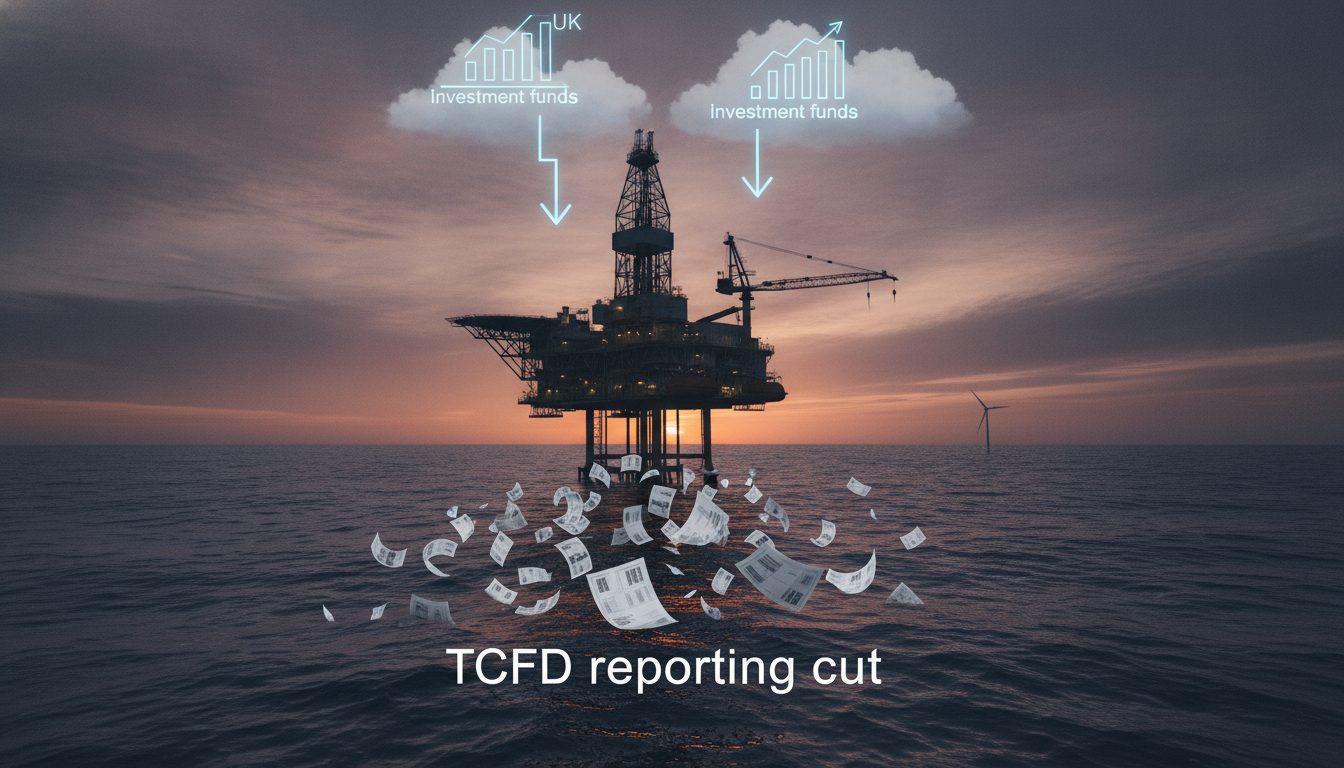
London’s financial landscape is poised for a significant shift as the UK’s Financial Conduct Authority (FCA) unveils a proposal to overhaul its climate-related disclosure requirements for investment products. This move signals a strategic pivot from broad, complex reporting towards a more streamlined, targeted approach, promising to reduce the regulatory burden on financial firms while aiming to enhance clarity for investors across the board. For the oil and gas sector, a pivotal component of global investment portfolios, understanding these impending changes is crucial for both energy producers and the institutions funding them.
UK Regulator Refines Climate Disclosure, Promises Efficiency Gains
The FCA, the primary conduct regulator for the UK’s financial services industry, has put forward a new framework designed to supersede the existing Taskforce on Climate-related Financial Disclosures (TCFD)-based requirements for investment product reporting. In its place, the regulator proposes simplified climate risk communication for retail investors and an on-demand system for emissions data tailored for institutional clients. This recalibration is not merely an administrative tweak; it represents a calculated effort to optimize sustainability reporting, potentially saving investment firms an estimated £20 million, or approximately $USD27 million, annually.
This initiative follows a comprehensive review of the FCA’s 2021 climate reporting rules. These regulations initially mandated asset managers, life insurers, and FCA-regulated pension providers to publish climate-related information aligned with TCFD recommendations. Specifically, firms were required to issue yearly entity-level reports detailing their consideration of climate risks and opportunities in investment management, alongside product-level reports featuring carbon metrics and climate scenario analyses. Such granular reporting aimed to provide transparency regarding environmental, social, and governance (ESG) factors impacting investment performance, a growing concern for investors in the energy transition era.
The Evolving Landscape of Climate Risk Reporting for Investors
The FCA’s deep dive into the effectiveness of its existing climate disclosure regime yielded mixed but insightful results. On the positive side, the review confirmed that the 2021 rules had catalyzed significant improvements in risk management practices. Financial institutions reported that the requirements prompted them to acknowledge climate change as a material risk, bolstering their capabilities and integrating climate-related risks and opportunities more deeply into their overarching investment strategies. Furthermore, the framework successfully enhanced transparency for clients regarding how their assets were being managed with climate considerations in mind, a critical factor for those allocating capital to carbon-intensive sectors like oil and gas.
However, the review also identified notable challenges. Despite a clear and sustained interest from retail investors in the financial impact of climate risks on their portfolios, the highly detailed and technical nature of TCFD-based product reports proved to be overly complex. This complexity translated into low engagement levels, suggesting that the information, while comprehensive, was not effectively reaching or being utilized by its intended audience. For institutional investors, while certain data points within the TCFD product reports were valuable, the review indicated that these sophisticated entities typically bypassed public reports, preferring direct engagement with firms to obtain highly specific, tailored data to meet their own disclosure obligations and due diligence processes.
A Dual Approach: Simplified for Retail, Data-Driven for Institutions
The new proposals are designed to address these distinct needs. Under the revised framework, the FCA intends to eliminate the prescriptive TCFD product reporting requirements, replacing them with more targeted, outcomes-focused guidelines. For retail investors, the mandate will shift to requiring firms to periodically assess whether climate risks and opportunities hold material relevance for a product’s financial performance or returns. This crucial information will then be communicated through more accessible channels, integrated into existing general disclosures on risk and financial returns, ensuring clarity without overwhelming detail. This approach acknowledges that retail investors require actionable insights rather than granular, technical data that may obscure the broader financial implications.
For institutional clients, the FCA’s new proposal emphasizes responsiveness and specificity. Firms will now be obligated to provide data on Scope 1, Scope 2, and Scope 3 greenhouse gas (GHG) emissions upon client request. This provision is specifically designed to enable institutional investors to fulfill their own climate disclosure requirements, allowing them to gain a precise understanding of their portfolio’s carbon footprint, particularly relevant when assessing investments in the energy sector. To manage the administrative load, the proposal limits these requests to a maximum of one per product per year. This balanced approach aims to provide essential data where it is most valued and actionable, without imposing unnecessary public reporting burdens.
Strategic Implications for Oil and Gas Investors
This regulatory evolution carries significant implications for oil and gas investment strategies. While the broader public disclosure requirements for retail products are simplified, the explicit demand for Scope 1, 2, and 3 emissions data for institutional clients underscores the enduring importance of robust climate data management for energy companies. Investors in the oil and gas sector, particularly large institutional funds, will continue to require this granular data to assess transition risk, physical risk, and to meet their own reporting mandates. Companies within the fossil fuel value chain must ensure their internal systems are capable of accurately tracking and rapidly disseminating these emissions figures.
Michelle Beck, the FCA’s Director of Wholesale Buy-Side, emphasized the rationale behind these changes: “As part of being a smarter, more proportionate regulator, we’re cutting complexity in our rules for asset managers, while keeping the focus on clear, useful information for investors. These proposals will make it easier for firms to communicate with their customers in ways that genuinely inform and engage them.” This statement highlights the FCA’s commitment to regulatory efficiency while maintaining transparency, a balance critical for fostering healthy, well-informed investment in all sectors, including the vital but often scrutinized oil and gas industry.
The Road Ahead: Consultation and Industry Adaptation
The FCA has formally initiated a consultation period on these new proposals, inviting feedback from stakeholders across the financial industry. This crucial phase will remain open until July 13, 2026, allowing market participants, including asset managers with significant exposure to the energy sector, institutional investors, and relevant industry bodies, to contribute their perspectives. The outcome of this consultation will shape the final regulatory framework, influencing how climate risks and opportunities are integrated into investment decisions and communicated to capital providers.
For sophisticated investors tracking the oil and gas markets, this regulatory refinement represents a nuanced challenge and opportunity. While the overall reporting burden may decrease, the targeted nature of institutional data requests means that a deep, verifiable understanding of Scope 1, 2, and 3 emissions remains paramount for energy companies seeking capital. This strategic shift by the FCA reinforces the need for accurate, accessible, and meaningful climate-related financial information, ensuring that capital continues to flow efficiently and responsibly within the UK’s dynamic financial ecosystem.


