The global financial landscape is once again grappling with significant volatility, with sovereign bond markets, notably UK gilts, experiencing a sharp sell-off. This market turbulence is inextricably linked to the trajectory of energy prices and the subsequent recalibration of central bank interest rate expectations. As of today, Brent Crude trades at $92.61, reflecting a -0.68% dip within its daily range of $92.57-$94.21, a notable shift from recent highs that had threatened to push the international benchmark well into triple digits. This dynamic environment poses both challenges and opportunities for investors in the oil and gas sector, demanding a nuanced understanding of macroeconomic shifts and their direct impact on operational costs and future valuations.
The UK’s Interest Rate Conundrum and Gilt Sensitivity
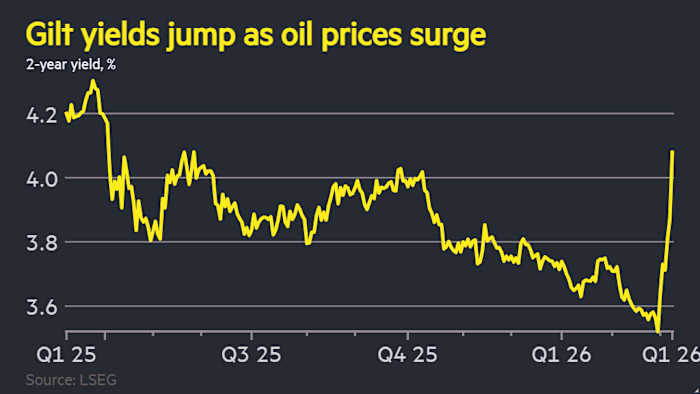
The United Kingdom’s bond market has been a focal point of this recent financial upheaval. Investors witnessed a significant rout in gilts, with the yield on the two-year gilt soaring by 0.24 percentage points to 4.12 percent, marking one of the most substantial single-day sell-offs in recent memory. The 10-year gilt yield also climbed by 0.11 percentage points to 4.73 percent. This sharp repricing reflects a dramatic shift in expectations for the Bank of England (BoE). Where only weeks ago market participants were pricing in multiple rate cuts, the narrative has now flipped, with traders assigning a roughly 50 percent probability to a quarter-point rate increase before the year’s end. This pivot is largely a direct consequence of escalating energy costs, which have reignited inflation fears. The UK market, in particular, demonstrates a pronounced sensitivity to energy price fluctuations, a ‘muscle memory’ from prior inflationary periods, making it more vulnerable to these external shocks than many of its global counterparts.
Oil Price Volatility: Beyond the Triple-Digit Scare
Brent Crude, which briefly pushed above $100 a barrel earlier this month, has since moderated, with current levels at $92.61 per barrel. This recent trajectory, showing a decline from $101.16 on April 1st to $94.09 by April 21st – a nearly 7% drop – underscores the inherent volatility in the global crude market even amidst geopolitical tensions. This observed correction from recent highs is a key insight for investors, many of whom are actively probing the future direction of prices. Our internal reader intent data shows significant interest in questions like “is WTI going up or down?” and broader inquiries about the year-end price outlook for oil. While the initial surge was clearly fueled by escalating conflict in the Middle East, the subsequent easing suggests that either supply concerns have been partially assuaged, or demand-side economic anxieties are beginning to weigh more heavily. WTI Crude currently mirrors this sentiment, trading at $89.26 per barrel, down 0.46% today. This implies that while geopolitical risk remains a premium, the market is also balancing it with other factors, including the potential for demand destruction from higher interest rates globally.
The Cost of Capital for UK Oil & Gas Players
The ripple effect of rising interest rates in the UK extends directly to the operational and investment landscape for oil and gas companies with significant exposure to the British market. Higher gilt yields translate into a higher cost of capital across the board. For exploration and production firms, this means that financing new projects, from offshore drilling campaigns to infrastructure upgrades, becomes more expensive. Debt servicing costs on existing loans will also increase, potentially squeezing profit margins, especially for companies with substantial leverage. Mergers and acquisitions, a common strategy in the energy sector, also face headwinds as the cost of financing deals rises. While the immediate boost from higher crude prices can temporarily offset some of these challenges, sustained elevated interest rates will force companies to re-evaluate project economics, potentially delaying or even cancelling investments that no longer meet internal rate of return hurdles. This dynamic could impact future supply capacity, creating a self-reinforcing cycle where underinvestment might lead to tighter markets down the line, but at the cost of current growth.
Forward Outlook: Key Data Points and Price Trajectories
Looking ahead, the trajectory of oil prices and, consequently, central bank policy will be heavily influenced by a series of critical data releases and geopolitical developments. Investors are actively seeking clarity on the future, exemplified by our proprietary data showing queries about year-end 2026 oil price predictions. Over the next two weeks, market participants will keenly watch for the EIA Weekly Petroleum Status Reports on April 22nd and April 29th, followed by another on May 6th. These reports will provide crucial insights into US crude oil inventories, refining activity, and product supplied, offering a snapshot of demand health in the world’s largest consumer. The Baker Hughes Rig Count, due on April 24th and May 1st, will signal future production trends, especially in North American shale. Perhaps most impactful for the longer-term outlook will be the EIA Short-Term Energy Outlook on May 2nd, which will offer updated supply, demand, and price forecasts that could significantly influence market sentiment and investment strategies. Any surprises from these releases – be it unexpected inventory builds or draws, or shifts in production forecasts – could trigger further volatility and force another reassessment of both energy prices and the likelihood of further interest rate adjustments by central banks globally.