Renewed U.S.-China Dialogue Could Reshape Energy Market Dynamics
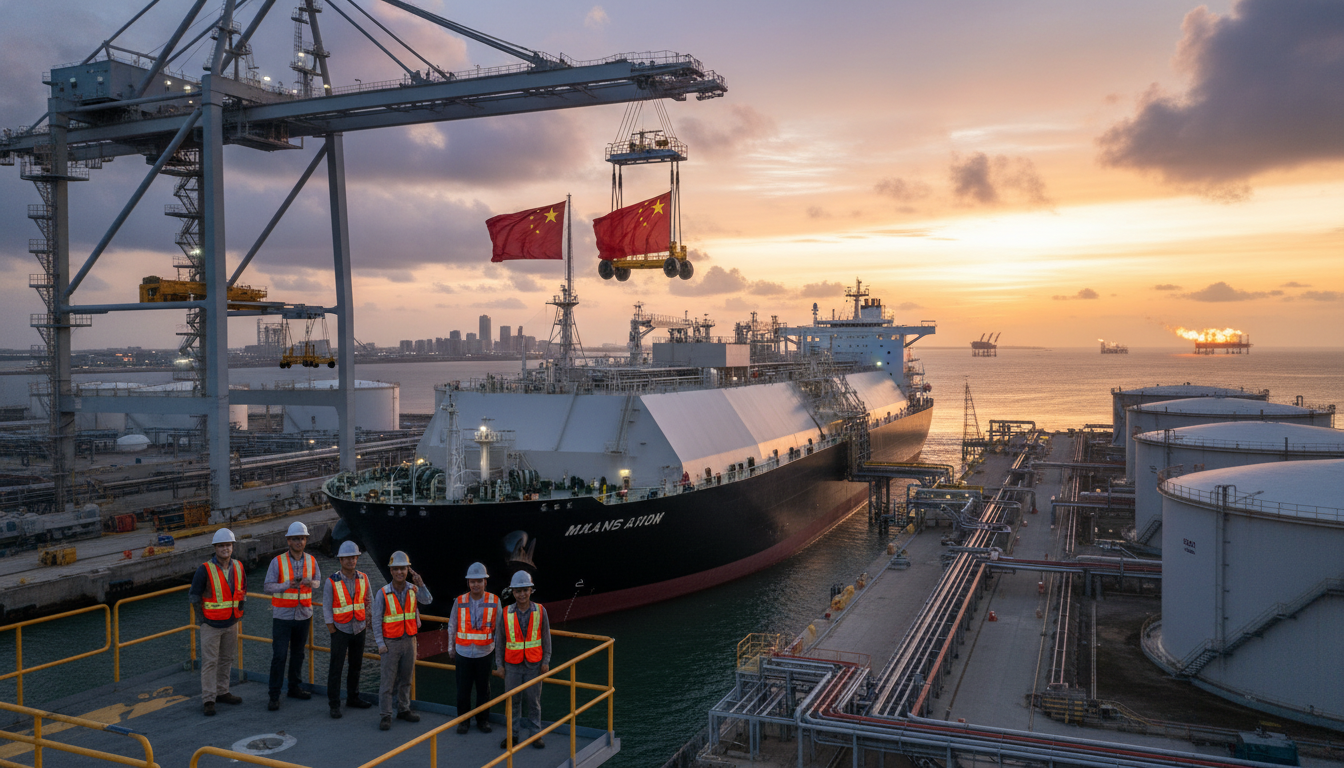
As U.S. President Donald Trump prepares for a high-stakes summit with Chinese President Xi Jinping in Beijing this week, May 14-15, energy sector investors are closely monitoring the potential for a significant agreement. Discussions between U.S. officials suggest that a deal for China to significantly increase its imports of American energy commodities could be on the table, a development that would dramatically reconfigure existing trade flows and provide new opportunities for energy investment.
The protracted trade conflict between Washington and Beijing, marked by a series of reciprocal tariffs, largely stifled China’s appetite for U.S. oil and liquefied natural gas (LNG). This disruption effectively dismantled a thriving energy trade segment that, just prior to President Trump’s second term in 2024, had reached an impressive valuation of $8.4 billion annually. The upcoming talks present a critical juncture, offering the prospect of revitalizing these crucial bilateral energy transactions and injecting new life into affected supply chains.
LNG: A Geopolitical Barometer for Energy Investments
The trajectory of Chinese imports of U.S. liquefied natural gas has historically served as a sensitive indicator of the broader geopolitical landscape between the two nations. Periods of improved diplomatic relations have consistently opened new avenues for U.S. LNG exports, while heightened tensions have just as swiftly curtailed them, demonstrating the market’s acute responsiveness to political shifts.
During the initial phase of President Trump’s first term and the ensuing trade war in 2019, Chinese purchases of U.S. LNG plummeted to a mere 260,000 metric tons. This stark reduction occurred even as China’s overall global LNG imports surged by 15% to 59.4 million tons, underscoring the direct impact of tariff barriers on specific trade routes.
However, a subsequent thaw in trade relations, culminating in a significant trade agreement two years later, led to a robust resurgence. By 2021, the United States had shipped 8.98 million tons of LNG to China, establishing itself as the nation’s third-largest supplier, trailing only narrowly behind Qatar. This period showcased the substantial potential for U.S. LNG in the Chinese market when trade barriers are eased.
This recovery proved short-lived. By 2024, U.S. LNG exports to China had fallen back to 4.15 million tons, and by 2025, they had dropped precipitously to a negligible 26,000 tons. This severe contraction was a direct consequence of China’s imposition of a 25% tariff on U.S. LNG, effectively making American cargoes economically unviable for direct import.
Despite these tariffs, contractual obligations stemming from long-term agreements signed between 2021 and 2023 by major Chinese energy firms like PetroChina and CNOOC continue to be honored. To circumvent the burdensome tariffs, these companies have ingeniously redirected approximately 12 million tons of contracted U.S. LNG cargoes, initially destined for China, to the European market for resale. Industry analysts project that, absent the 25% tariff, U.S. LNG would currently present a more cost-effective option than prevailing Asian spot cargoes, especially given the market volatility spurred by the ongoing Iran conflict. However, any immediate surge in U.S. LNG imports by China is likely to face headwinds, as analysts anticipate another year of subdued LNG demand growth within the Chinese market, tempering expectations for a rapid rebound even with tariff adjustments.
Crude Oil: A Strategic but Secondary Trade Volume
China holds the distinction of being the world’s preeminent crude oil importer. Yet, despite its colossal energy appetite, the United States has never emerged as a primary source of its crude supply. The volume of U.S. crude entering China reached its zenith around 2020, following the initial Phase 1 trade deal. During this period, imports peaked at approximately 395,000 barrels per day, constituting just under 4% of China’s total crude import portfolio.
By 2024, prior to the return of President Trump to office, this figure had receded to 193,000 barrels per day, representing a trade value of approximately $6 billion. However, the imposition of a 20% import tariff during the trade war fundamentally altered this dynamic. Since May 2025, China has effectively ceased all imports of U.S. crude oil, strategically reallocating its purchasing to alternative suppliers such as Canada and Brazil to offset the absence of American shipments. For investors, this segment highlights China’s capacity for diversification and the relatively minor, albeit symbolic, role U.S. crude plays in its vast import needs.
Ethane and Propane: Resilient Pillars of Petrochemical Supply
In contrast to the volatile trade in LNG and crude oil, U.S. exports of ethane and propane to China have demonstrated remarkable resilience, underscoring their critical importance to China’s industrial sector. The United States remains China’s exclusive supplier of ethane, a vital feedstock for plastics manufacturing. These shipments have flowed continuously, largely unaffected by the broader trade disputes.
In 2025, China imported 5.95 million tons of ethane from the U.S., valued at $2.96 billion. This robust trade continued into 2026, with first-quarter imports showing a significant 50% year-on-year increase, according to Chinese customs data. The strategic necessity of U.S. ethane was conspicuously demonstrated last year when Beijing took the exceptional step of waiving its own 125% retaliatory tariffs on ethane imports, a move prompted by temporary U.S. restrictions on exports. This decision vividly illustrates China’s profound dependence on this particular American energy commodity.
Similarly, propane, another key input for propylene used in plastics production, has seen sustained demand. Despite the prevailing tariffs, the U.S. maintained its position as China’s largest propane supplier in 2025, exporting more than $6.6 billion worth of the commodity. The continued strength of these petrochemical feedstock exports, even amidst significant trade friction, underscores the foundational role of U.S. natural gas liquids (NGLs) in China’s industrial economy and highlights a stable investment avenue within the broader, more volatile energy trade relationship.
Investment Implications and the Path Forward
The impending discussions between President Trump and President Xi carry profound implications for global energy markets and investment strategies. A renewed commitment by Beijing to procure American energy would not only invigorate U.S. upstream and midstream sectors but also potentially rebalance international commodity flows. Such a deal could provide a significant boost to U.S. LNG export terminal operators and producers, offering a more diversified and expansive market for their output, particularly given the inherent cost advantage U.S. LNG holds without tariff burdens.
For investors, the potential removal of tariffs and the reopening of the Chinese market to U.S. energy represents a powerful catalyst. It signals not just a recovery of lost trade volume, but also a reduction in geopolitical risk associated with a critical demand center. While China’s overall LNG demand growth may be sluggish in the near term, a predictable, tariff-free supply channel from the U.S. offers long-term stability and strategic flexibility. The resilience of the ethane and propane trade also provides a blueprint for areas of essential commodity exchange that transcend political friction.
Ultimately, the outcome of this high-level summit will dictate the immediate future of a significant bilateral energy trade worth billions. Investors should remain vigilant, as any agreement could lead to substantial shifts in energy investment attractiveness, commodity pricing dynamics, and the overall landscape of global energy security.