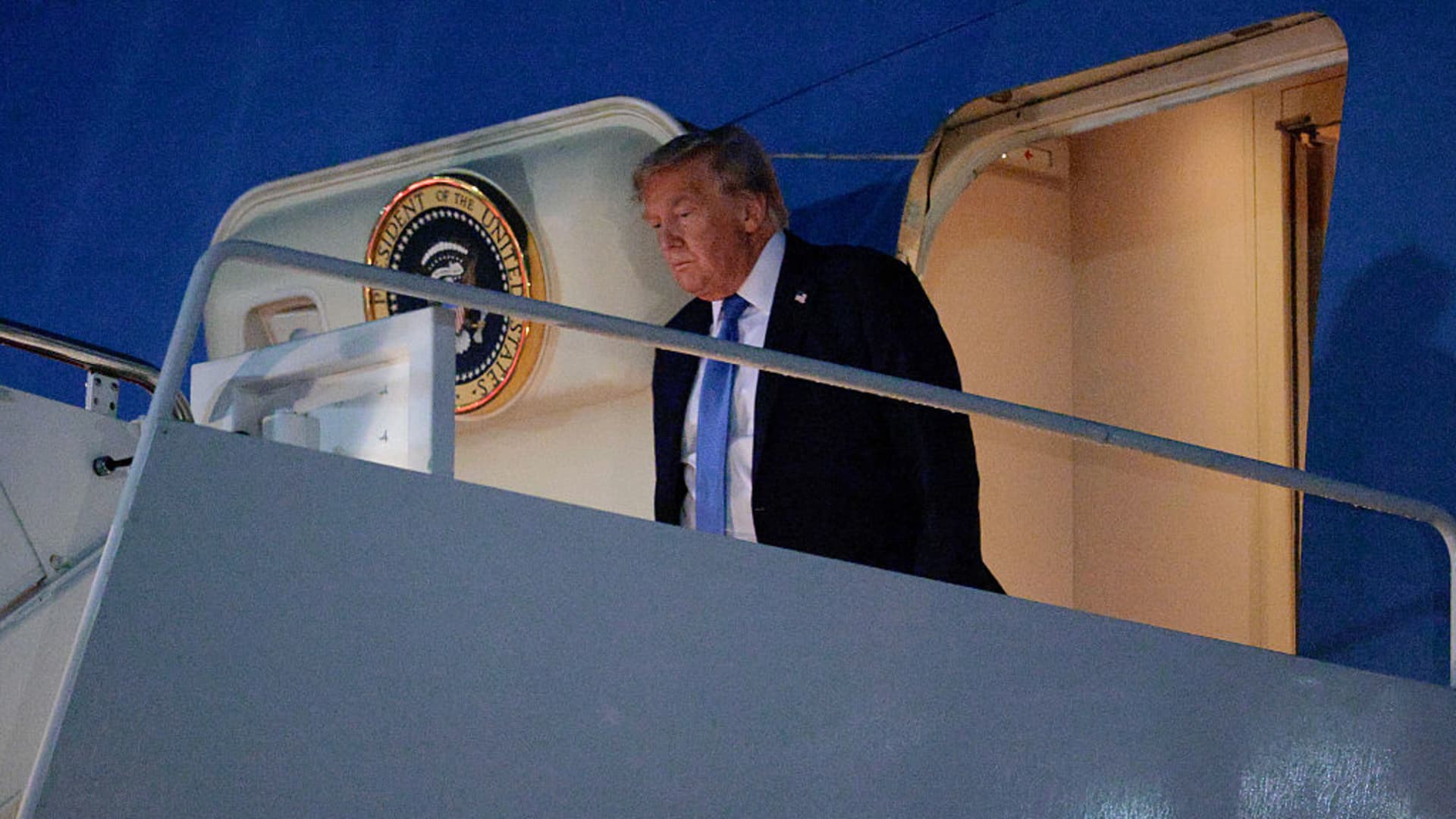
The global oil market found itself whipsawed this week, as U.S. President Donald Trump’s provocative social media statements regarding Iran injected a fresh wave of geopolitical risk premium into crude prices. Initially, hopes for de-escalation between Israel and Iran had begun to temper market sentiment. However, Trump’s early departure from the G7 summit and subsequent threats aimed at Iran’s leadership quickly shifted the narrative from potential ceasefire to imminent escalation. This abrupt change underscored the market’s inherent sensitivity to Middle Eastern stability, prompting a significant, albeit temporary, surge in oil values and reminding investors of the ever-present geopolitical wild card in energy investments.
Geopolitical Tensions Reignite Oil Volatility
The catalyst for the recent market jolt was unambiguous: President Trump’s direct challenge to Iran’s Ayatollah Ali Khamenei. Leaving the G7 summit a day early, Trump declared his involvement in something “much bigger” than a ceasefire, leading to speculation of a potential U.S. military strike against Iran. His subsequent posts on Truth Social, threatening Khamenei as an “easy target” and demanding “unconditional surrender,” were met with immediate market reactions. Oil prices, which had been retreating earlier in the week, shot up more than 4% during Tuesday’s trading session in America, reflecting a suddenly elevated risk of supply disruptions in the critical Strait of Hormuz. This rapid repricing demonstrates how quickly geopolitical rhetoric can override underlying fundamental trends, compelling investors to factor in a renewed, tangible threat to Middle East crude flows.
Current Market Dynamics: A Tale of Two Trends
While Trump’s rhetoric provided a sharp, upward jolt to oil prices mid-week, the broader market context reveals a more complex picture. As of today, April 18, 2026, Brent crude trades at $90.38, reflecting a significant daily decline of 9.07% from its intra-day high, navigating a range between $86.08 and $98.97. Similarly, WTI crude is priced at $82.59, down 9.41% within its daily range of $78.97 to $90.34. This current pullback contrasts sharply with Tuesday’s 4% surge, illustrating the market’s volatile and often contradictory reactions. Looking at the wider trend, Brent crude has experienced a substantial decline over the past fortnight, dropping from $112.78 on March 30 to $91.87 by April 17—an 18.5% decrease. This persistent downward pressure over two weeks suggests that while geopolitical events can trigger dramatic short-term spikes, fundamental demand concerns and supply expectations exert a powerful counterforce. Gasoline prices, currently at $2.93 and down 5.18% for the day, further underscore this broader bearish sentiment, indicating that the immediate geopolitical premium is battling against deeper market forces.
Broader Economic Headwinds and Monetary Policy Crossroads
Beyond the immediate geopolitical flashpoints, broader economic indicators continue to shape the demand outlook for oil. A weaker-than-expected U.S. retail sales report for May added to the heavy sentiment in markets, signaling potential softness in consumer spending, a crucial driver of energy demand. This economic data point serves as a reminder that even amidst supply-side risks, a faltering demand picture can cap price rallies. Furthermore, the U.S. Federal Reserve’s rate-setting meeting, concluding today, Wednesday, presents another critical juncture. While central bankers are widely expected to leave interest rates unchanged, the release of updated projections for future rates and Chair Jerome Powell’s press conference will provide invaluable insights into the economic trajectory. Any hawkish signals could dampen growth prospects, indirectly impacting energy consumption. Internationally, Japan’s exports in May declined 1.7% year-over-year, marking the steepest fall since September 2024 and reversing April’s 2% growth. Notably, exports to the U.S. plummeted 11.1% from a year earlier, a much sharper decline than in April. These global trade figures highlight an environment of decelerating economic activity that could fundamentally limit oil demand, irrespective of regional conflicts.
Navigating the Next Fortnight: Critical Energy Calendar Events
For investors seeking to navigate the current volatility, the upcoming energy calendar holds several critical data releases and policy events. Our proprietary event pipeline indicates that the OPEC+ Joint Ministerial Monitoring Committee (JMMC) meeting on April 18, followed by the full Ministerial Meeting on April 19, are paramount. These gatherings will be closely scrutinized for any signals regarding current production quotas or future supply adjustments, especially given the market’s underlying bearish trend and the renewed geopolitical risk premium. Investors are actively asking about “OPEC+ current production quotas” and how these might evolve, recognizing the bloc’s pivotal role in stabilizing or disrupting prices. Furthermore, the API Weekly Crude Inventory (April 21, April 28) and EIA Weekly Petroleum Status Report (April 22, April 29) will offer crucial insights into U.S. supply-demand balances, while the Baker Hughes Rig Count (April 24, May 1) will provide a forward-looking indicator of domestic production activity. These scheduled events will help market participants discern whether the recent geopolitical price surge can be sustained or if underlying fundamentals will reassert themselves.
Investor Outlook: Uncertainty Demands Strategic Positioning
Amidst this confluence of geopolitical rhetoric, shifting economic data, and impending policy decisions, investors are naturally seeking clarity. Our internal reader intent data shows significant interest in the medium-term outlook, with common queries revolving around oil price predictions for year-end 2026 and the performance trajectory of specific players in the sector, such as Repsol. While precise forecasts remain challenging given the dynamic environment, our analysis suggests a continued period of elevated volatility. The immediate impact of Trump’s strike talk demonstrates the enduring power of geopolitical risk to create rapid price dislocations. However, the broader trend of declining Brent prices over the past two weeks, coupled with economic headwinds like weak U.S. retail sales and falling Japanese exports, suggests that underlying demand concerns are a potent counterweight to any geopolitical premium. Investors should maintain a strategic focus on companies with robust balance sheets and diversified assets, capable of weathering price swings. The market currently grapples with the tension between potential supply disruptions from geopolitical events and a cooling global demand picture. Careful monitoring of OPEC+ decisions and weekly inventory data will be crucial in determining whether the recent price rally becomes a sustained trend or merely another transient geopolitical blip.


