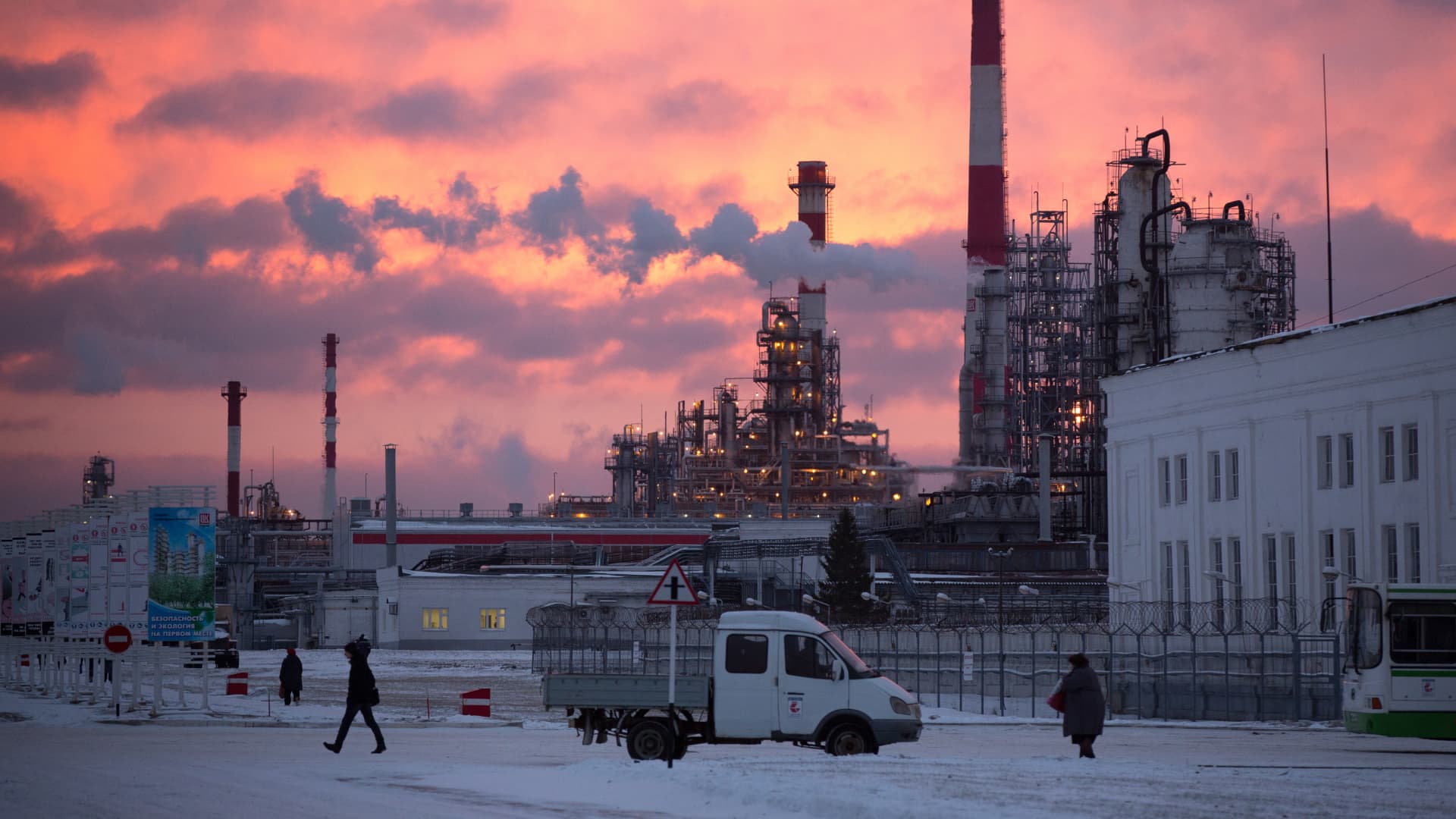
The recent escalation of U.S. sanctions against Russia’s vital oil sector, specifically targeting industry giants Rosneft and Lukoil, has injected a fresh layer of complexity into an already volatile global energy market. While the initial surprise caused a temporary price spike in U.S. crude, our proprietary market data suggests a more nuanced and potentially bearish outlook for investors. This move by the administration, framed as a response to geopolitical tensions, appears strategically timed to leverage a projected global crude surplus in 2026, offering a pathway to further pressure Moscow without immediately punishing American consumers at the pump. For astute energy investors, understanding the interplay between political maneuvering, market fundamentals, and upcoming calendar events is crucial for navigating the choppy waters ahead.
Sanctions Strategy Meets a Softening Market
The sanctions, announced by the Treasury Department and set to take full effect on November 21, are a significant development, described by some as the most material action to date against Russia’s energy revenues. However, their immediate impact on global supply volumes is designed to be indirect. The primary intent is to compel Russia to sell its crude at a steeper discount to international benchmarks like Brent, thereby reducing Moscow’s petroleum income without directly curtailing export volumes that could trigger a global price shock. This strategy is enabled by a market environment that has shown considerable weakness. As of today, Brent Crude trades at $90.38, reflecting a significant decline of 9.07% within the day, ranging from $86.08 to $98.97. Similarly, West Texas Intermediate (WTI) Crude stands at $82.59, down 9.41% with a daily range of $78.97 to $90.34. This downturn is not an isolated event; our 14-day Brent trend analysis reveals a notable drop from $112.78 on March 30 to the current $90.38, a decrease of nearly 20%. This sustained downward pressure, influenced by factors like increased OPEC+ production and global economic slowdown fears, provides the political latitude for such aggressive actions, allowing the administration to address geopolitical goals while shielding domestic motorists from immediate gasoline price spikes, which currently sit at $2.93 per gallon.
The Looming Surplus and the Future of Shale
Looking beyond the immediate impact, the administration’s long-term strategy appears to hinge on a projected global crude surplus expected to materialize in 2026. This anticipated oversupply could provide even greater leeway for further sanctions escalation, potentially targeting Russia’s export volumes directly. This forward-looking approach suggests a calculated risk, aiming to intensify financial pressure on Moscow when the market can theoretically absorb such disruptions without severe price repercussions. Crucially, this scenario could also offer an unexpected benefit to U.S. shale oil producers, who have voiced considerable concern over sustained low prices. Feedback from U.S. shale executives, as captured in confidential responses to a quarterly survey conducted by the Federal Reserve Bank of Dallas, highlights their financial pressures. The prospect of future sanctions that support crude prices from falling to “kill shale” levels—such as the $20-per-barrel environment seen in 2020—aligns with a political objective of protecting domestic energy production. While the administration may prefer oil around $40 a barrel to keep consumer prices low, avoiding a collapse that wipes out 2 million barrels per day of U.S. shale output is also a key consideration. This delicate balance reflects a complex energy policy aiming to hurt adversaries while bolstering strategic domestic industries, all within the framework of a global market teetering on oversupply.
Investor Questions and the OPEC+ Conundrum
Our proprietary reader intent data reveals a keen interest among investors regarding the future trajectory of oil prices and the role of major producers. Common questions include “what do you predict the price of oil per barrel will be by end of 2026?” and “What are OPEC+ current production quotas?” These inquiries underscore the market’s uncertainty, particularly as the recent sanctions introduce a new variable into the supply-demand equation. The global crude surplus forecast for 2026, combined with the U.S. administration’s willingness to use sanctions as a tool, places immense pressure on OPEC+ to manage supply effectively. The upcoming OPEC+ Joint Ministerial Monitoring Committee (JMMC) Meeting on April 19, followed by the full OPEC+ Ministerial Meeting on April 20, will be critical events for the market. These meetings will determine current production quotas and signal the group’s stance on market stability. The challenge for OPEC+ is stark: if a significant surplus materializes, “somebody has to cut big – OPEC, Russia, Iran or shale.” The U.S. sanctions against Russia, by potentially reducing Russian revenues rather than volumes initially, complicate this calculus, potentially pushing Russia itself to seek deeper discounts, further muddying the waters for global price benchmarks. Investors should monitor these upcoming events closely for any indications of production adjustments, which will heavily influence price expectations for the remainder of 2026.
Navigating Investment Risks and Opportunities
The interplay of geopolitical sanctions, a projected crude surplus, and the ongoing efforts of major producers to balance the market presents a complex landscape for oil and gas investors. While the initial market reaction to the sanctions saw U.S. crude prices spike, the current downward trend in both Brent and WTI, coupled with the long-term surplus outlook, suggests a prevailing bearish undertone. For investors, this environment necessitates a careful re-evaluation of portfolios. Companies with significant exposure to Russian oil exports, particularly those with existing trading relationships or infrastructure linked to Rosneft and Lukoil, face heightened operational and financial risks. Conversely, U.S. shale producers, while currently facing pressure from lower prices, might see a silver lining if future sanctions prevent a deeper price collapse. Integrated supermajors, with their diversified asset bases and downstream operations, may prove more resilient to price volatility, but even they are not immune to the broader market sentiment. The next few weeks, particularly around the crucial OPEC+ meetings and the November 21 implementation date of the sanctions, will provide further clarity on how these forces will re-shape the global oil market. Investors must remain agile, focusing on companies with strong balance sheets and adaptable strategies to weather potential shifts in supply dynamics and geopolitical pressures.