The global oil market is once again navigating a tumultuous period, with geopolitical tensions in the Middle East quickly re-establishing a significant risk premium. Hopes for de-escalation were significantly dampened by recent statements from former U.S. President Donald Trump, whose social media posts suggested a far more aggressive stance towards Iran than mere ceasefire negotiations. This rhetoric, hinting at potential U.S. military involvement, sent immediate shockwaves through trading floors, highlighting the market’s acute sensitivity to regional instability and its potential to disrupt critical energy flows.
Geopolitical Rhetoric Ignites Volatility
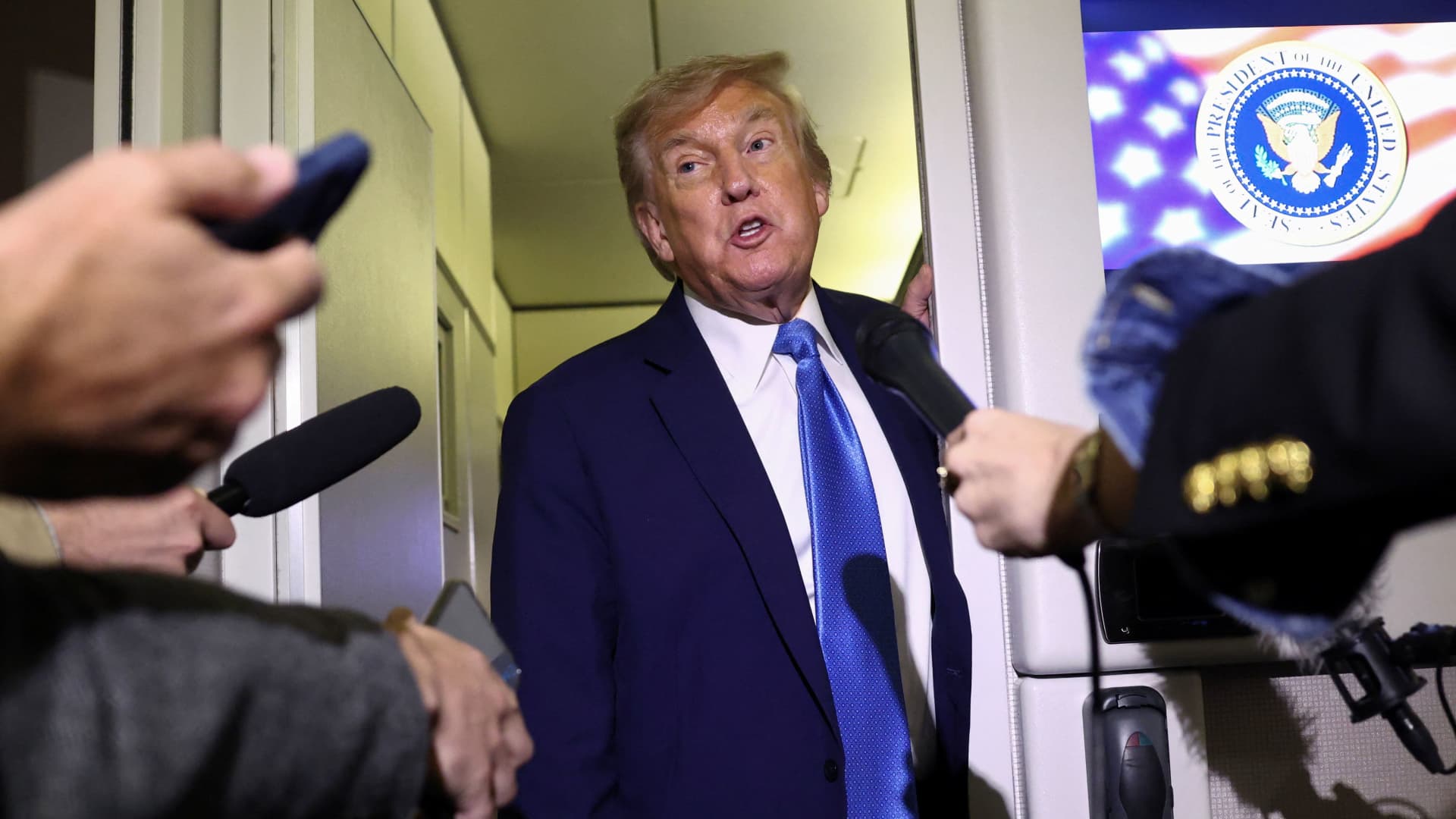
The sudden shift in sentiment followed Trump’s early departure from the G7 summit, where he indicated involvement in something “much bigger” than a ceasefire. His subsequent posts on Truth Social directly threatened Iran’s leader, Ayatollah Ali Khamenei, demanding “UNCONDITIONAL SURRENDER!” and labeling him an “easy target.” This aggressive posture, compounded by reports of high-level meetings discussing military options, immediately reversed earlier market retreats. The prospect of the U.S. directly joining hostilities in a region vital for global crude supply is a powerful catalyst, prompting investors to re-evaluate risk profiles and push for higher prices to account for potential disruptions. This dramatic escalation, contrasting with earlier optimism for a diplomatic resolution, underscores the fragile nature of stability in the Middle East and its outsized impact on energy commodity pricing.
Market Snapshot: A Day of Re-evaluation After Initial Spikes
While Trump’s statements initially caused oil prices to surge, today’s trading reflects a complex interplay of factors and a market in active re-evaluation. As of today, Brent crude trades at $90.38, marking a significant decline of 9.07% within the day’s range of $86.08 to $98.97. Similarly, WTI crude is priced at $82.59, down 9.41% for the session, oscillating between $78.97 and $90.34. Gasoline prices have followed suit, currently at $2.93, a 5.18% drop. This daily retreat, following an initial spike yesterday, suggests the market is processing the geopolitical news alongside other underlying dynamics. It’s crucial to note this volatility comes after Brent had already shed over 18% in the two weeks leading up to this point, dropping from $112.78 on March 30th to $91.87 yesterday. Broader markets also felt the chill, with U.S. stocks retreating; the S&P 500 fell 0.84%, the Dow Jones Industrial Average shed 0.7%, and the Nasdaq Composite was down 0.91%, reflecting widespread investor anxiety.
Navigating Forward: Key Events and Supply Dynamics Under Scrutiny
Looking ahead, the market’s focus will quickly shift to upcoming events that could either reinforce or temper the current geopolitical premium. The immediate attention turns to the OPEC+ Joint Ministerial Monitoring Committee (JMMC) meeting this Saturday, April 18th, followed by the full OPEC+ Ministerial Meeting on Sunday, April 19th. With heightened tensions in the Middle East, these meetings become even more critical. Investors will be keenly watching for any signals regarding production quotas. Will OPEC+ maintain current cuts, or will the new geopolitical instability prompt discussions about supply adjustments to either stabilize markets or capitalize on higher prices? Further influencing supply perceptions will be the API Weekly Crude Inventory reports on April 21st and 28th, alongside the EIA Weekly Petroleum Status Reports on April 22nd and 29th, which provide crucial insights into U.S. inventory levels. Additionally, the Baker Hughes Rig Count on April 24th and May 1st will offer a snapshot of drilling activity. Energy sector CEOs from companies like TotalEnergies, Shell, and EnQuest have already voiced concerns about the serious consequences for global supply chains should critical energy infrastructure in Iran come under attack, underscoring the severe implications of any escalation for physical oil flows.
Investor Focus: Decoding Market Signals and Long-Term Outlook
Our proprietary reader intent data reveals a clear focus among investors on understanding the future trajectory of oil prices and the stability of supply. A recurring question this week is, “What do you predict the price of oil per barrel will be by end of 2026?” This highlights a pervasive uncertainty regarding long-term market stability amid ongoing geopolitical risks and evolving demand patterns. Another frequently asked question, “What are OPEC+ current production quotas?”, directly ties into the upcoming ministerial meetings and the immediate impact of geopolitical events on supply policy. While we cannot provide specific company forecasts like “How well do you think Repsol will end in April 2026,” these macro developments will undoubtedly influence the performance of integrated energy companies and independent E&P firms alike. Heightened geopolitical risk generally translates to an increased risk premium for oil, potentially boosting revenues for producers, but it also introduces significant operational uncertainty and volatility. Investors are clearly seeking clarity on how these complex, interconnected factors will shape the oil market, demanding robust analysis to inform their strategic decisions in an increasingly unpredictable environment.