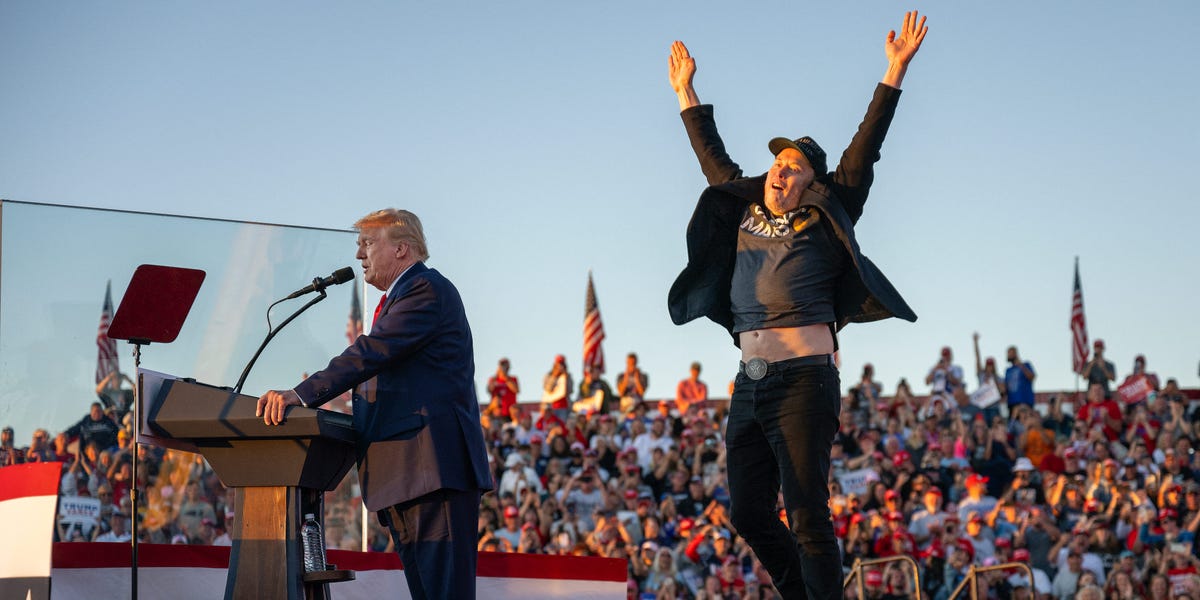
The public sparring between influential figures like Donald Trump and Elon Musk, often playing out across disparate digital platforms, may seem like mere political theatre. However, for investors in the oil and gas sector, such high-profile disagreements can signal far deeper ideological rifts with tangible implications for energy policy. When two individuals with immense power to shape public discourse and, potentially, future regulatory landscapes clash, the resulting uncertainty becomes a critical factor in market analysis. This dynamic forces us to consider how policy signals are disseminated and interpreted, particularly concerning the future direction of fossil fuel production versus the acceleration of renewable energy and electric vehicle adoption.
The Policy Crossroads: Divergent Energy Visions
The core of the Trump-Musk dynamic, beyond personal animosity or platform allegiances, represents a significant divergence in energy philosophy. Donald Trump’s political narrative has consistently championed domestic oil and gas production, deregulation, and a rollback of environmental policies perceived as hindering fossil fuel industries. His preferred communication channels, now primarily Truth Social, reinforce this message to a dedicated audience. Conversely, Elon Musk, through his ownership of Tesla and X, is a vocal proponent of electrification, renewable energy, and the transition away from hydrocarbons. His influence on policy, while indirect, comes from driving technological adoption and shaping narratives around sustainable energy solutions. The public nature of their current discord, even if not directly about energy, underscores the broader ideological chasm that could define future administrations’ approaches to energy policy. For investors, this creates a challenging environment to forecast regulatory stability, permitting processes for new drilling, or the longevity of existing tax incentives for traditional energy sources versus burgeoning green technologies.
Current Market Headwinds Amplified by Policy Ambiguity
As of today, Brent Crude trades at $90.38 per barrel, marking a significant intraday decline of 9.07%, with a day range between $86.08 and $98.97. Similarly, WTI Crude is at $82.59, down 9.41%, having traded between $78.97 and $90.34. Gasoline prices have also seen a notable drop to $2.93, a 5.18% decrease within a range of $2.82-$3.1. This sharp downturn reflects not only immediate supply-demand dynamics but also a palpable premium for geopolitical and policy uncertainty that has been building. Looking at the broader trend, our proprietary data indicates Brent has plunged from $112.78 on March 30th to $91.87 on April 17th, representing an 18.5% decline in just over two weeks. This dramatic shift suggests that macro factors are heavily influencing price discovery. The public discourse between figures like Trump and Musk, symbolizing a potential tug-of-war over future energy policy direction, contributes to this market volatility. Investors are struggling to price in the long-term regulatory environment when the signals from powerful influencers are so divergent and often contradictory.
Investor Focus: Seeking Clarity Amidst the Fog
Our platform’s proprietary intent data reveals a keen investor focus on long-term price predictions and fundamental market drivers, alongside specific company performance. This week, we’ve seen a surge in questions like, “What do you predict the price of oil per barrel will be by end of 2026?” and inquiries into specific firms such as, “How well do you think Repsol will end in April 2026?” These questions highlight the market’s hunger for clarity on future pricing, which is inextricably linked to the policy outlook. Furthermore, questions regarding “OPEC+ current production quotas” underscore the traditional reliance on supply-side management. However, the policy uncertainty emanating from high-profile figures, particularly regarding future U.S. energy strategy, introduces a layer of complexity that goes beyond OPEC’s immediate decisions. A potential shift in U.S. domestic production incentives, or an accelerated push for EV adoption, could fundamentally alter global demand projections, making long-term forecasting significantly more challenging for analysts and investors alike.
Upcoming Events: Short-Term Catalysts Meet Long-Term Policy Questions
The next two weeks are packed with critical events that will undoubtedly influence short-term market movements, yet the overarching policy uncertainty remains a significant backdrop. This weekend, the OPEC+ Joint Ministerial Monitoring Committee (JMMC) and the Full Ministerial Meeting are scheduled for April 18th and 19th, respectively. Decisions made here regarding production quotas will have immediate impacts on global supply. Following this, the API Weekly Crude Inventory report on April 21st and the EIA Weekly Petroleum Status Report on April 22nd will provide crucial insights into U.S. inventory levels and demand trends. Further industry data will arrive with the Baker Hughes Rig Count on April 24th, offering a gauge of drilling activity. While these events offer granular data points, their ultimate market impact must be viewed through the lens of a potentially shifting U.S. energy policy landscape. For instance, even if OPEC+ implements significant cuts, how will the market respond if a future U.S. administration signals a dramatic change in domestic shale policy or a massive push for EV infrastructure, as advocated by figures like Musk? The confluence of these immediate data releases with the persistent policy ambiguity creates a complex risk-reward profile for energy investors, demanding a nuanced understanding of both short-term fundamentals and long-term political winds.


