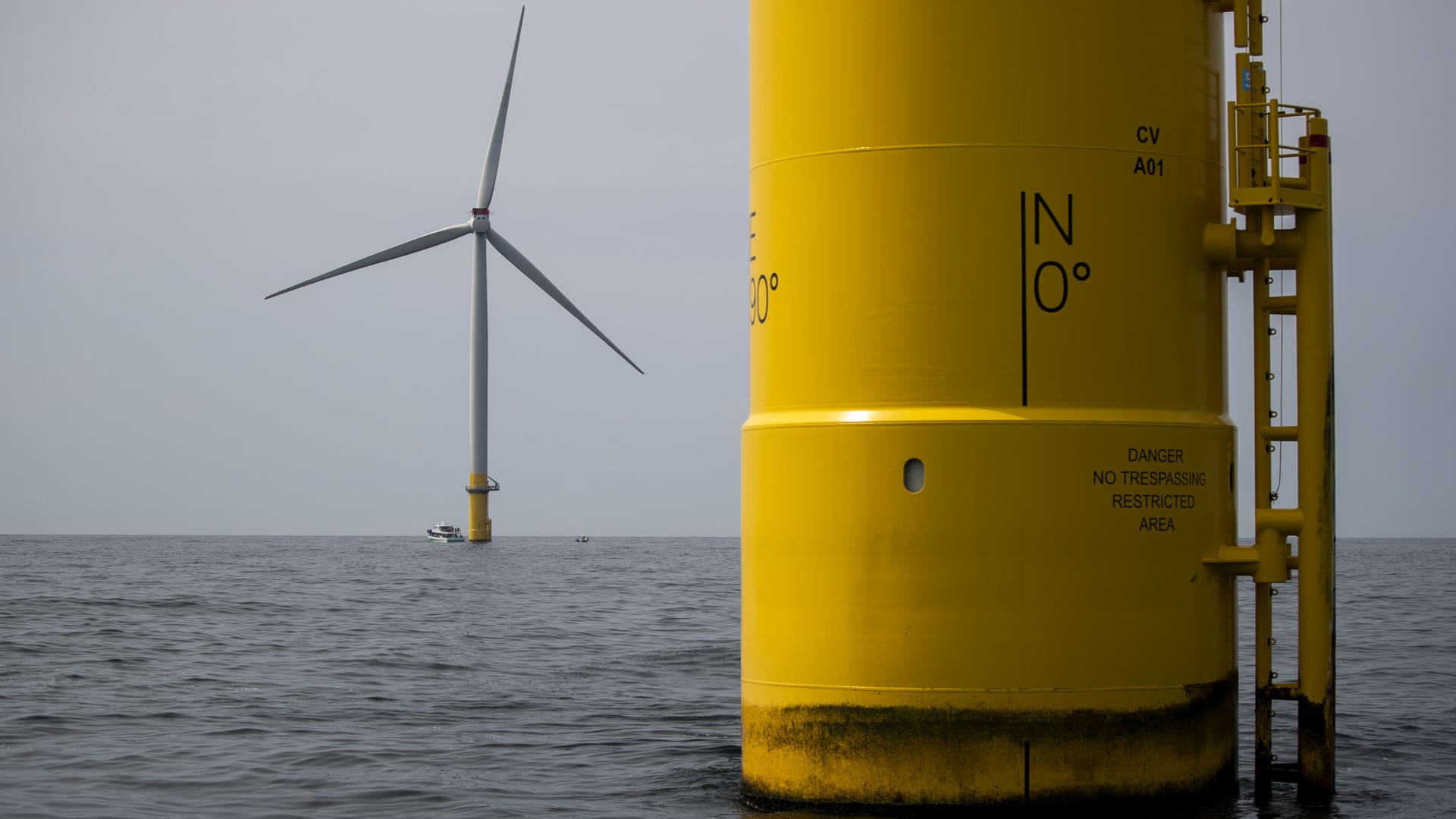
The recent decision by the Trump administration to halt five major offshore wind projects along the U.S. East Coast, including the substantial Coastal Virginia Offshore Wind initiative, sends a clear signal reverberating across the entire energy landscape. Citing national security concerns, this move has immediately impacted developers like Dominion Energy, whose shares dipped over 4% on the news. For investors in oil and gas, this isn’t merely a headline about renewable energy; it’s a critical inflection point demanding a re-evaluation of long-term demand projections, regulatory risks for alternatives, and the enduring role of traditional hydrocarbons in the nation’s energy mix. This analysis delves into the implications of this policy shift, examining its potential effects on market dynamics, investor sentiment, and the strategic positioning of oil and gas assets.
The Immediate Aftermath: A Shift in Energy Sentiment
The sudden pause on these significant offshore wind projects, which collectively represent a substantial portion of the U.S.’s planned renewable energy capacity, underscores a stark reality: the energy transition is not a linear, unidirectional path. The stated reason for the halt – national security concerns stemming from potential radar interference by turbine blades and highly reflective towers – introduces a new dimension of regulatory risk that was perhaps underappreciated by green energy proponents. While the federal government has indicated a willingness to work with leaseholders to assess mitigation possibilities, the immediate effect is a slowdown in a sector previously enjoying strong governmental backing and investor enthusiasm. For oil and gas, this creates a subtle but significant narrative shift. It suggests that the perceived inexorable march of renewables, which has often been framed as a direct threat to fossil fuel demand, may face more complex and unpredictable hurdles than previously modeled. Investors are now forced to consider a scenario where large-scale renewable deployment could be more protracted, thereby extending the runway for traditional energy sources.
Oil Market Volatility Amidst Policy Uncertainty
The broader energy market is currently navigating significant volatility, and this policy shift adds another layer of complexity. As of today, Brent crude trades at $90.38 per barrel, marking a substantial 9.07% decline within the trading day, with prices ranging from $86.08 to $98.97. WTI crude mirrors this trend, standing at $82.59, down 9.41% for the day, having seen a range of $78.97 to $90.34. Gasoline prices have also followed suit, dropping to $2.93 per gallon, a 5.18% decrease. This daily downturn, while primarily driven by broader macroeconomic concerns and global demand outlooks, occurs against a backdrop of increasing uncertainty in the energy transition narrative. Looking at the past two weeks, Brent crude has seen a pronounced correction, falling from $112.78 on March 30th to $91.87 just yesterday, representing an 18.5% drop. While the wind project halt doesn’t directly cause these immediate price movements, it inherently alters the long-term supply-demand equation. A slower build-out of renewable capacity means a more sustained reliance on fossil fuels to meet growing energy needs, potentially mitigating some of the longer-term bearish sentiment that has been factored into oil prices due to aggressive decarbonization targets. This policy decision could provide a floor for oil demand forecasts, even as immediate market pressures dictate current price action.
Reassessing the Energy Transition: What Investors Are Asking
Our proprietary investor intent data reveals a keen interest in the long-term trajectory of oil prices, with many readers asking, “What do you predict the price of oil per barrel will be by end of 2026?” and inquiring about “OPEC+ current production quotas.” These questions highlight a fundamental concern about future supply and demand dynamics, directly impacted by the pace and feasibility of the energy transition. The Trump administration’s halt on offshore wind projects directly challenges the aggressive decarbonization timelines many investors have assumed. If projects designed to power hundreds of thousands of homes, like the 176-turbine Coastal Virginia initiative, face significant political and security hurdles, it suggests that the displacement of fossil fuels might be slower and more complicated than previously modeled. This longer transition period implies a more sustained demand for oil and natural gas, potentially pushing long-term price forecasts higher than models that assumed rapid renewable deployment. For OPEC+, this development could provide additional leverage or rationale for maintaining production levels or even considering increases, depending on their assessment of global demand elasticity in a scenario where renewable alternatives face headwinds. Investors are clearly looking for clarity on how these shifting policy sands will impact the fundamental supply-demand balance that ultimately dictates future energy prices.
Upcoming Catalysts: OPEC+, Inventories, and Rig Counts in a Shifting Landscape
The coming weeks are packed with critical energy events that will provide further insight into market direction, now viewed through the lens of this altered policy landscape. Investors should closely monitor the OPEC+ Joint Ministerial Monitoring Committee (JMMC) meeting on April 18th, followed by the Full Ministerial Meeting on April 19th. With renewed uncertainty surrounding the pace of renewable adoption in a key market like the U.S., OPEC+ decisions on production quotas could be influenced by a more conservative outlook on global oil demand erosion. A slower energy transition might embolden some members to advocate for higher output, or at least resist further cuts, anticipating a more persistent need for their crude. Domestically, the weekly API and EIA crude inventory reports on April 21st, 22nd, 28th, and 29th will be crucial indicators. Persistent draws could signal robust underlying demand, further strengthening the case for sustained fossil fuel reliance. Conversely, significant builds could indicate a softening market, regardless of policy shifts. Finally, the Baker Hughes Rig Count reports on April 24th and May 1st will reveal how U.S. producers are reacting. If the offshore wind halt leads to an expectation of longer-term fossil fuel demand, we might see an uptick in drilling activity, particularly in Permian and other prolific basins, as operators capitalize on potentially extended market opportunities. These events, combined with the U.S. policy pivot, will offer a clearer picture of both immediate market sentiment and the strategic direction of the global oil and gas industry.