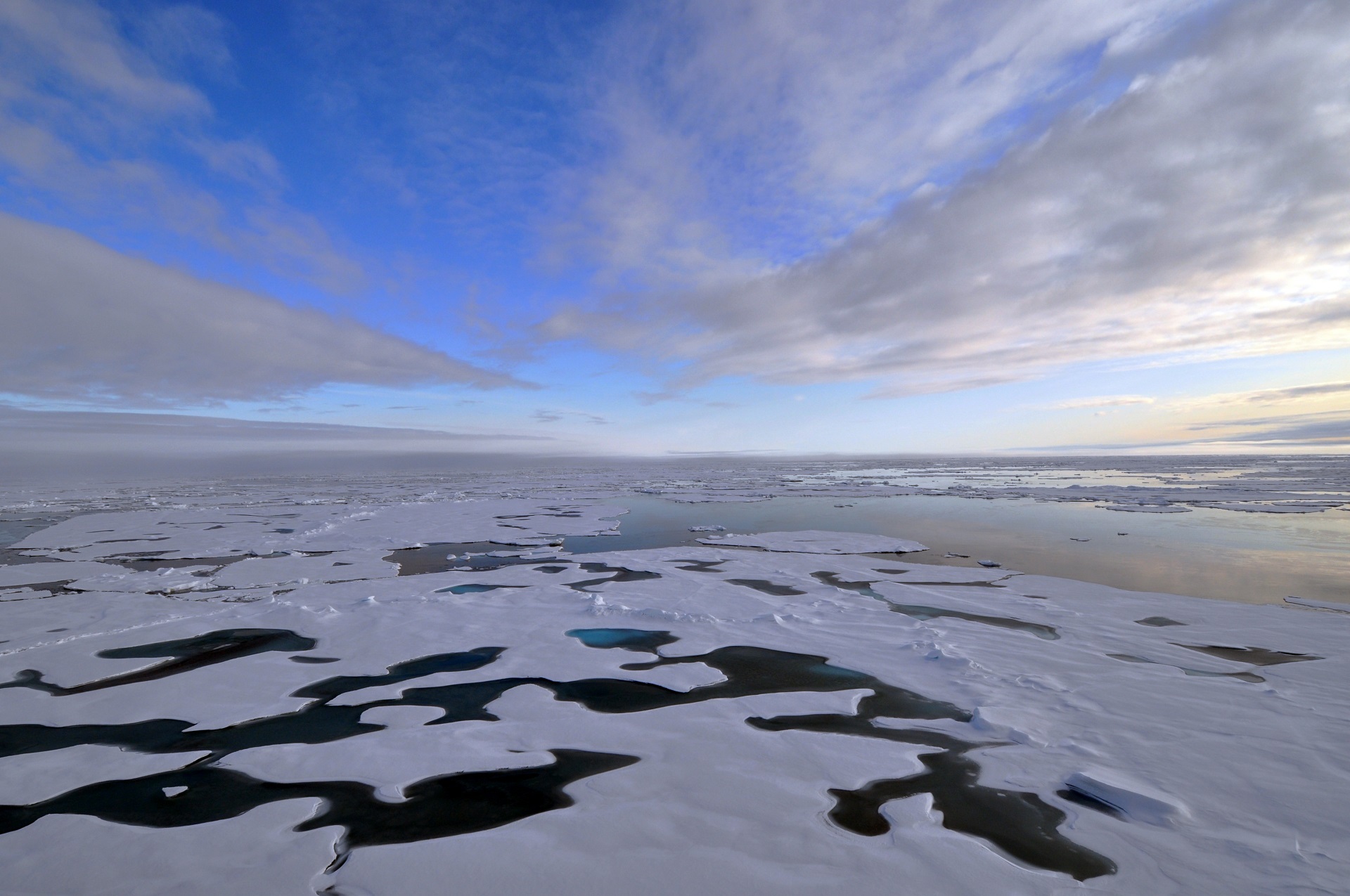
The Trump administration’s recent announcement to lift oil drilling restrictions across significant portions of the National Petroleum Reserve-Alaska (NPR-A) marks a pivotal policy shift with profound implications for the energy sector and global oil supply dynamics. This move, spearheaded by Interior Secretary Doug Burgum in Utqiagvik, aims to reverse Biden-era curbs and unlock an estimated 8.7 billion barrels of recoverable oil within the vast 23-million-acre reserve. For investors, this represents a long-term strategic play, reinforcing the U.S. commitment to domestic energy expansion and offering new avenues for capital deployment in Arctic exploration and production. While the immediate impact on market prices may be tempered by development timelines, the policy signals a clear direction for American energy policy, setting the stage for increased crude output in the coming decade.
Unlocking Alaska’s Vast Potential and the Immediate Market Context
The core of this policy reversal involves repealing a 2024 rule that had designated 13 million acres of the NPR-A as “special areas,” effectively limiting future oil and gas leasing, in addition to maintaining existing prohibitions on another 10.6 million acres. By removing these restrictions, the administration is opening up what it views as a critical resource for national energy security and economic growth. The sheer scale of the NPR-A, an area roughly the size of Indiana, underscores the magnitude of this decision. Alaska’s own forecasts are ambitious, projecting crude production from the reserve to surge from 15,800 barrels per day (bpd) in fiscal year 2023 to a substantial 139,600 bpd by fiscal year 2033. This nearly nine-fold increase represents a significant future supply increment that warrants careful attention from long-term oil and gas investors.
As of today, Brent crude trades at $96.62, reflecting a 1.93% increase within a day range of $91 to $96.73. Concurrently, WTI crude sits at $92.94, up 1.82% from its day range of $86.96 to $93.13. This upward movement follows a challenging two-week period where Brent experienced an 8.8% decline, falling from $102.22 on March 25th to $93.22 on April 14th. While current market movements are driven by a confluence of geopolitical factors and immediate supply-demand balances, the long-term prospect of increased Alaskan output could eventually provide a stabilizing effect on global supply, potentially moderating future price volatility. However, the significant lead times required for Arctic developments mean this policy’s impact will be felt more in forward price curves than in today’s spot market.
Investment Implications and Operational Landscape
For companies already entrenched in the region, such as ConocoPhillips, Santos Ltd., Repsol SA, and Armstrong Oil & Gas Inc., this policy change offers renewed clarity and expanded operational flexibility. ConocoPhillips’ 600-million-barrel Willow project, which is already underway and slated for first oil in 2029, serves as a prime example of the substantial capital and long-term commitment required for these Arctic developments. The lifting of restrictions could de-risk future expansion plans for these existing players and potentially attract new entrants looking to secure long-life, high-volume assets. The American Petroleum Institute (API) has already voiced strong support, applauding the administration’s move to “fully leverage Alaska’s National Petroleum Reserve as a driver of revenue, economic growth and energy security.” This industry backing underscores the sentiment that the policy fosters a more predictable and conducive environment for large-scale energy investments, which are crucial for projects with multi-year development cycles and multi-billion-dollar price tags.
Navigating Future Supply and Investor Sentiment
Investors are consistently seeking clarity on future price trajectories, with common questions surfacing about base-case Brent price forecasts for the next quarter and consensus 2026 Brent forecasts. While the NPR-A policy shift is a long-term supply catalyst, its immediate influence on these shorter-term forecasts is limited due to the inherent development timelines of Arctic projects. However, it significantly contributes to the longer-term supply outlook, which, in turn, informs strategic positioning for energy portfolios.
In the near term, market participants will be keenly observing a series of upcoming calendar events that are more directly tied to immediate supply-demand dynamics. The market will closely scrutinize the OPEC+ Joint Ministerial Monitoring Committee (JMMC) meeting on April 18th, followed by the full OPEC+ Ministerial Meeting on April 20th. These gatherings are critical for assessing global production quotas and potential supply adjustments. Furthermore, the weekly rhythm of energy data from the U.S. will provide crucial insights: the Baker Hughes Rig Count on April 17th and April 24th will indicate drilling activity trends, while the API Weekly Crude Inventory reports on April 21st and April 28th, alongside the EIA Weekly Petroleum Status Reports on April 22nd and April 29th, will offer real-time snapshots of U.S. crude stocks and demand indicators. While the Alaskan policy change adds a bullish long-term component to the U.S. supply picture, these near-term events remain paramount for formulating short-to-medium-term Brent price forecasts.
Geopolitical Strategy and Energy Security
Beyond the immediate economic and investment considerations, the decision to open up more of the NPR-A for drilling firmly aligns with a broader “energy dominance” strategy. This policy move is not merely about increasing crude output; it is a strategic step towards enhancing U.S. energy independence and bolstering its position in global energy markets. By cultivating domestic resources, the administration aims to insulate the nation from geopolitical volatilities in other major oil-producing regions and ensure a stable, secure energy supply for decades to come. The long-term nature of these projects means they serve as a strategic buffer, contributing to national energy resilience rather than merely reacting to current market fluctuations. This commitment to leveraging vast Alaskan reserves underscores a foundational belief that robust domestic production is key to national security and economic stability in an increasingly complex global landscape.