U.S. Escalates Sanctions on Iranian Oil Network Amid Geopolitical Tensions
Washington has significantly ratcheted up economic pressure on Tehran, imposing extensive new sanctions on a network integral to Iran’s illicit oil trade. This latest move targets entities linked to Hossein Shamkhani, a prominent figure in Iranian shipping, signaling a renewed commitment to disrupting the regime’s revenue streams amidst sensitive diplomatic talks and heightened regional instability.
The Treasury Department’s Office of Foreign Assets Control (OFAC) confirmed on Wednesday the designation of over a dozen individuals, firms, and vessels associated with Shamkhani, the scion of a powerful Iranian security official. This action underscores a strategic effort by U.S. authorities to dismantle the intricate financial and logistical apparatus that facilitates Iran’s circumvention of international sanctions, particularly as his network has continued to operate through the strategically vital Strait of Hormuz.
Targeting the Shamkhani Shadow Fleet: A Key Strategic Move
The sanctions zero in on Hossein Shamkhani’s sprawling shipping empire, which has been under intense scrutiny for its ongoing cargo movements through the Strait of Hormuz. This critical waterway, a chokepoint for global oil transit, has seen significant disruption, with commercial traffic largely curtailed amid the ongoing U.S.-Israeli war in Iran. Despite these challenges, Shamkhani’s operations reportedly maintained active routes, raising concerns about the efficacy of existing pressure campaigns.
This latest round of penalties builds on previous actions. Last July, the U.S. administration initially sanctioned Shamkhani and elements of his broader network. Furthermore, in early March, the Justice Department filed two civil forfeiture complaints directly targeting companies believed to be under his control. These successive measures illustrate a multi-pronged approach by U.S. authorities to expose and dismantle Iran’s illicit financial architecture, impacting investors by creating uncertainty in global energy supply chains and highlighting compliance risks.
Broader Enforcement: The Venezuela Connection and “Economic Fury”
Beyond the Shamkhani network, U.S. authorities also extended sanctions to Iranian national Seyed Naiemaei Badroddin Moosavi and three associated firms. These entities are implicated in an elaborate money laundering scheme designed to exchange Iranian oil for Venezuelan gold, reportedly under the auspices of Nicolas Maduro’s government. This highlights the extensive global reach of Iran’s illicit financial activities and its alliance with other sanctioned regimes, adding another layer of complexity for global financial institutions navigating compliance challenges.
Treasury Secretary Scott Bessent articulated the administration’s aggressive stance, stating, “Treasury is moving aggressively with Economic Fury by targeting regime elites like the Shamkhani family that attempt to profit at the expense of the Iranian people.” He delivered a stark warning to the global financial sector: “Financial institutions should be on notice that Treasury will leverage all tools and authorities, including secondary sanctions, against those that continue to support Tehran’s terrorist activities.” This robust statement reinforces the potential for severe penalties on any entity, anywhere in the world, found to be assisting Iran’s sanctioned activities, directly impacting investor due diligence and risk assessment for international transactions.
Waivers Expire: Closing the Loophole and Market Implications
The current designations mark a decisive return to intensified pressure, following a temporary reprieve that had allowed certain segments of Shamkhani’s shadow fleet to maintain oil flows. A temporary waiver issued just last month was intended to mitigate a sharp surge in global crude prices. This waiver controversially permitted Iran-linked vessels, including some under Shamkhani’s control, to offload pre-existing cargo already at sea. This brief window reportedly generated a significant windfall for his network, as detailed in early April financial reports.
However, that temporary concession is now firmly in the past. Treasury officials explicitly stated on Tuesday their intent to apply even greater economic pressure on Iran in the coming days. Crucially, the temporary waiver on specific Iranian crude oil purchases is slated to expire this weekend. This follows a similar decision to let lapse a license that had previously authorized purchases of certain otherwise-sanctioned Russian crude. The expiration of these waivers signals a tightening of the global sanctions regime, which could lead to further supply disruptions and potential upward pressure on crude oil prices, a key consideration for energy investors.
Geopolitical Crossroads: Hormuz Standoff and Ceasefire Talks
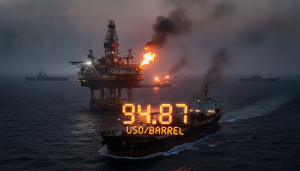
These escalating sanctions unfold against a backdrop of complex geopolitical maneuvers. Washington and Tehran are currently weighing a two-week ceasefire extension, aiming to facilitate further negotiations toward a comprehensive peace deal. Concurrently, the Strait of Hormuz remains a flashpoint; the U.S. has established a naval blockade to staunch Iranian shipments, while Tehran, in turn, has closed the vital waterway to other commercial vessels. This dual blockade creates an extremely volatile environment for global shipping and energy markets.
For investors, the situation in the Strait of Hormuz represents a significant risk premium built into current oil prices. Any escalation or miscalculation in this critical transit corridor could have immediate and dramatic impacts on global oil supply and pricing. The administration’s renewed enforcement strategy, coupled with the expiration of waivers and the ongoing military standoff, underscores the volatile nature of the oil market and the pervasive influence of geopolitical events on energy sector valuations.
Investor Outlook: Navigating Heightened Risk in Global Oil
The Trump administration’s latest offensive against Iran’s oil infrastructure through expanded sanctions on key figures like Hossein Shamkhani signals an unwavering commitment to its “maximum pressure” campaign. For energy investors, this means anticipating continued volatility and potential supply-side shocks. The elimination of temporary waivers on Iranian crude purchases will undoubtedly remove a source of supply, albeit illicit, from the global market, potentially tightening balances and supporting prices.
Furthermore, the explicit threat of secondary sanctions should put all financial institutions and trading entities on alert regarding their exposure to Iran-related transactions. Compliance will become an even more paramount concern. As the Strait of Hormuz remains a point of contention and ceasefire talks proceed cautiously, the interplay of diplomacy, military posturing, and economic sanctions will continue to shape the global oil landscape, making astute risk management and geopolitical awareness essential for navigating this complex market.