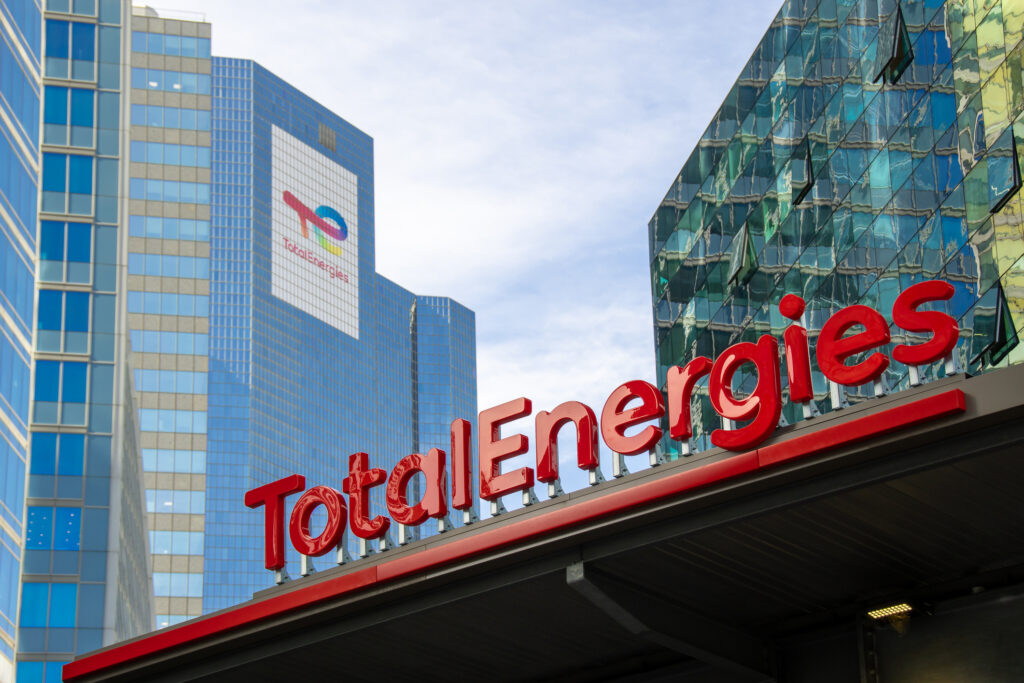
The ambitious TotalEnergies-led Mozambique LNG project, once heralded as Africa’s largest foreign investment, is navigating a fresh wave of financial and operational complexities. After a four-year hiatus due to security concerns, the project faces a substantial $4.5 billion cost increase, pushing its total estimated price tag from $20 billion to $24.5 billion. This significant escalation, coupled with TotalEnergies’ request for a decade-long extension to its construction and production timetable, has set the stage for contentious negotiations with the Mozambican government. For energy investors, this situation underscores the inherent risks and long-term commitment required for frontier market mega-projects, especially those in regions grappling with geopolitical instability and fluctuating commodity prices.
Escalating Costs and Governmental Scrutiny
TotalEnergies has attributed the $4.5 billion cost overrun to the extended suspension period, during which work on the liquefied natural gas facility was halted following a deadly militant attack. While the force majeure has now been lifted, the financial implications are profound. Mozambique’s President Daniel Chapo has made it clear that the government will meticulously scrutinize the revised cost calculations and the rationale behind the proposed 10-year timetable extension. He anticipates presenting “counter-arguments,” signaling a potentially protracted negotiation phase. This standoff highlights the critical balance between project viability for the operator and equitable returns for the host nation, particularly when unforeseen circumstances significantly alter the initial investment thesis. For investors eyeing TotalEnergies’ long-term portfolio, the resolution of these negotiations will be a key indicator of the company’s ability to manage complex stakeholder relations in high-risk environments.
Persistent Security Risks and Regional LNG Competition
The core challenge for the Mozambique LNG project, and indeed for other major energy developments in the region, remains the persistent security threat in the Cabo Delgado province. The initial suspension of TotalEnergies’ project was a direct consequence of escalating militant activity, and recent reports suggest a resurgence of violence in the area. This enduring instability casts a long shadow over the operational continuity and safety of personnel, a primary concern for any multinational energy company. Compounding the situation is the presence of Exxon’s Rovuma LNG project in the same volatile region. Rovuma, now poised to become Africa’s largest LNG development with an estimated cost of $30 billion and an annual capacity of 18 million tons, is awaiting a final investment decision in the first quarter of 2026, contingent upon robust security guarantees from the Mozambican government. Investors must weigh the substantial long-term potential of Mozambique’s vast offshore natural gas reserves against the formidable security and political risks that continue to define the operating landscape.
Navigating Market Volatility Amidst LNG Project Development
The financial hurdles facing the Mozambique LNG project are unfolding against a backdrop of considerable volatility in global energy markets. As of today, Brent Crude trades at $90.38, marking a significant daily decline of 9.07%, with its range for the day spanning $86.08 to $98.97. This sharp downturn is part of a broader trend, with Brent having fallen from $112.78 on March 30th to its current level on April 17th, representing a nearly 20% drop in just over two weeks. Such dramatic price swings directly impact the financial viability and perceived risk of large-scale, capital-intensive LNG projects, which require sustained high prices to justify their multi-decade investment horizon. Readers frequently ask about the future of oil prices, with a common query being: “what do you predict the price of oil per barrel will be by end of 2026?” The current market softness, characterized by falling crude and gasoline prices (gasoline is down 5.18% to $2.93 today), adds urgency to the government’s scrutiny of TotalEnergies’ revised cost structure. A lower price environment makes it harder to absorb cost overruns and necessitates a more favorable fiscal regime or extended production timeline to maintain project economics.
Upcoming Events and Investor Outlook on Energy Futures
The broader energy market’s trajectory in the coming weeks will be heavily influenced by several key events, which investors are keenly tracking. The OPEC+ Joint Ministerial Monitoring Committee (JMMC) Meeting is scheduled for April 19th, immediately followed by the OPEC+ Ministerial Meeting on April 20th. These gatherings are crucial for setting production quotas, a topic of direct interest to investors asking about “OPEC+ current production quotas.” Any decisions on supply adjustments will inevitably reverberate through crude and, by extension, natural gas markets, impacting the investment outlook for projects like Mozambique LNG. Furthermore, the weekly API and EIA crude inventory reports on April 21st, 22nd, 28th, and 29th, alongside the Baker Hughes Rig Count on April 24th and May 1st, will provide granular insights into immediate supply-demand dynamics in the U.S. These short-term indicators, while not directly tied to Mozambique, contribute to the overarching investor sentiment and price expectations for 2026 and beyond. For TotalEnergies and its partners, the ongoing negotiations with Mozambique must contend not only with local security and financial demands but also with a volatile global energy landscape shaped by these critical market-moving events.