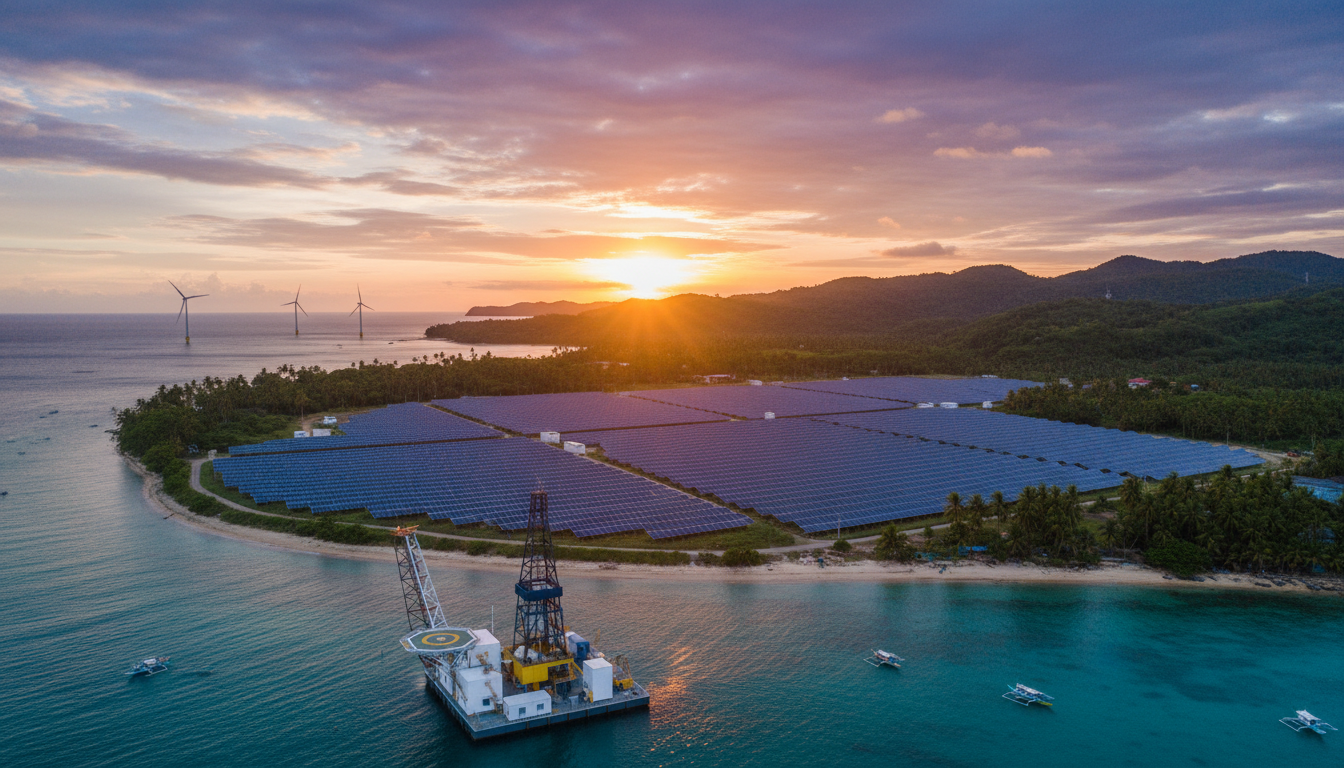
Energy investors are closely watching as French energy titan TotalEnergies, in a pivotal collaboration with renewable energy developer Nextnorth, has officially commenced construction on a substantial 440 MW solar power project in the Philippines. This development signals a significant stride in the energy transition narrative, particularly within the dynamic Southeast Asian market, and underscores TotalEnergies’ aggressive pivot towards low-carbon electricity generation.
The ambitious Ilagan solar facility, nestled in Isabela province, represents a critical investment in the region’s future energy landscape. Its approximately $300 million price tag has been fully financed, a remarkable feat achieved through the combined strength of international financial institutions: Sumitomo Mitsui Banking Corporation, ING Bank, and Standard Chartered. This financing package stands as the largest international funding secured for a solar project in the Philippines to date, highlighting robust investor confidence in the nation’s burgeoning renewable energy sector and TotalEnergies’ strategic direction.
This ground-breaking project is not an isolated venture but rather integrates seamlessly into TotalEnergies’ broader renewable energy expansion strategy across Asia. Just last month, the company announced a monumental $2.2 billion 50/50 joint venture with Abu Dhabi-based Masdar, merging their onshore renewable activities across nine key Asian markets, including the Philippines. This strategic alliance positions TotalEnergies as a formidable player in the continent’s green energy boom, solidifying its commitment to building a diversified, multi-energy portfolio.
Olivier Jouny, SVP Renewables at TotalEnergies, articulated the company’s enthusiasm for the venture. “We are delighted to partner with Nextnorth to initiate construction on this major solar project in the Philippines, thereby significantly contributing to the country’s objective of enhancing renewable energy’s share in its generation mix,” Jouny remarked. He further emphasized the project’s strategic alignment: “These 440 MW will be a vital component of the 9 GW renewables portfolio we are consolidating with Masdar through our 50/50 joint venture across nine Asian countries.” This statement clearly outlines TotalEnergies’ aggressive pursuit of scalable renewable assets to complement its traditional oil and gas operations, a strategy increasingly favored by energy majors seeking to de-risk and diversify their asset base.
Investors should note the ownership structure of the Ilagan project: TotalEnergies holds a commanding 65% stake, with Nextnorth securing the remaining 35%. This arrangement provides TotalEnergies with significant operational control and a larger share of the anticipated revenues from this long-term asset. The facility is on track for commercial operation by the end of 2027, promising a substantial and consistent output. Over its two-decade operational lifespan, the project is projected to generate an impressive 13.5 TWh of electricity, providing a stable revenue stream and contributing meaningfully to TotalEnergies’ growing renewable energy capacity.
The project’s revenue model is meticulously structured to ensure stability and market penetration. Over 50% of the generated electricity is already earmarked for long-term offtake agreements with two prominent Retail Electricity Suppliers, AdventEnergy and PrimeRES. These agreements are crucial for catering to commercial and industrial customers actively seeking to reduce their carbon footprint and enhance their sustainability profiles. This direct supply route addresses a growing demand for green power from businesses eager to meet ESG targets and regulatory requirements.
The remaining power production from the Ilagan solar facility will be sold to the national grid, secured through its award under Round 4 of the Philippines Government’s Green Energy Auction Program (GEAP). The GEAP is a critical government initiative designed to incentivize renewable energy development and ensure a stable supply of clean power, offering developers long-term certainty for their investments. Participation in such government-backed programs provides a de-risked pathway for revenue generation, a key attractive factor for institutional investors.
Miguel Mapa, President and CEO of Nextnorth, underscored the broader societal and economic benefits of the project. “Working alongside TotalEnergies, we are delivering clean, reliable power that supports communities, creates jobs, and advances the Philippines’ transition toward a more energy-independent future,” Mapa stated. His comments highlight the project’s multifaceted impact, extending beyond mere power generation to include job creation, local economic stimulus, and enhanced energy security for the island nation.
For investors focused on the evolving energy landscape, TotalEnergies’ strategic moves in the Philippines and broader Asia Pacific region signal a clear commitment to diversifying its portfolio beyond traditional hydrocarbons. This particular solar investment not only bolsters TotalEnergies’ renewable energy capacity but also positions the company at the forefront of the energy transition in a rapidly developing market. The robust financing, strong partnerships, and clear off-take agreements underpin a promising outlook for this project, reinforcing TotalEnergies’ strategy to become a leading multi-energy company and a significant player in the global renewable energy market. As oil and gas majors continue to navigate the complexities of energy transition, TotalEnergies’ actions provide a compelling case study for long-term strategic investment in sustainable energy solutions.


