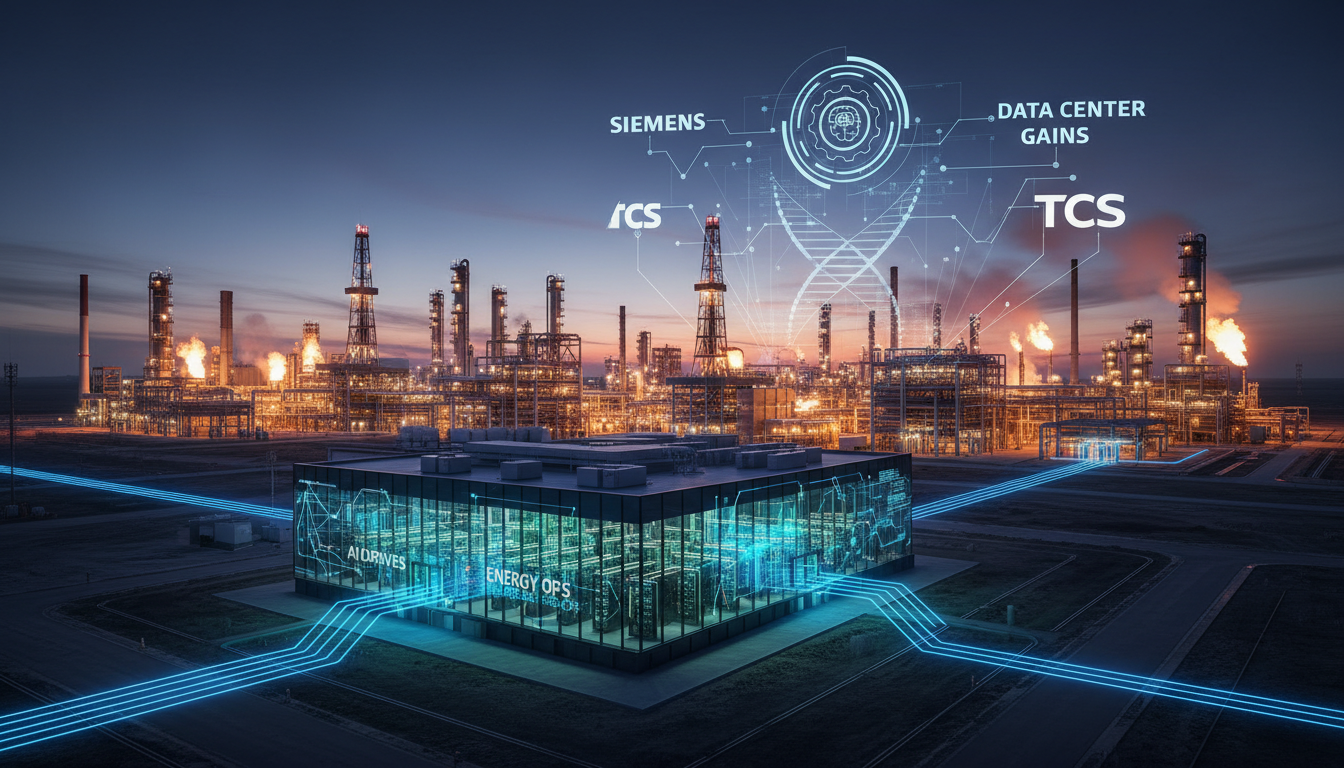
AI Drives Energy Ops, Data Center Value: A Catalyst for Oil & Gas Investors
The strategic expansion of the partnership between Siemens Energy AG and Tata Consultancy Services (TCS) marks a pivotal moment for the energy sector, signaling a profound acceleration in the integration of artificial intelligence (AI) across critical infrastructure. For astute investors in oil and gas, this collaboration isn’t just another tech announcement; it represents a powerful force poised to redefine operational efficiency, enhance asset reliability, and strategically address the rapidly escalating energy demands of the digital economy, particularly from data centers. This analysis will delve into how this alliance positions the energy sector for a future driven by intelligent, self-optimizing systems, directly impacting long-term shareholder value and market stability.
Operational Excellence Through AI: A New Horizon for Oil & Gas
At the heart of this expanded partnership lies a commitment to embedding advanced AI-driven tools into the very fabric of energy operations, from power generation to intricate manufacturing and sophisticated grid management. Technologies such as digital twins, advanced predictive analytics, and comprehensive automation are moving beyond pilot programs to widespread deployment. These are not mere incremental upgrades; they represent a fundamental shift towards systems capable of anticipating failures, streamlining workflows, and minimizing costly downtime. For energy infrastructure investors, this translates directly into improved asset utilization, reduced operational expenditures, and ultimately, enhanced profitability through more resilient and efficient energy delivery.
Consider the impact of digital twins: virtual replicas of physical assets that allow for real-time monitoring, simulation of operational scenarios, and predictive maintenance with unprecedented accuracy. This capability is invaluable in dynamic environments like complex industrial facilities or remote upstream oil and gas operations, where even minor disruptions can lead to significant financial losses. Coupled with predictive analytics, these tools empower operators to transition from reactive troubleshooting to proactive optimization, ensuring peak performance and extended asset lifespans. The adoption of such technologies across the energy value chain, including critical power systems essential for oil and gas production and processing, promises a more stable and predictable investment environment.
In a market where cost discipline is paramount, the efficiencies unlocked by AI are increasingly critical. As of today, Brent crude trades at $110.72, showing a modest daily gain of 0.29%, while WTI is slightly down at $104.59. This stability follows a robust 12.4% surge in Brent over the past two weeks, climbing from $99.36 on April 13th to $111.7 on April 30th. This upward trajectory underscores underlying market strength, yet it also highlights the continued pressure on energy companies to optimize every aspect of their operations to maintain competitive margins. AI-driven solutions offer a direct pathway to achieve this, making every barrel produced more profitable and every unit of energy delivered more reliable.
Powering the Digital Future: Addressing Data Center Energy Demands
A crucial facet of the Siemens Energy and TCS partnership directly addresses one of the most pressing challenges of the digital age: the insatiable energy appetite of data centers. As high-performance computing (HPC) and AI applications proliferate, the energy consumption of these facilities is skyrocketing, placing unprecedented strain on existing power grids. This initiative focuses on advancing the development of “AI-ready” data centers, a critical step towards sustainable digital growth. It emphasizes not just the efficient operation of the data centers themselves, but also the robust power systems, electrification infrastructure, and grid integration required to support this massive demand reliably and sustainably.
Our proprietary reader intent data reveals a strong focus on crude oil trends, with many investors asking for a “base-case Brent price forecast for next quarter” and analyzing the “2026 weekly trend for crude oil.” This clearly indicates a market hungry for predictable performance and stability. The rising energy demands of AI data centers, a key focus of the Siemens-TCS partnership, adds another complex layer to these forecasts. Investors are implicitly asking: how will the energy sector meet this new, massive demand without destabilizing existing supply-demand balances or exacerbating pricing volatility? The partnership’s focus on “AI-ready” data centers and robust power systems directly addresses this growing concern, aiming to ensure that the digital economy’s growth doesn’t disproportionately strain traditional energy supplies and, by extension, impact crude oil prices.
For investors, this segment of the partnership opens new avenues for growth in companies providing advanced power solutions, grid modernization technologies, and sustainable energy infrastructure. It’s a clear signal that the future of energy investment isn’t just about traditional fossil fuels, but also about the intelligent systems that power the digital transformation, creating a dual opportunity for both efficiency gains in conventional operations and strategic expansion into supporting new energy loads.
Forward-Looking Investment Implications and Upcoming Market Signals
The strategic implications of this partnership extend far beyond the immediate operational enhancements. It signals a broader industry shift where technological prowess, particularly in AI and digital integration, will become a key differentiator for energy companies. Investors should scrutinize companies’ commitments to digital transformation and AI adoption as a bellwether for future resilience and competitive advantage. Those investing proactively in these technologies are better positioned to weather market volatility, optimize capital expenditures, and capitalize on new revenue streams.
Looking ahead, the next two weeks bring a flurry of critical data that will offer fresh insights into supply-demand dynamics and operational activity, which AI aims to optimize. This Friday, May 1st, we receive the Baker Hughes Rig Count, followed by the EIA Short-Term Energy Outlook on May 2nd. Next week, the API Weekly Crude Inventory on May 5th and the EIA Weekly Petroleum Status Report on May 6th will provide granular data on inventories and refinery activity. These reports will be repeated on May 8th (Rig Count), May 12th (API Inventory, alongside the IEA Oil Market Report), and May 13th (EIA Weekly Petroleum Status Report). The insights from these reports will be increasingly shaped by how efficiently energy companies manage their assets and plan production, areas where AI-driven tools are poised to make a significant impact on resource allocation and operational decision-making.
This steady stream of market data will highlight the physical realities of the energy sector, while the ongoing digital transformation, exemplified by the Siemens-TCS alliance, provides the tools to navigate these realities more effectively. Companies that can leverage AI to predict demand, optimize maintenance schedules, and improve energy distribution will inherently possess a competitive edge, making them more attractive long-term investments in a dynamic global energy landscape.
Conclusion: AI as a Core Driver of Energy Value
The expanded Siemens Energy and TCS partnership is a powerful testament to AI’s transformative potential within the energy sector. For oil and gas investors, this signifies a crucial inflection point where digital intelligence moves from a supporting role to a core driver of value. By enhancing operational efficiency through digital twins and predictive analytics, while simultaneously addressing the monumental energy demands of data centers, this collaboration lays the groundwork for a more resilient, efficient, and ultimately more profitable energy future. Companies embracing this digital evolution are not just adapting to change; they are actively shaping the next generation of energy infrastructure, offering compelling opportunities for those looking to invest in the nexus of energy and technology.


