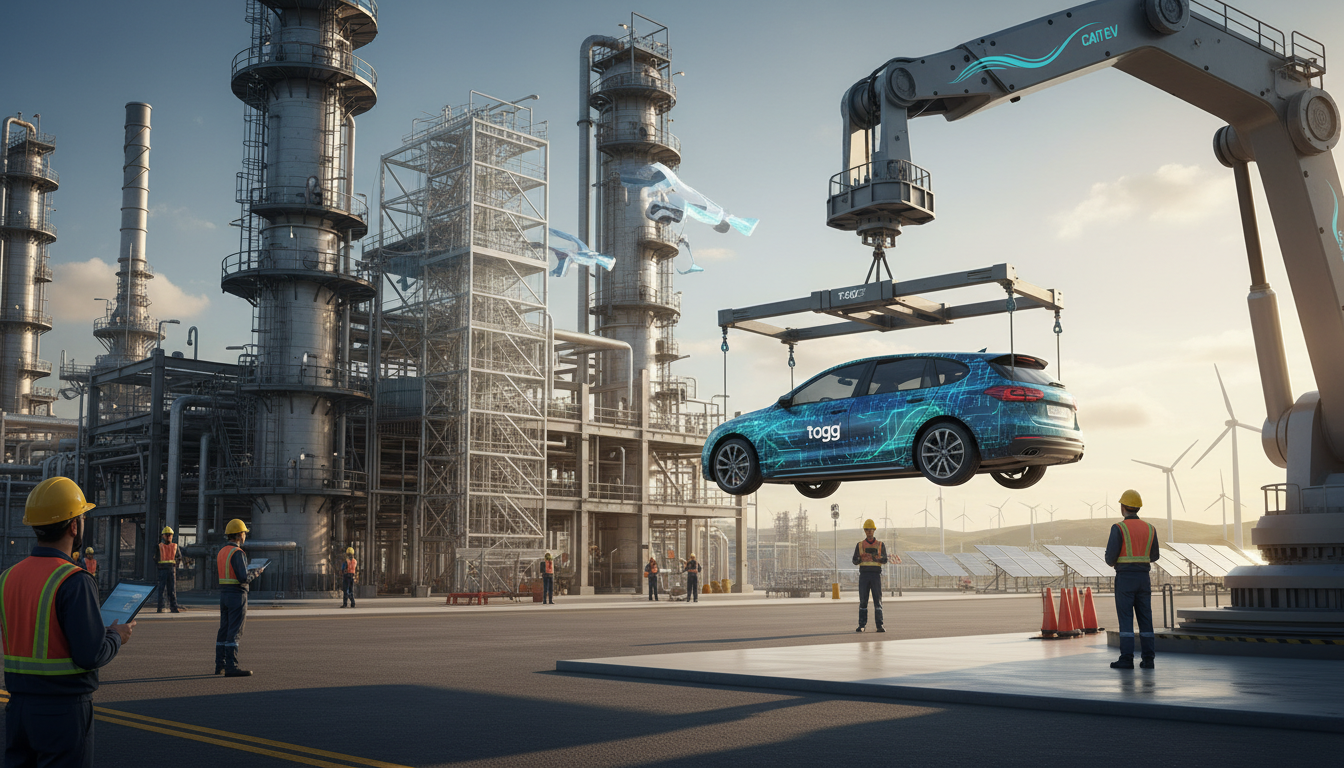
Investors closely monitoring the global energy landscape must note the latest strategic alliance reshaping the future of automotive power. Contemporary Amperex Intelligent Technology (CAIT), the specialized skateboard chassis division of battery behemoth CATL, has formalized a significant partnership with Turkish automaker Togg. Announced on April 29th, this collaboration focuses on developing a state-of-the-art chassis platform for Togg’s upcoming B-segment electric vehicle (EV) family, marking CAIT’s inaugural international passenger vehicle venture for its advanced Bedrock Chassis.
This development sends a clear signal regarding the accelerating pace of electrification, a trend that directly influences long-term projections for oil demand and, consequently, the investment thesis for traditional oil and gas assets. As major global players commit to deep integration in EV component development, the narrative of peak oil demand gains further credence, compelling oil and gas investors to recalibrate their outlooks.
Strategic Collaboration Drives EV Adoption
The alliance leverages CAIT’s formidable Bedrock Chassis technology and extensive engineering prowess. Togg, in turn, will be instrumental in defining the user experience, product specifications, and the digital architecture tailored for its new B-segment vehicle lineup. This cooperative development model is designed to produce three distinct models, all slated for both the Turkish and broader European markets. The first vehicle born from this partnership is ambitiously scheduled for mass production by 2027, a timeframe that underscores the urgency and rapid progress within the EV sector.
For oil and gas investors, such aggressive timelines for new EV model introductions in key growth markets like Turkey and established economies across Europe translate into a tangible erosion of future gasoline and diesel demand. Each new EV rolling off the production line represents a reduction in petroleum consumption over its operational lifetime, collectively contributing to a structural shift in global energy demand patterns.
Bedrock Chassis: A Glimpse into Future Mobility and Energy Consumption
At the heart of this partnership lies the Bedrock Chassis, an integrated intelligent platform built on a “battery-centric” architectural philosophy. This innovative design consolidates critical vehicle components – including the battery module, the electric drive system, the thermal management system, and the chassis domain controller – into a unified structure. By integrating these systems, the chassis transcends its traditional role, transforming into an intelligent hub capable of managing both the vehicle’s energy flow and its motion control. Essentially, it functions as a mobile energy carrier, optimizing efficiency and performance.
Robin Zeng, Chairman and CEO of CATL, highlighted the strategic significance of this deal, stating, “This collaboration represents another important milestone in the global expansion of the CATL Bedrock Chassis following its mass production rollout in the Chinese market. It will also serve as a benchmark project in the field of integrated intelligent chassis, strengthening our global partnerships, accelerating electrification and supporting the transition to low-carbon mobility in emerging new energy markets.” For oil and gas investors, Zeng’s remarks underscore the global ambition behind EV technology deployment, signaling continuous innovation aimed at driving down costs and improving performance, thereby making EVs even more competitive against internal combustion engine (ICE) vehicles.
Togg Chairman Fuat Tosyalı articulated his company’s vision, emphasizing, “We see mobility not merely as a product category, but as a holistic matter of technology and ecosystem. In this direction, we are taking the partnerships we establish beyond conventional supplier relationships and turning them into strategic partnerships that create shared value and build the future together.” Such an ecosystem-focused approach, moving beyond transactional supplier relationships, signifies a deeper, more integrated push towards electrification that could accelerate market penetration beyond current forecasts.
Global Blueprint for Localized EV Penetration
The Bedrock Chassis is being deployed globally through a unique “1+1+1” localization model. This strategy integrates one core chassis technology platform, establishes a dedicated industrial supply chain pathway, and fosters the localized operation of a domestic automotive brand. The objective is to enable the design and production of electric vehicles that are specifically tailored to meet local market demands and preferences, all while leveraging a standardized, cutting-edge technological foundation. The partnership with Togg exemplifies this model, aiming to develop vehicles precisely aligned with Turkish and European consumer needs, simultaneously bolstering the regional EV ecosystem.
From an oil and gas investment perspective, this localization model is particularly impactful. It suggests that the adoption of EVs will not be a monolithic global trend but rather a series of regionally optimized rollouts, potentially accelerating the transition in diverse markets more effectively than a one-size-fits-all approach. This localized manufacturing and development can overcome market-specific hurdles, such as infrastructure limitations or consumer preferences, thus broadening the appeal and accessibility of EVs faster than many might anticipate.
Expanding Footprint and Implications for Energy Markets
The Bedrock Chassis has already achieved mass production in the Chinese market in 2024, marking a global first for an integrated intelligent chassis offered as a standalone product to various passenger vehicle brands. This prior success lends credibility to its international expansion plans.
CAIT continues to broaden its cooperative efforts for the Bedrock Chassis across multiple regions, including Europe and Southeast Asia. The platform’s fundamental design aims to equip emerging automotive markets with the tools to efficiently construct competitive electric vehicle industries, directly supporting the overarching global movement towards lower-emission transportation. Each successful deployment in these regions contributes to the broader narrative of declining reliance on fossil fuels for personal mobility.
For oil and gas sector investors, these developments are not merely news from the automotive industry; they represent structural shifts in energy demand that will shape valuations and strategic decisions for decades. The rapid technological advancements, global expansion strategies, and localized deployment models evident in the CAIT-Togg partnership underscore the imperative for traditional energy companies to accelerate diversification, decarbonization efforts, and strategic capital allocation to navigate an increasingly electrified future. Those who fail to account for the velocity and scale of this transition risk being left behind as the world pivots towards new energy paradigms.


