The deepwater Gulf of America continues to be a crucial frontier for global energy supply, and new advancements in exploration technology are continuously reshaping its investment landscape. TGS and its joint venture partner Viridien have just released initial insights from their Laconia Phase III ultra-long offset ocean bottom node (OBN) survey, revealing significant imaging improvements across the highly prospective Paleogene play. This proprietary data offers a substantial advantage, directly reducing exploration risk and enhancing the perceived value of leases ahead of the anticipated U.S. offshore lease sale BBG 1 (lease sale 262), scheduled for December 10, 2025. For investors eyeing the Gulf’s lucrative potential, understanding the impact of such high-resolution seismic data is paramount in a market characterized by both opportunity and volatility.
Deepwater De-Risking: The Laconia Phase III Edge
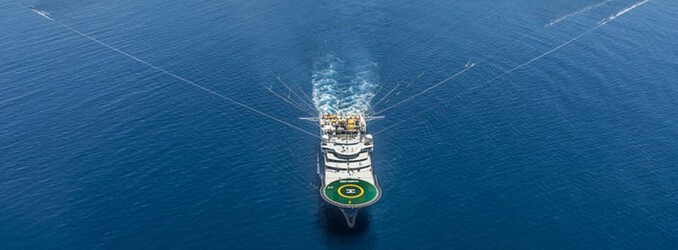
The early results from the Laconia Phase III survey are poised to be a game-changer for deepwater exploration in the Gulf of America. Covering a vast 151-block Outer Continental Shelf (OCS) area, the initial 5Hz Acoustic TLFWI (AFWI) data products are now available, providing unprecedented subsurface clarity. TGS reports a “significant imaging uplift” within the complex Paleogene play, a critical factor for successful hydrocarbon discovery. This enhanced visualization directly addresses one of the biggest challenges in deepwater exploration: geological uncertainty. By providing clearer images of subsurface structures, this data allows exploration companies to make more informed decisions, drastically lowering the financial and operational risks associated with drilling costly deepwater wells. This proprietary dataset is expected to drive competitive bidding and strategic acreage acquisition in the upcoming lease sale, as companies seek to capitalize on this improved geological understanding.
The project’s phased delivery schedule further solidifies its long-term value proposition. Following these early AFWI products, Fast Track 5Hz Elastic TLFWI (EFWI) data is slated for release in the first quarter of 2026, with final 12Hz EFWI volumes expected in January 2027. This progressive enhancement in resolution and detail will continue to refine reservoir characterization and exploration strategies well beyond the initial lease awards, enabling operators to optimize development plans and maximize recovery from one of the Gulf’s most technically demanding basins. The collaboration between TGS and Viridien underscores a commitment to advancing imaging fidelity, which is essential for unlocking the full potential of these deepwater formations.
Navigating Market Volatility with Precision Data
Investing in deepwater projects requires a long-term outlook, yet daily market movements heavily influence sentiment and capital allocation. As of today, the crude oil market presents a challenging picture. Brent Crude is currently trading at $90.38 per barrel, marking a significant 9.07% decline today, with its range fluctuating between $86.08 and $98.97. Similarly, WTI Crude stands at $82.59, down 9.41% within a daily range of $78.97 to $90.34. This sharp downturn is amplified by a broader trend, with Brent having fallen by $22.4, or 19.9%, from $112.78 just two weeks ago on March 30, 2026. Such volatility underscores the inherent risks in oil and gas investments.
In this turbulent environment, the value of high-quality seismic data, such as that from the Laconia Phase III survey, becomes even more pronounced. While the immediate price action of crude oil can cause investor apprehension, superior imaging technology fundamentally alters the risk-reward profile of exploration assets. By significantly reducing geological uncertainty and improving the chances of successful discovery, this data helps to insulate deepwater investments from some of the market’s more extreme fluctuations. It provides a foundational layer of confidence, allowing companies to commit capital to high-potential acreage with a clearer understanding of the subsurface, thereby strengthening their investment thesis against a backdrop of fluctuating commodity prices.
Upcoming Catalysts and Investor Outlooks
The investment community is constantly scrutinizing macro and micro events to gauge market direction, with many investors keenly asking, “what do you predict the price of oil per barrel will be by end of 2026?” and the more immediate, “is WTI going up or down?”. These questions highlight the pervasive uncertainty surrounding future oil prices. Against this backdrop, several key events on the immediate horizon will shape market sentiment. The OPEC+ Joint Ministerial Monitoring Committee (JMMC) Meeting is scheduled for April 19, followed by the full OPEC+ Ministerial Meeting on April 20. Outcomes from these gatherings could directly impact global supply strategies and, consequently, crude prices.
Further influencing short-term market dynamics are the recurring API Weekly Crude Inventory reports on April 21 and April 28, alongside the EIA Weekly Petroleum Status Reports on April 22 and April 29. These reports offer crucial insights into U.S. supply and demand fundamentals. Additionally, the Baker Hughes Rig Count on April 24 and May 1 will provide an indication of drilling activity levels, reflecting industry confidence. While these events drive near-term speculation, the long-term attractiveness of deepwater prospects in the Gulf of America is increasingly tied to the enhanced certainty provided by advanced seismic data. The phased delivery of Laconia III data, extending into Q1 2026 and January 2027, means that companies participating in the December 2025 lease sale will continue to benefit from improving data quality, allowing them to adapt to evolving market conditions with superior geological intelligence.
Unlocking Deepwater Potential and Investment Value
The successful deployment and initial results of the Laconia Phase III survey underscore the critical role of advanced technological capabilities in unlocking new potential within mature basins. The precision and adaptability demonstrated by TGS’s OBN operations team in one of the Gulf’s most technically demanding plays are commendable, ensuring industry-leading data quality. Viridien’s advanced imaging technologies have proven instrumental in revealing the true potential of Paleogene formations in the deepwater Gulf of America.
For investors, this translates directly into tangible value. Improved subsurface clarity means a higher probability of exploration success, reduced dry-hole risk, and the ability to optimize well placement for maximum hydrocarbon recovery. Companies leveraging this high-fidelity data will gain a significant competitive edge in lease sale BBG 1, positioning themselves to acquire prime acreage with a clearer understanding of its resource potential. This ultimately leads to more efficient capital deployment and potentially higher returns on investment in deepwater exploration, solidifying the Gulf of America’s position as a vital region for future energy production.