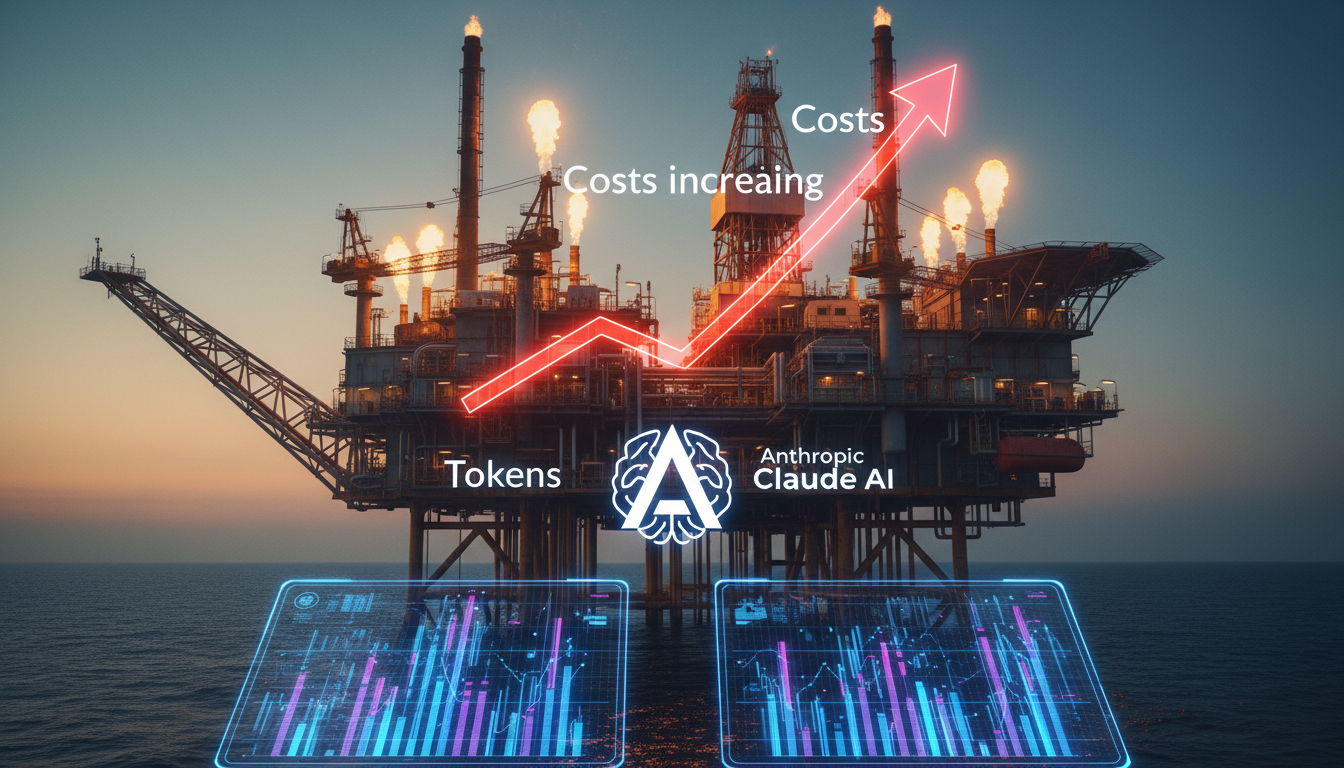
The global energy landscape is undergoing a profound transformation, driven not only by traditional industrial demands but increasingly by the insatiable appetite of artificial intelligence. Recent shifts in pricing structures for leading AI models, such as Anthropic’s Claude Code, offer a stark illustration of this burgeoning energy intensity, signaling significant implications for power generation, grid infrastructure, and ultimately, the oil and gas sector.
For investors accustomed to tracking barrels and therms, understanding the intricate economics of AI compute power is becoming critically important. What appears, on the surface, to be a mere adjustment in AI software costs is, in fact, a powerful indicator of the escalating physical resources—primarily electricity—required to fuel the digital revolution. This nexus between digital advancement and energy consumption presents both unprecedented challenges and lucrative opportunities for energy producers and infrastructure developers.
AI Compute Costs Surge: A Bellwether for Energy Demand
In a telling development, Anthropic, a prominent AI developer, has significantly recalibrated its public cost estimates for enterprise users of its Claude Code platform. Just weeks ago, the projected daily expenditure for an active developer stood at approximately $6, with costs for the vast majority of users—90%—remaining below $12 per active day. This benchmark, documented in archived records prior to April 16th, reflected a certain baseline of operational expense for advanced AI applications.
However, the new figures paint a dramatically different picture. Anthropic now estimates the average cost per developer per active day at $13, with a monthly average ranging between $150 and $250. Crucially, the threshold for 90% of users has more than doubled, now expected to stay under $30 per active day. This substantial upward revision in token expenditure underscores the escalating computational demands inherent in developing and deploying sophisticated AI solutions. For energy investors, these numbers are not just about software pricing; they are a direct proxy for the rapidly intensifying energy draw required by the underlying infrastructure.
Tokens, in the realm of large language models like Claude, serve as the fundamental units of processing. They are the digital building blocks, representing how AI systems convert human language into numerical inputs and outputs to generate responses. As AI models become more complex and their applications more pervasive, the volume of tokens processed skyrockets, directly translating into a greater need for raw computational power. This, in turn, fuels an ever-growing demand for electricity.
The observation of this cost escalation, first highlighted by tech and business PR firm CEO Ed Zitron, reverberates across the entire AI ecosystem. From individual developers leveraging AI tools to multinational corporations integrating advanced agents, the financial burden of compute is on a steep upward trajectory. This trend is not confined to a single AI provider; it is a systemic shift driven by the exponential increase in AI sophistication and usage.
The Data Center Energy Footprint: A Growing Imperative for Oil & Gas
The escalating costs of AI are a direct consequence of the immense computational infrastructure required to power these models. Data centers, the physical manifestation of the digital economy, are becoming increasingly energy-intensive. The rise of advanced AI agents, capable of complex reasoning and autonomous action, is pushing frontier AI model providers and hyperscale cloud operators to their absolute limits. The demand for graphics processing units (GPUs) and the electricity to run them is unprecedented, placing enormous strain on existing power grids.
This surge in compute demand directly translates into a parallel surge in electricity demand. Data centers, once considered significant but manageable consumers of power, are now projected to become among the largest and fastest-growing loads on global electricity grids. Every token processed, every AI query answered, and every machine learning algorithm trained requires gigawatts of reliable power, often 24/7. This fundamental link between digital innovation and energy supply creates a compelling investment thesis for the oil and gas industry.
Natural gas, in particular, stands poised to play a critical role in this evolving energy landscape. As intermittent renewable sources like solar and wind continue to expand, their variability necessitates reliable, dispatchable baseload power. Natural gas-fired power plants offer the flexibility and stability required to back up renewable generation, ensuring continuous power supply for energy-hungry data centers. For oil and gas companies with existing power generation assets or those looking to diversify into robust energy infrastructure, the AI boom presents a clear pathway for strategic growth.
Infrastructure Strain and Strategic Investment Opportunities
Recent events at Anthropic further underscore the profound challenges posed by burgeoning AI usage. The company faced a user backlash when Claude Code appeared to be temporarily removed for Pro users on its pricing page. While Anthropic clarified it was a test affecting a small percentage of new users, the underlying message was clear: existing infrastructure and subscription models were struggling to keep pace with demand. Amol Avasare, Anthropic’s head of growth, candidly admitted that current subscription plans “weren’t built for this,” citing a dramatic increase in engagement per subscriber. This revelation highlights the immense, unanticipated pressure on computational resources.
For energy investors, this paints a vivid picture of the scale of investment required in power generation and transmission. The need for new power plants, upgraded grid infrastructure, and efficient energy management solutions will only intensify. Companies involved in the extraction and transportation of natural gas, as well as those specializing in grid modernization and smart energy solutions, are uniquely positioned to capitalize on this megatrend. The demand for robust, reliable energy is not merely a cost factor for AI companies; it is a critical enabling factor for the entire digital economy.
Furthermore, the geographic distribution of these new data centers will dictate regional energy demand spikes. States and nations with abundant, affordable natural gas resources and strong grid infrastructure will likely attract significant data center investment, creating localized booms for energy providers. This prompts energy firms to consider strategic partnerships with technology companies, invest in distributed power generation, and explore innovative solutions for grid resilience and capacity expansion.
The Long-Term Outlook: Energy as the Foundation of AI Progress
As AI continues its rapid advancement, evolving from niche applications to a foundational technology across industries, its energy footprint will only grow. The initial cost adjustments observed with Claude Code are likely just the beginning of a broader trend reflecting the true cost of scaling AI. This necessitates a proactive approach from the energy sector to meet future demands, ensuring that the digital revolution does not outpace the physical resources required to sustain it.
Investors in oil and gas must recognize that the future of energy is intricately linked with the future of technology. The escalating energy requirements of AI offer a powerful, long-term demand driver for reliable power generation, making natural gas a crucial component of the energy mix. Companies that strategically invest in expanding their power generation capacity, modernizing grid infrastructure, and exploring innovative energy solutions will be best positioned to thrive in this new era where silicon brains run on carbon fuels (or the electricity derived from them). The convergence of bits and watts is creating a transformative landscape, and energy companies stand at the very foundation of this unprecedented technological boom.


