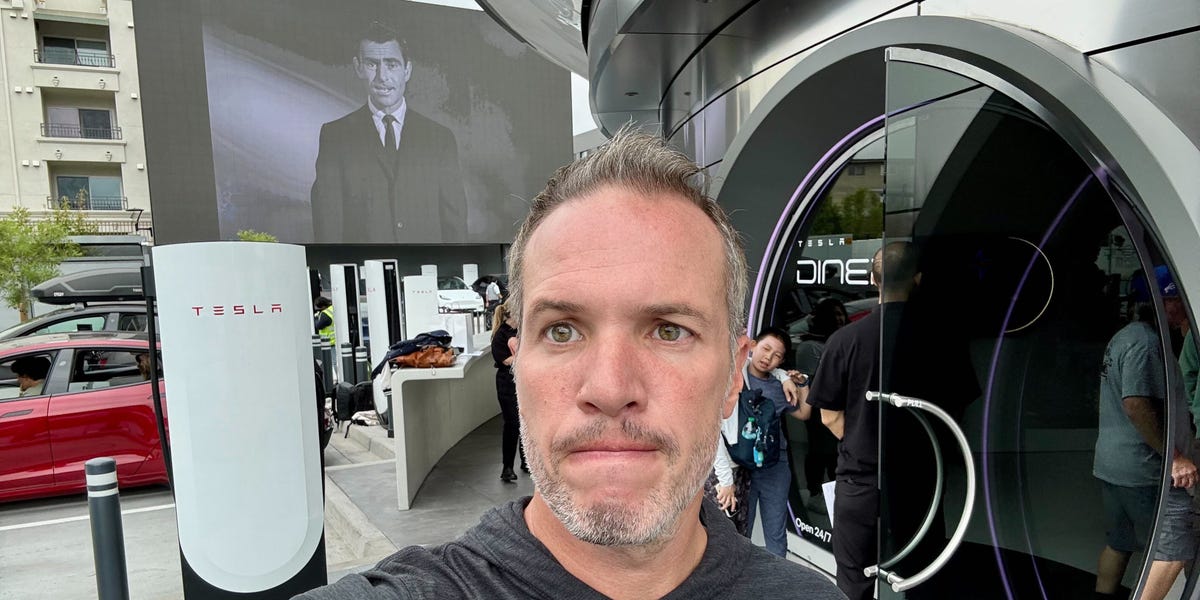
The recent grand opening of a prominent EV manufacturer’s new retro-futuristic diner and charging station in West Hollywood is more than just a culinary curiosity; it represents a significant strategic move that underscores the evolving landscape of consumer energy and mobility. While seemingly a foray into hospitality, this initiative is a potent symbol of the long-term energy transition, signaling an aggressive push to integrate electric vehicle ownership into a broader lifestyle experience. For oil and gas investors, this development, alongside a complex tapestry of market fundamentals and upcoming events, demands a nuanced understanding of both immediate market dynamics and the accelerating pace of structural change within the global energy matrix.
The Strategic Play Beyond the Plate
This new establishment, featuring a unique blend of nostalgia and high-tech, complete with roller-skating servers, drive-in screens, and a humanoid robot, aims to create an immersive brand experience. Crucially, it also houses the world’s largest urban V4 Supercharger hub. This move extends beyond simply selling cars; it’s about selling an entire ecosystem and lifestyle. By creating a destination that pairs charging infrastructure with entertainment and dining, the company is directly addressing range anxiety and the convenience factor, which remain key hurdles for widespread EV adoption. For incumbent oil and gas players, this signifies a growing competitive front that extends beyond fuel sales to capturing consumer mindshare and daily routines. The strategy is to normalize EV ownership by making it an appealing, integrated part of modern life, thereby gradually eroding the cultural and practical dominance of gasoline-powered vehicles and their associated infrastructure.
Market Realities vs. Future Narratives
Despite the futuristic vision presented by such EV-centric developments, the current state of global energy markets remains firmly rooted in traditional fuels. As of today, Brent crude trades at $94.88 per barrel, a slight dip of 0.05% in intraday trading, having moved within a range of $94.42 to $95.01. West Texas Intermediate (WTI) crude, meanwhile, holds at $91.31, marking a modest gain of 0.02% with a day range of $90.52 to $91.50. Gasoline prices reflect this underlying strength, hovering around $2.99 per gallon. This current stability, however, follows a notable softening in recent weeks, with Brent having declined by $13.43, or 12.4%, from $108.01 on March 26 to $94.58 on April 15. This downward trend suggests a market grappling with shifting demand expectations, potential inventory builds, or a re-evaluation of geopolitical risk premiums. While the EV sector continues to innovate and expand its footprint, these robust crude prices and gasoline demand figures underscore the persistent, immediate reliance on fossil fuels that will continue to drive significant investment opportunities and challenges for the foreseeable future. The juxtaposition highlights the dual reality investors must navigate: a present dominated by traditional energy and a future being actively reshaped by new technologies and consumer behaviors.
Investor Focus: Navigating Short-Term Volatility and Long-Term Shifts
The proprietary data from our reader intent signals that many investors are keenly focused on building a base-case Brent price forecast for the next quarter and understanding the consensus 2026 Brent outlook. This immediate focus on price discovery is directly tied to a series of critical upcoming calendar events. The market will closely watch the OPEC+ Joint Ministerial Monitoring Committee (JMMC) meeting on April 18, followed by the Full Ministerial meeting on April 20. Any signals regarding production quotas, compliance levels, or forward guidance from these gatherings will directly influence short-term price trajectories and shape investor sentiment for the coming months. Beyond OPEC+, the weekly API and EIA crude inventory reports on April 21/22 and April 28/29, respectively, will provide vital insights into U.S. supply and demand balances, acting as key indicators for market tightness or surplus. Furthermore, the Baker Hughes Rig Count on April 17 and April 24 offers a pulse check on North American drilling activity. Investors are also asking about the operational health of Chinese ‘teapot’ refineries this quarter, recognizing that demand from the world’s largest crude importer is a significant determinant of global market dynamics. While these events dictate immediate trading strategies, the long-term strategic moves by EV companies, like integrating charging into lifestyle hubs, represent a foundational shift that slowly but steadily challenges the terminal demand horizon for oil. Savvy investors must weigh the impact of these cyclical and event-driven market movements against the underlying, secular trends transforming the energy landscape.
The Road Ahead: Implications for Oil & Gas Investment
The opening of the EV-branded diner serves as a vivid reminder that the energy transition is not merely a theoretical concept but a tangible, consumer-facing reality. While the immediate impact on global oil demand from a single diner is negligible, the cumulative effect of such strategic infrastructure build-outs by electric vehicle leaders cannot be ignored. For oil and gas investors, this necessitates a proactive approach to portfolio management. Companies with strong balance sheets, diversified energy portfolios, and a clear strategy for reducing carbon intensity will be better positioned to navigate this evolving environment. Investment decisions must increasingly factor in the long-term demand destruction curve for liquid fuels, even if that curve is gradual and subject to geopolitical and economic variables. The focus should be on operators demonstrating capital discipline, investing in high-return, low-cost barrels, and exploring opportunities in transitional energies, such as natural gas, carbon capture, or hydrogen. The oil and gas sector will continue to play a critical role in meeting global energy needs for decades, but the competitive landscape is undeniably shifting. Monitoring both the immediate fundamentals driven by OPEC+ decisions and inventory reports, alongside the accelerating pace of energy diversification exemplified by innovative EV infrastructure, will be paramount for sustained investment success.


