The health of the global industrial sector often serves as a crucial barometer for overall economic vitality, and by extension, for the trajectory of global energy demand. Recent disclosures from industrial titans like Caterpillar and Eaton are flashing cautionary signals, suggesting that escalating trade tensions are beginning to inflict tangible financial pain. For investors navigating the volatile waters of oil and gas markets, these developments are not merely isolated industrial woes; they represent potential headwinds for commodity prices and the broader energy investment landscape.
Following a period where industrial equities were among Wall Street’s strongest performers, recent quarterly results have introduced a dose of reality. Shares of both Caterpillar and Eaton experienced declines after their latest financial updates failed to meet investor expectations, directly attributing profit erosion and revised outlooks to the effects of tariffs. This unsettling trend casts a shadow over a sector that, until recently, had been a favorite for capital deployment, signaling a potential slowdown that could cascade across the global economy and, consequently, into energy markets.
Caterpillar’s Profit Hit: A Tariff-Induced Downturn
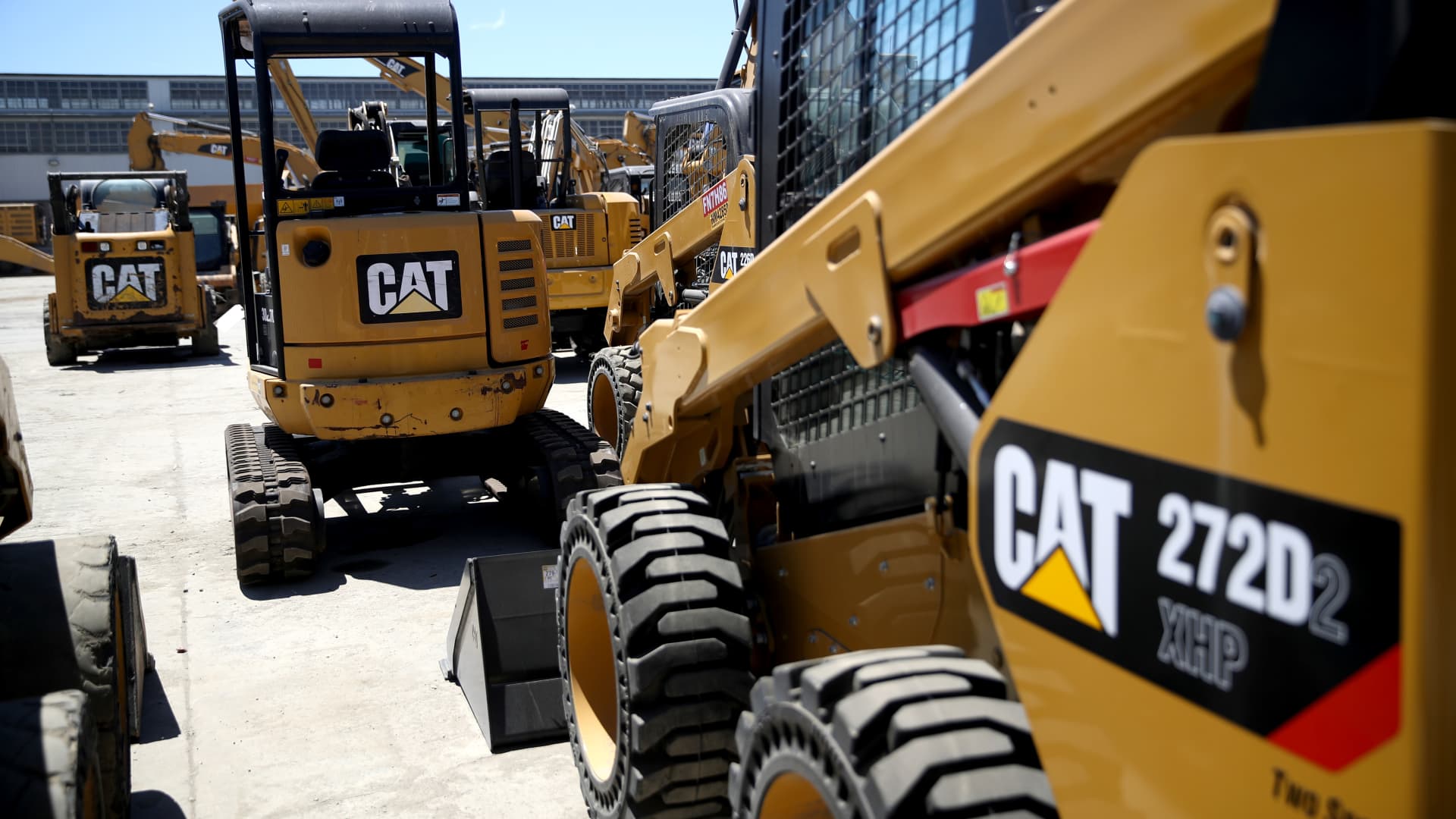
Caterpillar, a bellwether for global construction and mining activity, revealed a significant 18% decline in its operating profit compared to the prior year. This translates to a drop from a robust $3.48 billion to $2.86 billion, a reduction the company explicitly attributed to “unfavorable manufacturing costs,” largely driven by the impact of higher tariffs. Digging deeper into their operational segments, the construction division witnessed a particularly sharp 29% plunge in profits year-over-year, a direct consequence of both less favorable pricing environments and the burden of increased tariffs.
Similarly, the resources segment, critical for the mining and quarry industries – sectors that consume vast amounts of fuel and lubricants – experienced a 25% profit reduction, again citing elevated manufacturing expenses tied to the tariff regime. These figures paint a stark picture: tariffs are not just abstract policy measures; they are directly eroding the bottom line of foundational industrial players. For oil and gas investors, a weakening Caterpillar signals reduced demand for heavy machinery, slower development in resource extraction, and potentially less robust industrial project activity, all of which directly impact energy consumption and upstream investment.
Eaton’s Guidance Miss Underscores Sector Vulnerability
Adding to the industrial sector’s emerging concerns, power management company Eaton also delivered disappointing news to investors. Their third-quarter earnings guidance, projected between $3.01 and $3.07 per share, fell short of Wall Street’s consensus expectation of $3.09 per share. While a seemingly minor miss, this guidance from another industrial heavyweight further reinforces the narrative that economic pressures, particularly those stemming from trade disputes, are permeating beyond individual enterprises to affect broader industry forecasts.
Eaton’s business, which spans electrical, hydraulic, and aerospace systems, is deeply intertwined with global manufacturing and infrastructure development. A conservative outlook from such a diversified industrial conglomerate suggests a pervasive sentiment of caution across various industrial verticals. For energy investors, such misses signal a potential slowdown in industrial capital expenditure and operational activity, which could temper future demand for petroleum products and natural gas needed for manufacturing processes and electricity generation.
Broader Industrial Sector Momentum Faces Headwinds
For much of the year, the industrial sector has been a darling on Wall Street, with the Industrial Select Sector SPDR Fund (XLI) posting an impressive gain of over 14%, trailing only the utilities sector which gained more than 15%. This robust performance suggested resilience, yet the recent earnings reports from Caterpillar and Eaton, alongside aerospace parts manufacturer TransDigm’s 7% stock decline and reduced annual outlook, are challenging this optimistic view.
The cumulative effect of these announcements is casting a long shadow, suggesting that the industrial sector’s momentum may be unsustainable in the face of persistent trade friction. An industrial sector facing decelerating growth implies fewer new projects, less factory output, and ultimately, a reduced need for the energy products that power these operations. This shift from a high-growth outlook to one tempered by trade policy adds a layer of complexity for energy investors forecasting future demand scenarios and evaluating the long-term prospects of energy equities.
Tariffs: A Direct Threat to Manufacturing Profitability
The explicit mention of “tariffs” and “unfavorable manufacturing costs” in company reports underscores the direct financial impact of trade protectionism. These duties increase the cost of imported raw materials and components, forcing manufacturers to either absorb these higher costs, pass them on to consumers (potentially hurting demand), or seek alternative, often more expensive, supply chains. This complex dynamic erodes profit margins and creates significant uncertainty, discouraging investment and expansion. For the oil and gas industry, this means slower development of new infrastructure, reduced demand for heavy machinery, and a generally more cautious economic environment that suppresses overall energy consumption.
The ripple effect is profound: higher input costs for manufacturers translate into potentially lower capital expenditure, reduced factory output, and ultimately, a subdued demand profile for industrial-grade fuels, lubricants, and natural gas used in processes. This creates a challenging environment for downstream refiners and petrochemical producers, as well as for midstream companies whose throughput volumes are tied to industrial activity.
Economic Ripple Effect on Global Energy Markets
The interconnectedness of the global economy means that a slowdown in the industrial sector inevitably ripples through to energy markets. Industrial activity is a primary driver of demand for crude oil (for transportation, petrochemical feedstocks), natural gas (for power generation, industrial processes), and refined products. When factories scale back production, shipping volumes decrease, and new infrastructure projects are delayed, the underlying demand for these energy commodities softens.
This can exert downward pressure on crude oil benchmarks like WTI and Brent, impact natural gas prices, and affect the profitability of upstream producers, midstream operators moving product, and downstream refiners. Energy investors must therefore consider these industrial sector warnings as early indicators of potential shifts in the supply-demand balance for global energy. A world where fewer goods are being manufactured and transported is a world with less demand for the fuels that power it, directly impacting the valuations of oil and gas assets.
Investor Outlook: Monitoring Industrial Health for Energy Signals
In conclusion, the recent earnings disappointments from major industrial players serve as a critical alarm for the broader economic outlook. While the oil and gas sector often operates on its own unique supply-demand fundamentals, it is inextricably linked to the pulse of global industrial health. The current environment, marked by significant tariff-induced cost pressures on manufacturing giants, signals a potential deceleration in economic activity that could directly translate into softer energy demand growth.
Astute energy investors should closely monitor these industrial indicators, adjusting their strategies to account for the potential impact on commodity prices, energy equities, and the overall investment climate within the oil and gas industry. The message is clear: what hurts industrials today could very well temper energy markets tomorrow, necessitating a cautious yet informed approach to portfolio management in the energy sector.