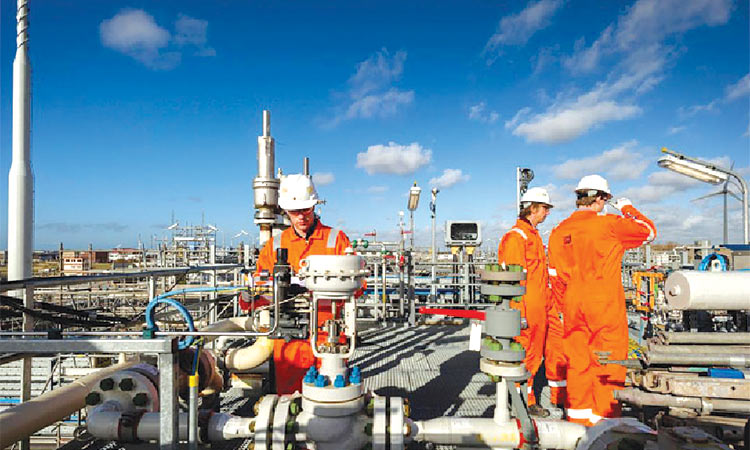
The UK North Sea continues its strategic evolution, and a recent major contract award by TAQA UK to offshore contractor Allseas for the decommissioning of the Brae Alpha platform topsides marks a significant inflection point for investors. This isn’t merely a logistical undertaking; it represents a substantial investment in the lifecycle management of mature assets, offering a glimpse into the future financial landscape of the basin. For investors tracking the energy transition and the specialized services sector, TAQA’s move underscores a proactive approach to late-life asset management and environmental stewardship, a trend that carries significant implications for sector valuations and strategic positioning.
TAQA’s Strategic Pivot in the Mature North Sea
TAQA UK’s decision to entrust Allseas with the engineering, preparation, removal, and disposal (EPRD) contract for Brae Alpha is more than just a contract award; it’s a clear signal of their strategic commitment to managing their mature portfolio. The Brae Alpha platform, a cornerstone of UK energy security since 1983, has produced over 636 million barrels of oil equivalent. Its removal, involving the 33,000-tonne topside and 12,000-tonne upper jacket in two separate campaigns starting later this year, is a monumental task.
This initiative builds on TAQA’s existing extensive decommissioning work with Allseas, which includes the largest single offshore decommissioning contract ever awarded in the UK for the North Cormorant, Tern, Eider, and Cormorant Alpha platforms. This consistent engagement highlights TAQA’s leadership in this complex field. Furthermore, the company’s commitment to reusing or recycling at least 95% of recovered topsides material aligns with growing investor demand for robust environmental, social, and governance (ESG) practices. As TAQA transitions multiple assets into post-production, having ceased output at East Brae in 2025 and four Northern North Sea platforms in 2024, their strategic focus is shifting, and investors need to recalibrate their valuation models to account for these significant expenditures and the long-term benefits of de-risking balance sheets from future liabilities.
Market Volatility and Decommissioning Economics
The timing of such a significant decommissioning program occurs against a backdrop of considerable oil market volatility. As of today, Brent crude trades at $98.15 per barrel, down 1.25% for the day, having ranged between $97.92 and $98.67. This downward movement is part of a broader trend; over the past two weeks, Brent has seen a significant correction, dropping from $112.57 on March 27th to $98.57 yesterday, a decline of over 12%. WTI crude has followed a similar trajectory, currently at $89.8, down 1.5%.
This market dynamic directly impacts the economics of both continued production and decommissioning. While higher oil prices can extend the life of marginal fields, a sustained period of lower prices can accelerate decommissioning decisions for older, less efficient assets. However, lower prices also mean reduced operating cash flows, potentially making it more challenging for operators to fund these capital-intensive decommissioning projects. Investors must therefore consider how TAQA’s proactive decommissioning strategy positions them to manage these costs, rather than deferring them into an uncertain future. The substantial costs associated with these projects, while necessary, will influence cash flow projections and balance sheet health, especially if crude prices remain subdued, a key concern for many of our readers.
Navigating Future Headwinds: Upcoming Events and Their Impact
The broader oil and gas investment landscape is heavily influenced by a series of upcoming events, which our readers closely monitor. The impending OPEC+ Joint Ministerial Monitoring Committee (JMMC) meeting tomorrow, April 17th, followed by the full Ministerial Meeting on April 18th, looms large. Any decisions regarding production quotas will directly impact global supply and, consequently, crude prices. A move towards increased supply could further pressure prices, intensifying the economic considerations for both producers and service providers in the decommissioning sector.
Furthermore, investors will closely monitor the API and EIA weekly crude inventory reports on April 21st/22nd and April 28th/29th. These reports provide critical insights into demand trends and storage levels, which are key indicators of market health. Coupled with the Baker Hughes Rig Count on April 24th and May 1st, which offers a pulse on upstream drilling activity, these events collectively shape the investment thesis for oil and gas. For companies like Allseas, whose specialized services are in high demand for decommissioning, a stable and predictable oil price environment, shaped by these macro events, can influence future project pipelines and contract values. Investors actively seeking to understand these market forces frequently ask about OPEC+ current production quotas and the models powering our real-time Brent crude price responses, underscoring the critical need for timely and accurate data in this dynamic environment.
Decommissioning as a Growing Investment Niche
Our proprietary reader intent data reveals a sophisticated investor base, keenly interested not just in upstream production, but also in the underlying data sources and analytical tools that power our market insights. Many inquire about the data sources powering our market data and the utility of our EnerGPT platform, reflecting a desire for robust, transparent analysis. This extends to understanding the strategic implications of developments like the Brae Alpha decommissioning.
While often viewed as a cost center, decommissioning is rapidly evolving into a significant and specialized market segment within the broader oil and gas investment universe. The sheer scale of the Brae Alpha project, requiring Allseas’ Pioneering Spirit – the largest heavy-lift vessel in the world – highlights the advanced engineering and logistical capabilities now demanded. For investors, this signifies a growing opportunity in specialized service providers like Allseas, which are uniquely positioned to capture market share in a segment driven by regulatory requirements, asset maturity, and environmental commitments. Companies like TAQA, by proactively addressing their decommissioning liabilities, are demonstrating prudent long-term capital management, a factor increasingly weighted by investors. Their commitment to managing the entire lifecycle of their assets, supported by robust data and strategic partnerships, suggests a resilient and forward-thinking approach that merits close attention.