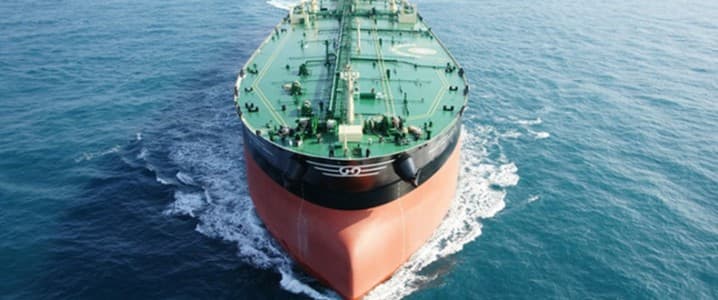
The global oil and gas investment landscape is rarely static, but recent movements in the crude tanker market signal a notable shift that demands investor attention. August saw an undeniable resurgence in crude carrier freight rates, a powerful indicator of fundamental changes in global trade flows rather than fleeting market noise. While product tankers largely languish amidst overcapacity, crude carriers are demonstrating robust health, driven by geopolitical realignments and the inherent economics of longer voyages. This divergence presents a clear directional signal for investors navigating the complex energy transportation sector.
Crude Carriers Command the Waves as Product Tankers Drift
The latest market intelligence paints a clear picture of strength in the crude tanker segment. August witnessed a substantial rally across key crude carrier classes. Suezmax rates, for instance, surged an impressive 34% month-on-month, with the critical West Africa–US Gulf Coast corridor experiencing an even more dramatic 38% climb. Not to be outdone, Very Large Crude Carriers (VLCCs) saw rates increase by 19% on Middle East–East routes, reflecting robust demand from Asian refiners. Even the workhorse Aframax class registered a healthy 23% gain on Caribbean–US East Coast voyages.
This vigorous performance stands in stark contrast to the subdued environment for product tankers, those vessels carrying refined petroleum like gasoline and diesel. Most clean tanker routes saw rates soften, with the lone exception of the Middle East–East corridor, which managed a modest 13% rise. This stark divergence is telling: crude carriers are directly benefiting from the re-routing of global crude supplies, which translates into increased ton-mile demand. Product tankers, however, remain hampered by lingering refinery overcapacity and persistent pressure on refined product margins, creating a two-speed market within the broader shipping sector.
Geopolitics Fuels Longer Voyages and Higher Costs
The timing of this crude tanker resurgence is no coincidence; it is deeply intertwined with ongoing geopolitical shifts and strategic energy decisions. Persistent adjustments to OPEC+ production quotas, the specter of additional sanctions on Russian crude, and the enduring pull of the U.S. Gulf as a crucial export hub are all contributing factors. Each barrel rerouted across longer distances directly inflates freight costs and, consequently, tanker profitability. For example, a Suezmax embarking on a longer journey from West Africa to the U.S. Gulf becomes significantly more valuable when European markets are increasingly sourcing crude from the Americas, and Asian buyers are balancing Russian supply with broader geopolitical considerations.
This dynamic plays out against a backdrop of fluctuating crude prices. As of today, Brent crude trades at $98.27, reflecting a 1.13% decline over the past 24 hours, with a day range between $97.92 and $98.67. Similarly, WTI crude stands at $89.88, down 1.41%. Our proprietary data shows Brent crude has experienced a more significant softening over the past two weeks, dropping from $112.57 on March 27th to $98.57 on April 16th – a decline of 12.4%. Yet, despite this broader easing in crude benchmarks, the strength in crude tanker rates persists. This reinforces the argument that the current tanker market strength is driven by structural changes in trade routes and ton-mile demand, rather than simply a reflection of rising commodity prices. Investors should recognize this decoupling: even with some price volatility in the underlying commodity, the *movement* of that commodity is becoming more lucrative for carriers.
Investor Focus: Unpacking OPEC+ and Crude Price Drivers
Our proprietary reader intent data reveals a strong focus among investors on the foundational elements of global oil supply and pricing. This week, we’ve observed a significant uptick in inquiries regarding “OPEC+ current production quotas” and “the current Brent crude price.” This directly underscores investor efforts to understand supply-side dynamics and price discovery mechanisms, which are inherently linked to the demand for crude transportation. The recent surge in crude tanker rates provides a tangible real-world outcome of these very macro forces that investors are actively tracking.
When OPEC+ adjusts quotas, or geopolitical events force buyers to seek alternative supply chains, the immediate effect is often a reshuffling of shipping routes. This creates longer voyages, pushes up demand for available tankers, and ultimately translates into higher freight rates. The market is effectively pricing in the increased complexity and distance involved in matching global supply with demand. For investors, understanding these linkages is critical: the strength in tanker rates is not merely a shipping story, but a reflection of the broader energy market’s response to supply constraints and geopolitical pressures, directly answering the ‘how’ and ‘why’ behind crude price movements and supply stability.
Navigating Future Headwinds and Opportunities
Looking ahead, the calendar of upcoming energy events offers several potential catalysts that could further influence crude tanker demand and rates. The next 14 days are packed with key announcements, most notably the OPEC+ Joint Ministerial Monitoring Committee (JMMC) meeting on April 18th, followed by the full OPEC+ Ministerial Meeting on April 20th. Any decisions regarding production levels or compliance could directly impact trade flows, either by tightening supply further and necessitating more long-haul movements, or by easing restrictions and potentially altering regional demand balances.
Beyond OPEC+, weekly data releases like the API and EIA Crude Inventory reports (due April 21st/22nd and April 28th/29th) provide crucial insights into U.S. supply and demand, which directly influence U.S. export volumes. Furthermore, the Baker Hughes Rig Count reports (April 17th and 24th) offer a forward-looking perspective on potential U.S. crude production trends. An increase in U.S. output, particularly from the Permian Basin, could bolster crude exports from the U.S. Gulf, a key driver for Suezmax and Aframax demand. Investors should monitor these events closely, as they will undoubtedly shape the operational environment for crude carriers in the near term, dictating both volume and voyage length.
Investment Implications: Riding the Crude Carrier Wave
For discerning investors, the message from the tanker market is clear: the underlying structural demand for crude transportation, particularly on longer routes, remains robust. While the overall crude market has seen some price softening, with Brent down 12.4% over the past two weeks, the persistent strength in crude tanker rates indicates that the ‘miles equal money’ equation is firmly in play. This suggests that operators with significant exposure to Suezmax, VLCC, and Aframax crude carriers are well-positioned to capitalize on ongoing geopolitical realignments and evolving trade patterns.
Conversely, the outlook for product tankers appears more challenging. With gasoline prices holding steady at $3.09 today, and broad refinery overcapacity persisting, the path to recovery for this segment remains longer and more arduous. Investors should carefully differentiate between these two distinct shipping segments. Focusing on crude carriers that benefit from increased ton-mile demand, driven by strategic energy shifts and supply chain reconfigurations, offers a compelling investment thesis in the current environment. The market is rewarding efficiency in crude movement, creating a potential upside for those positioned correctly within the shipping value chain.


