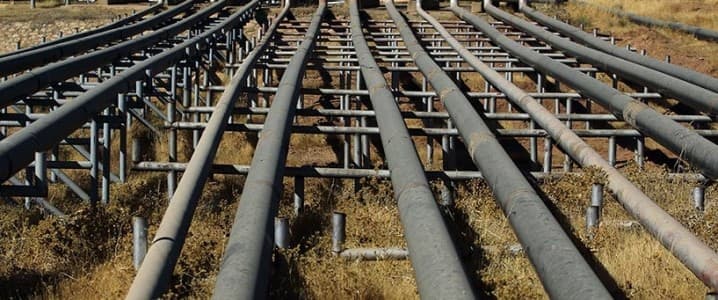
The Kirkuk-Baniyas Revival: A Strategic Inflection Point for Middle East Energy
The proposed restoration of the Kirkuk-Baniyas oil pipeline represents far more than a logistical undertaking; it signals a profound recalibration of energy geopolitics in the Middle East with significant implications for global oil markets and investor portfolios. This strategic corridor, once capable of channeling up to 300,000 barrels per day (bpd) from Iraq to Syria’s Mediterranean coast, has lain dormant for decades due to conflict and sanctions. Its potential revival now places it at the nexus of regional power struggles, supply diversification efforts, and the ever-present drive for energy security, demanding close attention from discerning investors.
Geopolitical Motivations and Market Diversification
For Damascus, reconnecting the Kirkuk-Baniyas pipeline offers a lifeline. The Syrian caretaker government, through its Energy Minister Mohammed al-Bashir’s upcoming visit to Baghdad, is actively pursuing a strategy to secure critical transit revenues, drastically reduce its reliance on costly maritime oil imports, and re-establish itself as a vital regional energy transit hub. This move could inject much-needed capital and stability into a nation grappling with persistent economic challenges.
Baghdad’s motivations are equally compelling, centered on strategic diversification and enhanced export flexibility. Reopening the Kirkuk-Baniyas route would provide Iraq with an alternative export pathway to Europe, crucially bypassing the volatile Strait of Hormuz chokepoint. Moreover, it would reduce Iraq’s current dependence on pipelines transiting Turkish territory, a dependence that has proven problematic. The Iraq-Turkey pipeline to Ceyhan, for instance, has been largely shut down for over two years, severely hampering northern Iraqi crude exports. A functional Kirkuk-Baniyas pipeline offers Baghdad a direct northern export corridor that bypasses both KRG-controlled infrastructure and Turkish sovereign territory, fundamentally reshaping its export calculus and potentially bolstering its leverage in regional energy discussions.
Market Volatility and Regional Risk Premiums
The very discussion of reactivating a pipeline in a historically volatile region like Syria inherently adds a layer of geopolitical risk to global oil markets. Investors are constantly weighing supply security against regional instability, and this project is a prime example of that delicate balance. As of today, Brent crude trades at $94.45 per barrel, down 1.08% on the day, with WTI crude following a similar trajectory at $86.12 per barrel, marking a 1.49% decline. While these daily movements are influenced by a myriad of factors, the underlying sentiment is often shaped by perceived geopolitical risks.
Our proprietary data highlights this sensitivity. Brent crude has seen a significant downward trend, falling from $118.35 on March 31st to $94.86 yesterday, April 20th. This represents a substantial $23.49, or nearly 20%, reduction in price over just three weeks. Such volatility underscores the market’s quick reaction to shifts in global supply-demand dynamics, economic outlooks, and critically, geopolitical developments. While the Kirkuk-Baniyas project itself is a long-term play, the mere prospect of its revival, and the regional power struggles it implies, can contribute to the risk premium embedded in current oil prices. Investors are keenly asking about the direction of WTI and broader oil prices, reflecting a deep uncertainty that projects like this, with their dual potential for stability and conflict, only amplify.
KRG, Turkey, and the Shifting Balance of Power
The potential restoration of the Kirkuk-Baniyas pipeline carries profound implications for Baghdad’s complex relationship with the Kurdistan Regional Government (KRG) in northern Iraq. For years, the KRG has leveraged its control over vital pipeline infrastructure to assert its financial autonomy and bargaining power in budget negotiations with the central Iraqi government. A fully operational Baniyas route would provide Baghdad with a direct northern export alternative, diminishing Erbil’s leverage and potentially reshaping the balance of power. This strategic shift could allow Baghdad to route crude from disputed fields in Kirkuk and Nineveh through Syria, bypassing KRG consent and potentially escalating regional tensions. For investors, understanding these internal Iraqi dynamics is crucial, as any heightened conflict within Iraq could disrupt existing supply chains and introduce further market uncertainty. Similarly, Turkey, which has historically held significant sway over Iraqi oil exports via the Ceyhan pipeline, stands to lose leverage, potentially triggering a broader recalibration of Mediterranean energy flows and regional alliances.
Forward-Looking Analysis and Upcoming Catalysts
The coming weeks will be critical for investors tracking the broader oil market and the potential long-term impacts of projects like Kirkuk-Baniyas. The Syrian Energy Minister’s trip to Baghdad is a key near-term event that could provide initial clarity on rehabilitation plans and timelines. Beyond this immediate development, several scheduled events on our calendar demand investor attention. The OPEC+ Joint Ministerial Monitoring Committee (JMMC) Meeting on April 21st (tomorrow) will offer insights into global supply strategy, while the EIA Weekly Petroleum Status Reports on April 22nd and April 29th, alongside API Weekly Crude Inventory data on April 28th and May 5th, will provide crucial updates on U.S. crude stocks and demand indicators. Furthermore, the EIA Short-Term Energy Outlook on May 2nd will offer a comprehensive macro perspective on global supply and demand projections for the coming months and year.
While these broader market catalysts won’t directly address the Kirkuk-Baniyas project, they form the essential backdrop against which such infrastructure developments are evaluated. Investors asking about the long-term price of oil, such as “what do you predict the price of oil per barrel will be by end of 2026?”, must factor in not only immediate supply-demand fundamentals but also the long-tail impacts of projects that reshape regional energy security and geopolitical dynamics. The potential re-activation of the Kirkuk-Baniyas pipeline, if successful, promises to be a significant, albeit gradual, contributor to these evolving market conditions, influencing supply diversification, geopolitical risk premiums, and ultimately, investor confidence in the region’s energy future.


