The Geopolitical Redrawing of Global Oil Flows: A Supertanker Perspective
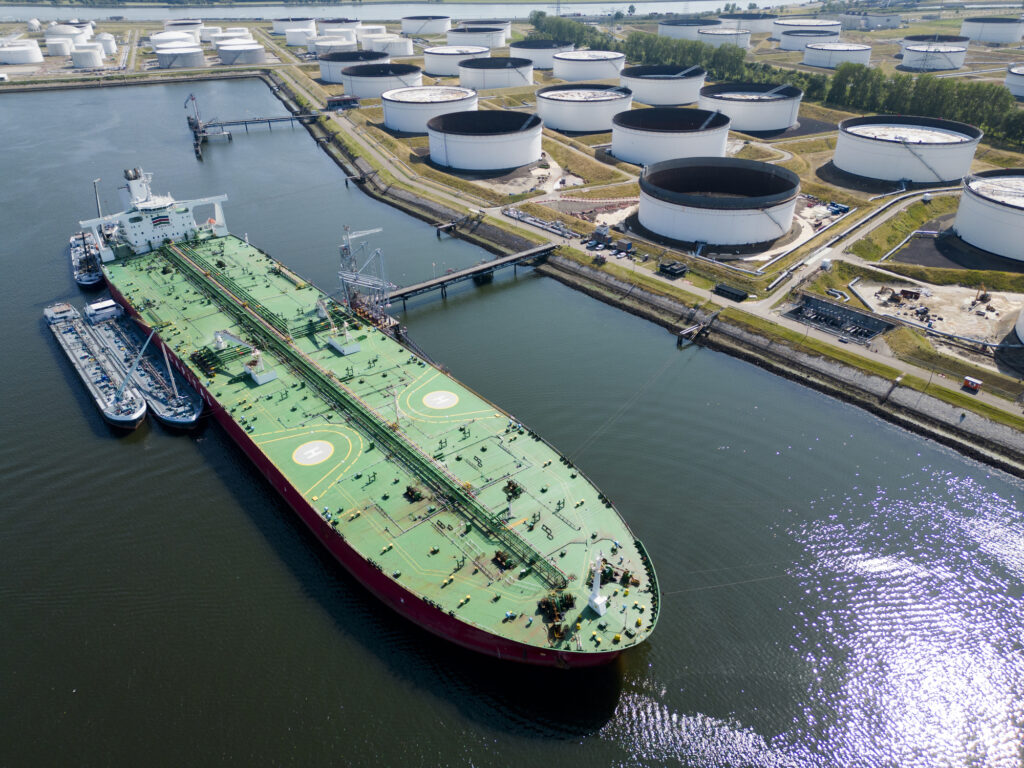
The global oil market is currently navigating a complex confluence of geopolitical realignments and trade frictions, a scenario that has dramatically reshaped the economics of crude transportation. While the immediate reaction to fresh U.S. sanctions against major Russian oil entities saw a significant, albeit temporary, surge in crude prices, the most sustained impact is being felt in the supertanker freight market. This dynamic has sent front-month supertanker contracts for the benchmark Middle East to China route soaring by a remarkable 16%, reaching levels not seen in nearly two years. For energy investors, understanding the underlying drivers of this shipping upheaval is crucial, particularly as traditional trade lanes are disrupted and new logistical challenges emerge.
Sanctions-Induced Scramble and Divergent Market Signals
The recent U.S. sanctions targeting Russia’s two largest oil firms, Rosneft and Lukoil, along with their various subsidiaries, have initiated an urgent global search for alternative crude supplies. This move, representing the Trump Administration’s most direct strike yet against Russia’s oil revenues, has forced refiners, particularly in key demand centers like India, to scramble for non-Russian barrels. The consequence is a lengthening of voyages and a re-routing of supply chains, fundamentally boosting demand for supertanker capacity. What makes this situation particularly noteworthy for investors is the stark divergence in market signals. While the initial announcement of these sanctions catalyzed a sharp surge in crude prices, our live proprietary data reveals a significant market correction. As of today, Brent Crude trades at $90.38 per barrel, marking a substantial 9.07% decline within the day, while WTI Crude similarly plunged to $82.59, down 9.41%. This immediate downward pressure on crude prices, following a period where Brent had already fallen by nearly 20% from $112.78 just two weeks prior, suggests that while logistical costs are rising for specific routes, broader macroeconomic and demand concerns are currently outweighing the localized supply shocks in the crude market itself. This creates a fascinating, and potentially profitable, arbitrage opportunity for those invested in the logistics rather than just the commodity.
Trade Tensions and the Vortex of Inefficiency
The current geopolitical landscape is not the sole driver of the supertanker surge. The market was already experiencing upward pressure from escalating trade tensions between the U.S. and China, specifically through the imposition of tit-for-tat port fees. These fees, which add millions of dollars in additional costs per voyage, were already creating significant chaos in the oil tanker market, leading to cargo delays and cancellations. When coupled with the recent sanctions, these trade frictions compound the logistical challenges, creating what industry analysts describe as “additional vortexes in global oil flows.” The cumulative effect is a pervasive inefficiency across the global shipping network. Tankers are forced to take longer, more circuitous routes, increasing transit times and reducing available capacity. This sustained effect on global trade flows means that the current elevated supertanker rates are unlikely to be a transient phenomenon. Investors should consider the structural changes these dual pressures are imposing on the shipping industry, which could lead to a sustained period of higher freight costs and, consequently, higher revenues for well-positioned tanker operators.
Navigating Volatility: Investor Focus on Future Supply and Demand
Our proprietary reader intent data reveals that investors are keenly focused on the future trajectory of oil prices and the actions of key market players. Questions like “What do you predict the price of oil per barrel will be by end of 2026?” and “What are OPEC+ current production quotas?” underscore a desire for clarity amidst the volatility. This focus is directly relevant to the tanker market. While sanctions-driven rerouting provides an immediate boost to freight rates, the long-term health of the shipping sector ultimately depends on global crude demand. Investors should closely monitor upcoming events that will shape these dynamics. The OPEC+ JMMC and Ministerial Meetings on April 19th and 20th are critical, as any adjustments to production quotas could significantly alter the supply-demand balance and global crude flow patterns, directly impacting tanker utilization. Furthermore, the API Weekly Crude Inventory reports on April 21st and 28th, followed by the EIA Weekly Petroleum Status Reports on April 22nd and 29th, will offer vital insights into U.S. demand health and inventory levels, providing a barometer for global consumption trends. These data points, alongside the Baker Hughes Rig Count on April 24th and May 1st, will paint a clearer picture of future crude availability and, by extension, the sustained demand for supertanker services through 2026 and beyond.
Strategic Implications for Energy Investors
For investors seeking to capitalize on these market shifts, the supertanker sector presents a compelling, albeit nuanced, opportunity. The current environment favors shipping companies with diversified fleets, adaptable route networks, and strong balance sheets capable of managing increased operational complexities and potentially higher bunker fuel costs. While the immediate surge in freight rates offers a tailwind, the broader decline in crude prices, as evidenced by Brent’s nearly 20% drop over the last two weeks, suggests that the underlying commodity market faces different pressures. This divergence implies that investors looking for exposure to the logistics of oil rather than just its price might find value in well-managed tanker firms. However, the increased geopolitical risk and trade uncertainties also warrant careful due diligence. Companies with long-term charters or strategic alliances may be better insulated from short-term rate fluctuations. As global crude flows continue to reconfigure under the weight of geopolitical and trade pressures, the supertanker market remains a critical, and increasingly complex, area for strategic investment within the broader energy landscape.