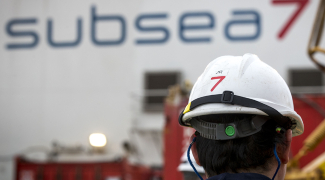
Subsea7’s recent announcement of a sizeable Engineering, Procurement, Commissioning, and Installation (EPCI) contract in offshore Egypt marks a significant win that reinforces its robust backlog and underscores the continued strategic importance of subsea infrastructure development. This agreement, valued between $50 million and $150 million, covers flexible pipelines, umbilicals, and associated subsea components, designed to tie into existing infrastructure. For investors, this award isn’t just about a single project; it provides critical visibility into future revenue streams, validates the company’s technical expertise, and signals a resilient demand for specialized subsea services in key energy basins, even amidst fluctuating commodity markets. Our analysis delves into the implications of this contract, integrating real-time market data, upcoming industry catalysts, and direct insights into what investors are currently scrutinizing.
Subsea7’s Strategic Foothold in the Eastern Mediterranean
The Egypt EPCI contract is more than just a backlog boost; it represents a strategic deepening of Subsea7’s presence in a vital energy region. Egypt is rapidly cementing its role as a regional gas hub, with significant exploration and production activities underway, particularly in its deepwater Mediterranean acreage. By securing a contract for a tie-back to existing infrastructure, Subsea7 is engaging in a project profile that often carries lower execution risk and promises quicker monetization compared to entirely greenfield developments. The scope of work—encompassing engineering, procurement, commissioning, and installation—highlights the company’s integrated capabilities. Project management and engineering are set to commence immediately across Subsea7’s offices in France, Portugal, and Egypt, with offshore activities scheduled for 2026. This staggered timeline provides a stable revenue pipeline for the coming years, demonstrating the long-term demand for specialized subsea solutions that enhance and extend the life of crucial energy assets. Such projects are foundational to maintaining production levels and ensuring energy security for host nations, making them less susceptible to short-term market noise.
Navigating the Current Commodity Headwinds
While Subsea7’s latest contract fortifies its long-term outlook, the broader energy market presents a dynamic and volatile picture that investors must consider. As of today, Brent crude trades at $90.38 per barrel, marking a notable daily decline of 9.07% and reflecting a day range of $86.08 to $98.97. Similarly, WTI crude stands at $82.59, down 9.41% within a daily range of $78.97 to $90.34. This sharp daily downturn is not an isolated event; it compounds a more significant trend over the past two weeks, where Brent has shed $20.91, dropping from $112.78 on March 30th to $91.87 yesterday, representing an 18.5% erosion of value. Gasoline prices, a key indicator of consumer demand and refining margins, have also retreated to $2.93, a 5.18% drop. This pronounced volatility in crude prices, while potentially alarming, requires a nuanced interpretation for EPCI providers like Subsea7. Their contracts are often fixed-price, meaning immediate project revenues are insulated. However, sustained periods of low or highly volatile oil prices can influence future Final Investment Decisions (FIDs) for new projects, impacting the longer-term pipeline of opportunities for service companies. Investors must weigh the immediate security of a growing backlog against the potential for a more cautious upstream spending environment should these price trends persist.
Upcoming Events Shaping Future Investment Decisions
Looking forward, several critical calendar events in the coming weeks will provide further clarity on the trajectory of the global oil and gas market, influencing the broader investment landscape for companies like Subsea7. Investors are keenly awaiting the outcomes of the OPEC+ Joint Ministerial Monitoring Committee (JMMC) and the full Ministerial Meetings scheduled for April 18th and 19th. Any signals regarding adjustments to current production quotas will significantly impact global supply expectations and, consequently, oil price stability. A decision to maintain or reduce quotas could lend support to prices, encouraging further upstream investment, which directly translates to opportunities for subsea contractors. Furthermore, the recurring API and EIA Weekly Crude Inventory reports, slated for April 21st, 22nd, 28th, and 29th, will offer crucial real-time insights into U.S. demand and supply dynamics. Persistent inventory builds could signal weakening demand or oversupply, potentially dampening future FIDs. Conversely, draws could indicate robust demand. Finally, the Baker Hughes Rig Count, to be released on April 24th and May 1st, while predominantly tracking onshore activity, serves as a bellwether for overall industry confidence and capital expenditure. A rising rig count, even if not directly offshore, suggests a healthier appetite for upstream investment that will eventually filter down to the specialized deepwater and subsea sectors, creating more opportunities for Subsea7 beyond its current Egypt commitments.
Addressing Investor Sentiment: Long-Term Outlook vs. Short-Term Swings
The prevailing market volatility directly feeds into questions we observe from investors, particularly regarding the long-term trajectory of oil prices and the stability of the energy sector. Many are asking: “what do you predict the price of oil per barrel will be by end of 2026?” and “What are OPEC+ current production quotas?” These inquiries highlight a fundamental tension between the short-term price swings and the longer-term strategic necessity of conventional oil and gas. While the energy transition is a dominant narrative, the reality is that oil and gas will continue to play a critical role in the global energy mix for decades. This enduring demand underpins the business model for essential service providers like Subsea7. Their focus on complex deepwater and subsea infrastructure positions them in a segment with higher barriers to entry, often leading to more resilient margins and a less crowded competitive landscape. Projects like the Egypt tie-back are often critical for national energy security or maintaining existing production, making them strategically imperative and less susceptible to the daily fluctuations of crude prices. Understanding OPEC+ production quotas is indeed vital, as these decisions directly influence global supply and, by extension, the economic viability calculations for future large-scale energy projects that Subsea7 could bid on. Investors should recognize that Subsea7’s backlog, reinforced by this latest contract, provides a degree of insulation from immediate market turbulence, allowing them to capitalize on the sustained, albeit evolving, demand for essential energy infrastructure.


