The American Petroleum Institute (API), under the leadership of President and CEO Mike Sommers, is embarking on a pivotal national campaign designed to reframe public perception and policy dialogue around the indispensable role of the U.S. oil and gas industry. This initiative, launched amidst complex market dynamics and evolving energy narratives, aims to champion a philosophy of “energy realism” – a recognition that reliable, affordable hydrocarbons remain foundational to national economic stability and energy security. For investors, this proactive stance from the industry’s leading advocacy group signals a concerted effort to mitigate regulatory headwinds and foster a more predictable operating environment, directly influencing long-term capital allocation strategies in the sector.
API’s Strategic Push for Energy Realism
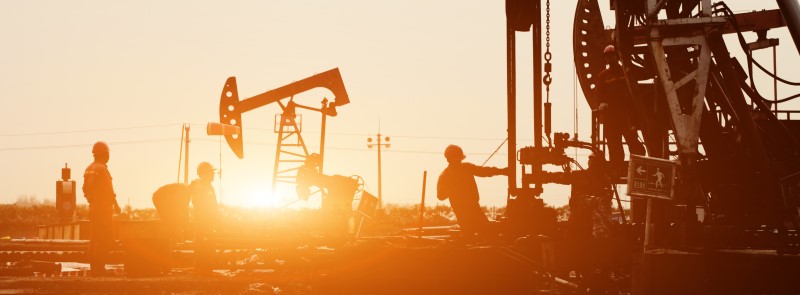
API’s new campaign is more than just a public relations exercise; it’s a strategic effort to solidify the industry’s social license to operate at a critical juncture. Mike Sommers emphasizes that the initiative showcases the expertise, professionalism, and world-class safety standards of the U.S. oil and gas workforce, particularly highlighting the essential contributions of landmen and field professionals. This focus on the human element, coupled with the industry’s commitment to rigorous API standards, aims to reinforce credibility and highlight ongoing innovation. The timing is strategic, coinciding with renewed public interest in the sector, partly fueled by popular culture, and underpinned by new public opinion research demonstrating bipartisan support for expanded domestic oil and gas production. For investors, this signals API’s commitment to building a more stable policy landscape, reducing the risk of sudden policy shifts that could disrupt production forecasts and investment returns. A robust public mandate for domestic energy production is a significant de-risking factor for upstream and midstream assets, fostering an environment where long-term capital projects can proceed with greater confidence.
Market Volatility and the Imperative for Stable Policy
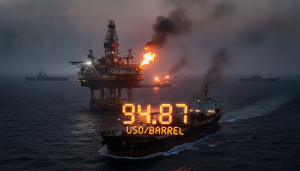
The urgency of API’s “energy realism” campaign is underscored by the current volatility in global energy markets. As of today, April 17, 2026, the market is experiencing significant downward pressure. Brent crude is trading at $90.61, marking an 8.83% decline for the day, having ranged between $86.08 and $98.97. WTI crude is not far behind, priced at $82.68, down 9.31% within a daily range of $78.97 to $90.34. This sharp daily contraction follows a broader trend; Brent has shed over $14, or 12.4%, from its March 27 peak of $112.57 to $98.57 on April 16. Similarly, gasoline prices have fallen to $2.93, a 5.18% drop today. In this environment, API’s advocacy for policies that support reliable, affordable domestic energy production becomes paramount. The campaign’s message directly addresses concerns about energy security and affordability, which are amplified during periods of price instability. Investors should view API’s efforts as a bulwark against policies that could exacerbate volatility, instead promoting a framework that ensures consistent supply and mitigates geopolitical or economic shocks through robust domestic output.
Navigating Near-Term Catalysts: OPEC+ and Inventory Watch
The coming days are packed with market-moving events that could either exacerbate or alleviate current price pressures, further highlighting the need for a stable domestic energy policy championed by API. Today, April 17, the OPEC+ Joint Ministerial Monitoring Committee (JMMC) is meeting, setting the stage for the full OPEC+ Ministerial Meeting scheduled for tomorrow, April 18. Investors will be scrutinizing any signals regarding production quotas or supply adjustments, which could significantly impact global crude balances and price trajectories. Against this backdrop, the API Weekly Crude Inventory report on April 21, followed by the EIA Weekly Petroleum Status Report on April 22, will provide critical insights into U.S. supply and demand dynamics. These reports, alongside the Baker Hughes Rig Count on April 24, offer a granular view of domestic production trends and storage levels. A consistent theme emerging from these data points is the interplay between global supply decisions and domestic capacity. API’s campaign implicitly argues that a strong U.S. upstream sector, supported by “energy realism” policies, provides a crucial counter-balance to global supply uncertainties, offering a degree of stability that investors value during periods of external market influence.
Investor Sentiment and the Long-Term Outlook for Oil & Gas
Our proprietary reader intent data reveals a keen investor focus on future price trajectories and the underlying policy environment. Questions frequently surface around “what do you predict the price of oil per barrel will be by end of 2026?” and “What are OPEC+ current production quotas?”. These inquiries underscore a desire for clarity and predictability in a sector known for its volatility. While specific price predictions are inherently challenging, API’s campaign for “energy realism” aims to foster an environment where the foundational demand for oil and gas is acknowledged and supported by policy. This proactive narrative is crucial for investor confidence, signaling that the industry is actively working to ensure its long-term viability and social acceptance. For companies like Repsol, which readers have specifically inquired about regarding their April 2026 performance, the broader policy landscape championed by API directly impacts their operational freedom, capital expenditure decisions, and ultimately, their shareholder returns. A policy environment that recognizes the essential role of hydrocarbons, and supports their responsible development, is one that offers a more stable and attractive investment proposition, fostering sustained growth and predictability for E&P companies and their investors through 2026 and beyond.