

Solar geoengineering could increase the ferocity of North Atlantic hurricanes, cause the Amazon rainforest to die back and cause drought in parts of Africa if deployed above only some parts of the planet by rogue actors, a report has warned.
However, if technology to block the sun was used globally and in a coordinated way for a long period – decades or even centuries – there is strong evidence that it would lower the global temperature, the review from the UK’s Royal Society concluded.
The world is failing to halt the climate crisis and the researchers said that in future, a judgment might need to be made between the risks of geoengineering and the those of continued global heating, which is already costing lives and livelihoods. The logistics of a large-scale geoengineering effort would be daunting, the experts said, but the cost would be small relative to climate action – billions of dollars a year against trillions.
The researchers emphasised that geoengineering only masked the symptoms of the climate crisis, and did not tackle the root cause – the burning of fossil fuels. Geoengineering could only complement the cutting of emissions, not replace it, they said.
If geoengineering was halted abruptly but emissions had not been reduced, there would be a termination shock of rapidly rising temperatures – 1-2C within a couple of decades – that would have severe effects on people and ecosystems unable to rapidly adapt.
“This is not a question of whether [solar geoengineering] is safe, as it is clearly not without risks,” said Prof Keith Shine, at the University of Reading, who led the report. “However, there may come a point where those risks are seen to be less severe than the risks of insufficiently mitigated climate change.”
“If policymakers did take the decision to deploy, a scientifically informed, globally coordinated and internationally agreed-upon strategy would be essential both to achieve global cooling and avoid potentially large undesirable regional climate impacts,” he said.
Geoengineering has divided the scientific community. Some researchers argue that research should continue in order to increase the knowledge of the likely effects of using it, in case it was ever judged necessary. Others say that further research would increase the chances of its use as it may increasingly be seen as a fast way to fight the climate crisis. The Royal Society report does not take a position but aims to set out the current state of understanding to better inform debate.
The report considers the two types of geoengineering seen as most likely to be feasible and effective. Using high-altitude aircraft to pump sulphur dioxide (SO2) into the stratosphere would cause reflective particles to form, bouncing a fraction of the sun’s heat back into space.
Explosive volcanic eruptions are natural examples of this process, and studying these has helped researchers understand the impact. For example, the eruption of Mount Pinatubo, in the Philippines, in 1992, which pumped 15m tonnes of SO2 into the atmosphere, lowered global temperature by about 0.5C for a couple of years. About 8m to 16m tonnes a year is thought to be needed for a significant geoengineering programme.
The second type of geoengineering considered is marine cloud brightening, where salt particles produced from seawater are thrown up into the lower atmosphere. These particles enable water vapour to nucleate and form clouds, which reflect sunlight. The effect is seen today in the ribbons of clouds created by the pollution from shipping.
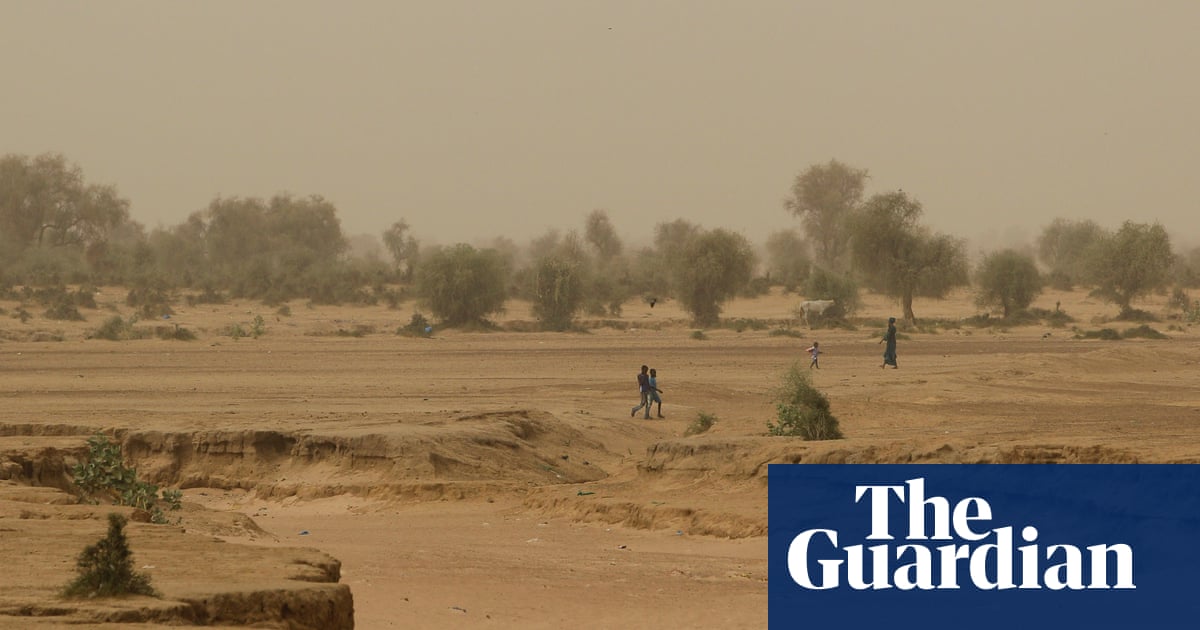
The global climate is the result of the interaction of many different ocean, land and air systems across the planet. Research has found that stratospheric sulphur dioxide injection deployed only in the southern hemisphere could cause North Atlantic hurricanes to increase in frequency and intensity. Deployment in only the northern hemisphere could lead to droughts in the Sahel region of north Africa, while deployment only in the tropics could cause droughts in the Mediterranean.
Marine cloud brightening in the south-east Atlantic alone could result in the dieback of the Amazon, releasing a huge amount of carbon, while deployment in the eastern Pacific only could result in an enormous La Niña, a climate phenomenon with global consequences.
“You would not want it to be done by a single rogue actor”, who thought they were acting in their own best interests by trying to reduce temperatures in one region, said Prof Jim Haywood at the University of Exeter, part of the Royal Society team.
Some commercial companies have raised millions of dollars to pursue private geoengineering efforts. Shine said: “Any research should be done in an objective, critical and transparent way and, obviously, there would be concerns about commercialisation if it didn’t live up to this.”
The scientists said that even if a global deployment was internationally agreed and coordinated, many uncertainties remained about how much it would cool the Earth and what regional impacts would remain.
In April, the UK Advanced Research and Invention Agency launched a £50m government-funded geoengineering programme, which will include small-scale outdoor experiments. Prof Mark Symes, who is leading the Aria programme, said the looming threat of climate tipping points was a strong reason to research solar geoengineering. Some previous planned outdoor experiments have been cancelled after strong opposition.
