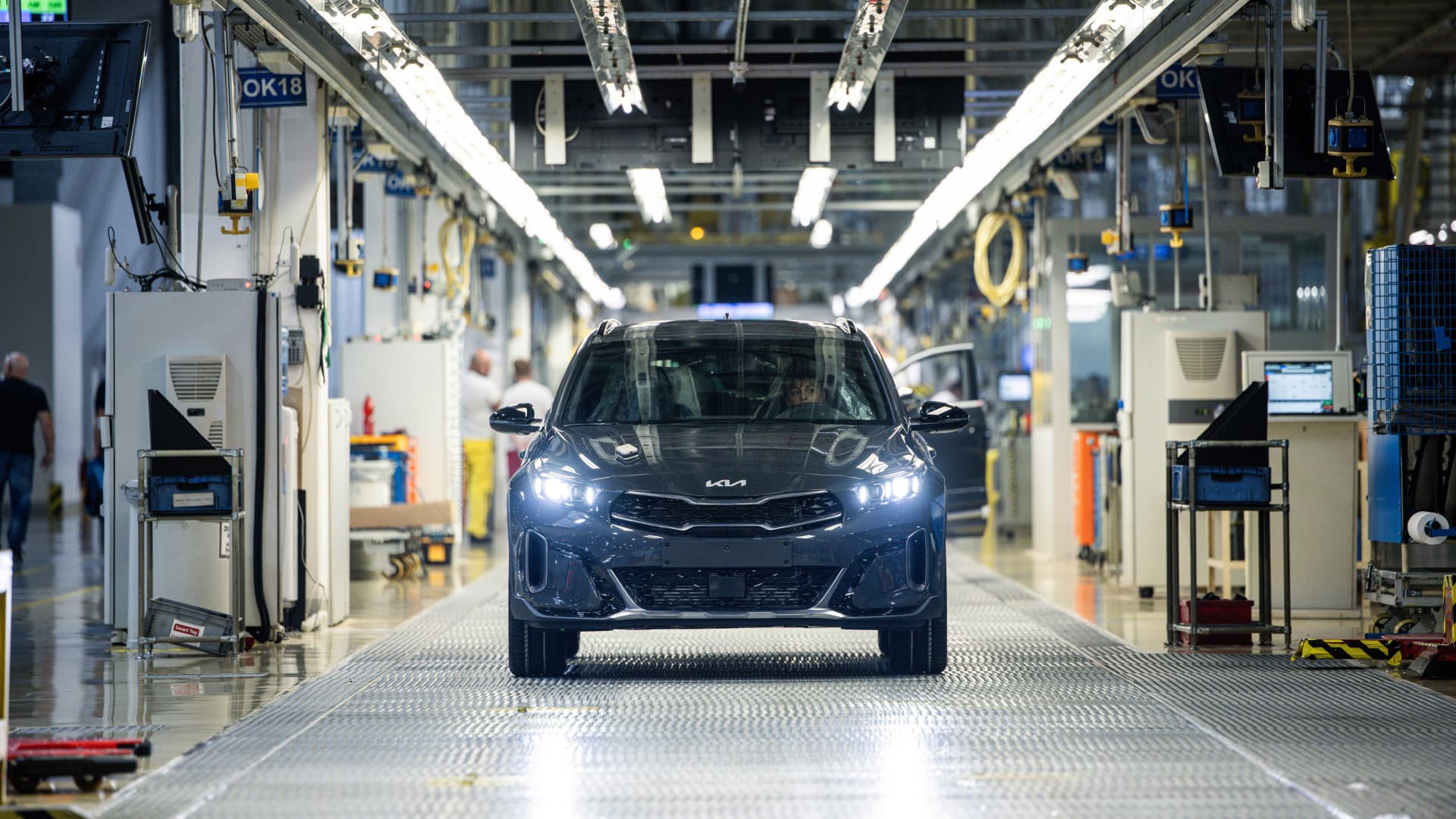
Slovakia, a nation of just 5.4 million people nestled in the heart of Europe, has long held an outsized influence on the global automotive sector, earning it the moniker “Europe’s Detroit.” Its impressive output, establishing it as the world’s leading producer of cars per capita, is a testament to significant investments from titans like Volkswagen, Stellantis, Kia, and Jaguar Land Rover, with Volvo Cars poised to open a fifth major facility for electric vehicle production. This robust automotive industry is far from a niche player, contributing approximately 11% to the country’s Gross Domestic Product, accounting for half of its industrial output, and employing roughly one-tenth of its total workforce. However, this enviable position is now facing a confluence of severe headwinds, from escalating U.S. tariffs and intense competition from Chinese manufacturers to rising domestic taxes and a broader geopolitical shift away from the European Union. For energy investors, understanding the challenges facing such a critical industrial hub offers vital insights into potential shifts in global manufacturing demand and the broader economic landscape.
Slovakia’s Automotive Engine Under Threat: A Macroeconomic Bellwether
The Slovak automotive sector’s deep integration into the global supply chain makes its current struggles a significant indicator for wider industrial health. With major manufacturers having established substantial operations since the early 1970s, culminating in a dominant position post-communism and EU ascension, the country’s economic fabric is intricately woven with vehicle production. This heavy reliance, while previously a strength, now exposes Slovakia to external shocks. The combination of increased domestic taxation and a shifting geopolitical alignment presents internal pressures, while the specter of intensified Chinese competition looms large globally. As investors assess the resilience of industrial demand for energy commodities, the performance of a manufacturing powerhouse like Slovakia’s auto sector serves as a crucial bellwether, signaling potential softening in the demand for fuels and refined products used in logistics and manufacturing across the continent.
Tariff Headwinds and Global Trade Dynamics Impacting Demand Outlook
Among the immediate threats, U.S. tariffs stand out as a primary concern for the Slovak auto industry. Despite a recent agreement between the U.S. and the EU that saw tariff rates on most EU goods lowered to 15% – a significant reduction from an initial threat of 30% and an improvement from a prior 27.5% for the auto sector – the impact remains considerable. Slovakia is particularly exposed, with approximately 80% of its 4% total exports to the U.S. consisting of automobiles. This tariff reality translates directly into higher costs for Slovak carmakers, ultimately dampening demand and profitability. For energy investors, these trade frictions signal broader economic uncertainty, directly impacting the outlook for global energy demand. Our readers frequently inquire about the long-term price trajectory of oil, with questions like “what do you predict the price of oil per barrel will be by end of 2026?” The ongoing challenges in key industrial sectors like the Slovak automotive industry, driven by trade policy, will undeniably factor into these longer-term demand models, influencing the potential for sustained price recovery or further consolidation.
Oil Market Volatility Amplifies Auto Sector Concerns Amidst Supply-Side Scrutiny
The macroeconomic headwinds impacting Slovakia’s automotive industry are unfolding against a backdrop of significant volatility in global energy markets. As of today, Brent Crude trades at $90.38, marking a notable 9.07% decline within the day, with its range fluctuating between $86.08 and $98.97. Similarly, WTI Crude has seen a sharp dip to $82.59, down 9.41% for the day, trading within a range of $78.97 to $90.34. This recent price action follows a substantial 14-day trend where Brent crude has fallen by nearly 20%, from $112.78 on March 30th to its current level. This pronounced market weakness, characterized by falling prices for both crude and refined products like gasoline, which is currently at $2.93, down 5.18%, underscores a prevailing uncertainty that is not helped by signals of industrial slowdown from key manufacturing hubs. Investors are keenly focused on supply-side responses to this demand fragility. The upcoming OPEC+ JMMC Meeting on April 19th and the subsequent OPEC+ Ministerial Meeting on April 20th are critical events that will shape market sentiment. Our readers are actively asking about “OPEC+ current production quotas,” highlighting the market’s reliance on these decisions to balance supply against potentially weakening global industrial demand. Further insights into U.S. inventory levels, through the API Weekly Crude Inventory reports on April 21st and 28th, and the EIA Weekly Petroleum Status Reports on April 22nd and 29th, will provide crucial short-term demand indicators that could either exacerbate or alleviate current price pressures.
Navigating the EV Transition and Investor Focus on Resilience
Beyond the immediate concerns of tariffs and geopolitical shifts, Slovakia’s auto sector, and by extension the energy markets, faces the structural transformation brought by the electric vehicle (EV) transition. While Volvo Cars’ upcoming EV factory near Kosice signals investment in the future, the broader industry must adapt. This transition, alongside tariff challenges and Chinese competition, necessitates strategic shifts for manufacturers and has long-term implications for the demand for traditional refined products. For energy investors, this evolving landscape means focusing on companies demonstrating resilience and adaptability. Questions from our readership, such as inquiries into the performance of specific energy players like Repsol, reflect this desire to identify robust investments amidst changing market dynamics. The automotive sector’s pivot towards electrification, while a long-term trend, will gradually reshape the global energy consumption profile, particularly for gasoline and diesel. Therefore, while immediate price movements are swayed by supply-side actions and short-term demand signals, the underlying shifts in industrial output and vehicle technology in regions like Slovakia represent powerful, compounding forces that investors must integrate into their long-term strategies for the oil and gas sector.