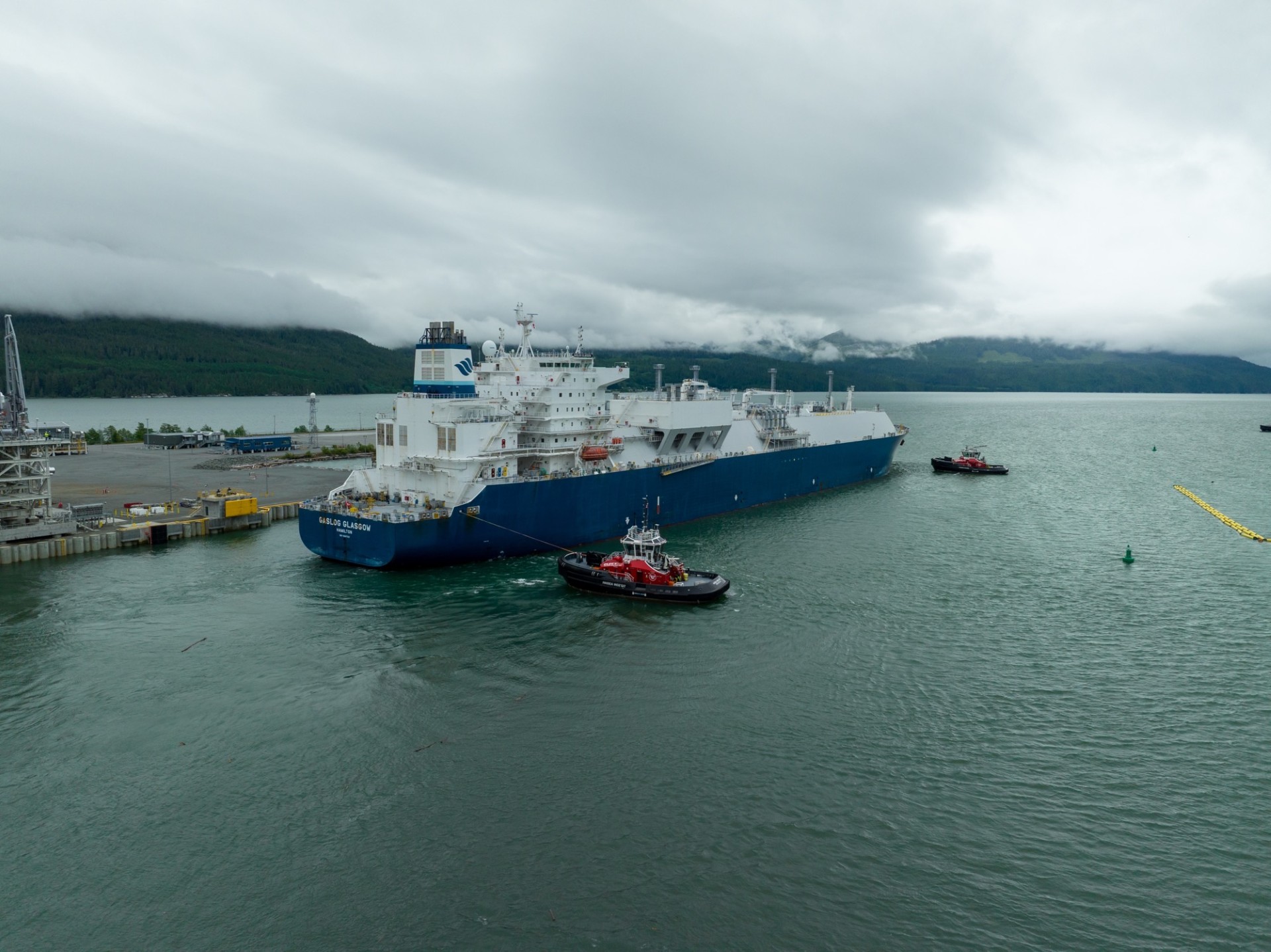
Shell-led LNG Canada: First Exports Signal Cash Flow
A monumental shift in Canada’s energy export landscape has officially begun as the LNG Canada facility, a cornerstone project for global liquefied natural gas supply, successfully dispatched its inaugural export cargo. This pivotal event, marking the culmination of years of intensive development and significant capital investment, directly translates into anticipated cash flow generation for its consortium of international energy giants, with Shell holding the largest stake.
The maiden shipment from the newly constructed terminal in British Columbia signifies the operational readiness of a facility poised to deliver Canadian natural gas to energy-hungry markets worldwide. For investors tracking the global LNG sector, this milestone underscores the transition from capital expenditure to revenue generation, fundamentally altering the financial outlook for the project’s partners.
A Consortium of Global Energy Powerhouses
LNG Canada represents a strategic collaboration among some of the world’s most influential energy corporations. At the forefront is Shell plc, holding a substantial 40% working interest, positioning it as the leading partner and primary beneficiary of the project’s success. Other key stakeholders include Malaysia’s national oil and gas company Petronas, Japanese trading and investment giant Mitsubishi Corporation, China National Petroleum Corporation subsidiary PetroChina, and Korea Gas Corporation (KOGAS). This diverse partnership ensures robust financial backing and a broad market reach for the exported LNG.
The successful realization of this massive undertaking owes much to the engineering and construction prowess of Fluor and its joint venture partner, JGC Corporation. Since 2018, these firms have been instrumental in delivering comprehensive engineering, procurement, fabrication management, construction, and commissioning services. Their continued involvement through commissioning support and long-term operational readiness services highlights the intricate and ongoing nature of such a complex industrial asset.
According to Fluor’s Business Group President of Energy Solutions, Mike Alexander, this achievement is “a significant achievement in Canada’s energy landscape and a pivotal moment for Fluor.” He emphasized that the first cargo represents the “culmination of years of collaboration, innovation and a shared commitment to project delivery excellence” among all parties involved.
Strategic Advantages and Market Positioning
The LNG Canada terminal boasts an enviable strategic location on Canada’s west coast, offering unparalleled access to abundant, low-cost natural gas reserves from the Western Canadian Sedimentary Basin. Furthermore, its placement benefits from an ice-free harbor, ensuring year-round shipping capabilities—a critical advantage for reliable energy supply chains. This facility is the first of its kind in Canada, establishing the nation as a significant player in the global LNG export market.
With an impressive annual production capacity of up to 14 million tonnes of LNG, the plant is set to become a major supplier of lower-carbon natural gas to international markets. Operating under a robust 40-year license, the project offers long-term stability and predictability for investors seeking exposure to the global energy transition. Pierre Bechelany, President of Fluor’s LNG & Power business, underscored the facility’s commitment to environmental stewardship, stating its design enables LNG Canada “to produce LNG with some of the lowest emissions of any large-scale LNG facility in the world.” This focus on sustainability positions the project favorably in an increasingly carbon-conscious global economy.
Engineering Marvel and Construction Excellence
The construction of LNG Canada stands as a testament to modern engineering and project management innovation. JGC Fluor implemented an advanced modular fabrication approach, dramatically enhancing schedule efficiencies. This method allowed simultaneous site preparation, early works, and construction activities with off-site module fabrication. Over 215 modules, some of them colossal in scale—measuring approximately 45 meters wide, 75 meters deep, and 47 meters in height—were meticulously delivered and installed at the site between January 2022 and July 2023.
Adding to the project’s impressive statistics is the construction of the world’s second-largest LNG storage tank. This monumental structure stands 56 meters high, spans 75 meters in diameter, and possesses a staggering volume capacity exceeding 225,000 cubic meters. Such scale not only highlights the engineering ambition but also ensures the operational resilience and export capacity of the facility, providing crucial buffer storage for continuous supply.
Global Market Impact and Investor Outlook
The maiden cargo, loaded onto the vessel Gaslog Glasgow, is reportedly destined for Asian markets, signaling the project’s immediate focus on meeting the burgeoning energy demand in that region. Asia remains the primary growth engine for global LNG consumption, driven by economic expansion and a transition away from more carbon-intensive fuels. Canada’s entry into this market as a reliable, lower-carbon supplier introduces a new dynamic, potentially diversifying supply sources and enhancing energy security for importing nations.
For investors, the operational launch of LNG Canada represents a significant derisking event. The transition from a capital-intensive construction phase to an operational asset generating revenue fundamentally alters the investment profile. Shell, with its dominant stake, stands to gain substantially from the anticipated long-term cash flows, bolstering its integrated gas portfolio and contributing to shareholder returns. The 40-year license provides a strong foundation for sustained profitability, making this a generational asset for its owners.
As global energy markets continue to evolve, projects like LNG Canada, which combine strategic resource access, advanced engineering, and a commitment to environmental performance, are increasingly attractive. The first export cargo is not merely a logistical success; it is a clear signal of financial maturation and a strong indicator of long-term value creation in the global energy investment landscape.