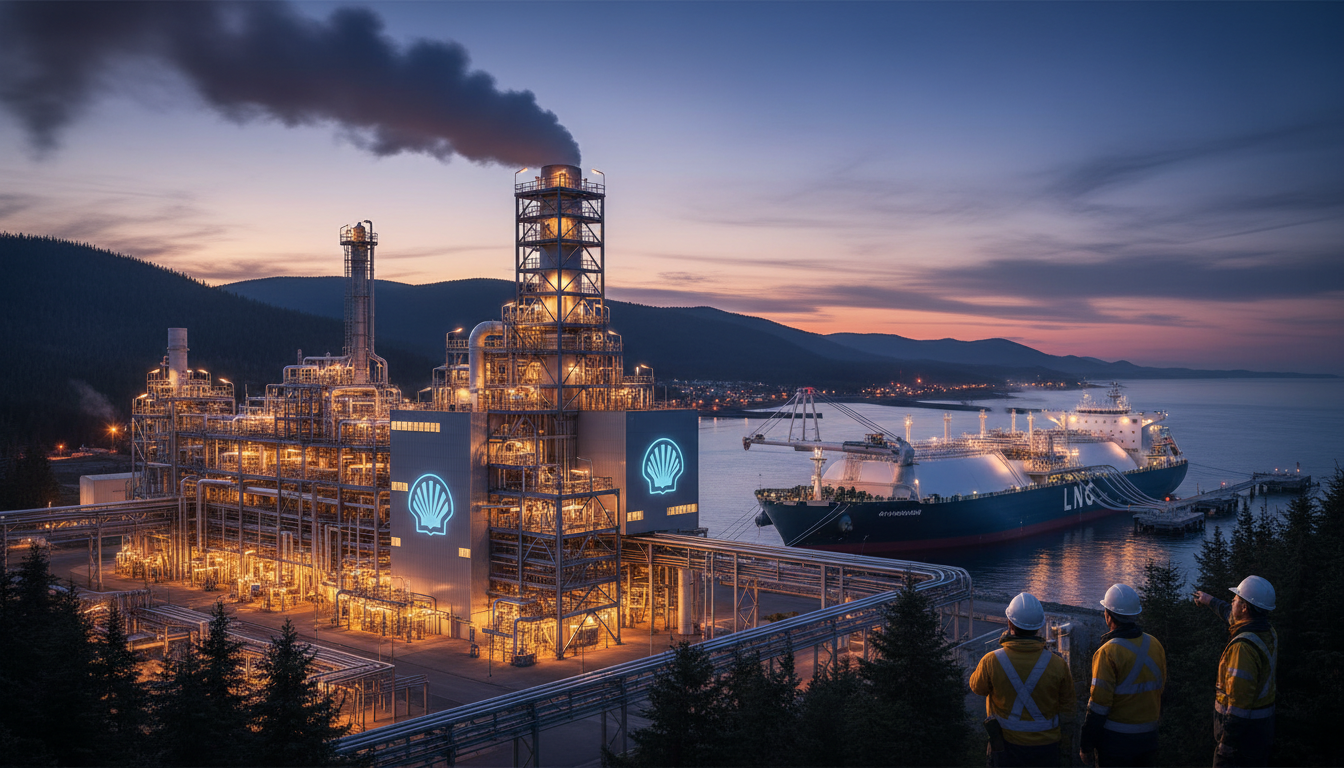
Shell PLC (NYSE: SHEL) has unleashed a monumental strategic move, agreeing to acquire Canada’s ARC Resources Ltd. in an impressive $16.4 billion transaction. This definitive action solidifies the supermajor’s position as a dominant force in North American natural gas, signaling an emphatic long-term bet on the burgeoning global liquefied natural gas (LNG) market. For investors, this acquisition promises to profoundly reshape Shell’s upstream portfolio, bolstering its production capacity and extending its reach into critical growth markets, particularly across Asia.
Shell’s Strategic Pivot: Doubling Down on North American Gas and LNG Leadership
This landmark acquisition by Shell is far more than a simple asset addition; it represents a clear strategic pivot and a firm declaration of confidence in natural gas as an indispensable component of the world’s energy future, especially in its flexible, transportable LNG form. By integrating ARC Resources, Shell gains immediate access to an estimated 2 billion barrels of reserves, which are strategically located to complement and enhance its extensive existing Canadian operations. Critically, these newly acquired assets are poised to become a vital feedstock for LNG Canada, a cornerstone export project where Shell operates with a significant 40% stake.
The strategic synergy with LNG Canada lies at the very heart of this deal. This facility is increasingly recognized as a pivotal element in Shell’s ambitious growth agenda targeting the rapidly expanding energy markets of Asia. The seamless integration of ARC’s prolific gas fields, geographically contiguous with Shell’s current Canadian footprint, ensures a robust and reliable supply stream for the liquefaction plant. Furthermore, it significantly replenishes Shell’s reserve base, a crucial indicator for investors evaluating an energy company’s long-term sustainability and operational longevity.
Addressing Production Gaps and Accelerating Growth Trajectories
A primary driver and compelling advantage of the ARC acquisition, from an investor’s perspective, is its direct and immediate impact on Shell’s production outlook. Industry analysts had previously highlighted a potential production shortfall for Shell, projecting a substantial gap ranging from 350,000 to 800,000 barrels of oil equivalent per day (boed) by the mid-2020s, a consequence of declining output from mature fields. ARC’s impressive and consistent production, which achieved a record 374,000 boed last year, effectively fills a significant portion of this anticipated deficit, providing a much-needed boost to Shell’s output profile.
This strategic injection of substantial production volumes empowers Shell to significantly revise its compound annual production growth target for the current decade. The target has been elevated from a conservative 1% to a more aggressive and ambitious 4%. Such a marked increase in its growth trajectory underscores the deal’s profound influence on Shell’s operational scale and its enhanced capacity to deliver sustained returns to shareholders. For discerning investors, this translates into greater confidence in Shell’s ability to maintain and strategically expand its core energy output within an increasingly dynamic global energy landscape.
Financial Mechanics, Valuation, and Investor Returns
Valued at an enterprise sum of $16.4 billion, inclusive of assumed debt, this transaction ranks among the largest upstream acquisitions seen in recent times, drawing comparisons to other mega-deals such as Chevron Corporation’s acquisition of Hess Corporation. Shell structured the acquisition using a balanced financial approach, comprising approximately 25% cash and 75% shares. This valuation offered ARC Resources shareholders a substantial 20% premium relative to its 30-day average share price, reflecting Shell’s conviction in the long-term value and strategic alignment of ARC’s assets.
Crucially for shareholders, this significant acquisition is anticipated to be accretive, contributing positively to free cash flow per share starting from 2027. This financial discipline is further evidenced by Shell’s firm commitment that this transaction will not alter its previously communicated capital expenditure budget, which remains steadfast within the $20 billion to $22 billion range through 2028. This adherence to existing capex guidance signals an efficient and strategic allocation of capital, ensuring that the acquisition enhances shareholder value without creating undue strain on the balance sheet or diverting funds from other critical strategic initiatives.
The Distinct Advantage of Canadian Gas and Enhanced Reserve Life
This strategic move emphatically deepens Shell’s ongoing pivot towards natural gas, acknowledging LNG’s position as a market segment poised for robust and sustained long-term expansion, characterized by tight supply-demand fundamentals. Canadian natural gas boasts a compelling geographical advantage. Exports from the Pacific Coast offer significantly shorter transit times to key Asian markets compared to cargoes originating from the U.S. Gulf Coast. This not only translates into notable reductions in shipping times and associated costs but also strategically bypasses certain geopolitical and logistical chokepoints, thereby bolstering delivery reliability and enhancing market competitiveness for Shell.
Beyond immediate production and optimized market access, the ARC acquisition delivers a critical extension to Shell’s reserve life. Reports indicated that Shell’s reserve life had dipped below eight years by the close of 2025, a metric that could raise long-term concerns among institutional investors. By integrating ARC’s substantial proved and probable reserves, Shell significantly fortifies its resource base, securing future production streams and ensuring a more stable and prolonged operational horizon. This enhancement of reserve life is a foundational element for the sustained viability, strategic appeal, and overall investment thesis of any major integrated energy company.
A Bullish Outlook for Global Energy Investment and Supermajor Strategy
Shell’s bold and decisive investment in ARC Resources sends a powerful and unambiguous signal across the global energy investment landscape. It emphatically underscores the supermajor’s unwavering conviction in natural gas as a vital transition fuel and a cornerstone of future global energy security. For investors actively seeking exposure to resilient, strategically positioned, and high-quality energy assets, this acquisition highlights the ongoing strategic recalibrations and consolidation within the energy sector. Shell is not merely reacting to evolving energy market dynamics; it is proactively shaping its future portfolio to capitalize on long-term demand trends and consistently deliver enhanced shareholder value.
This strategic maneuver mirrors a broader trend among leading energy players who are meticulously refining their asset portfolios. The focus is increasingly on high-value, lower-carbon intensity operations where feasible, alongside robust natural gas positions designed to meet the world’s burgeoning energy requirements. Shell’s latest move with ARC Resources unequivocally reinforces its leadership in the LNG domain and solidifies its resolute commitment to a diversified and forward-looking energy future.


