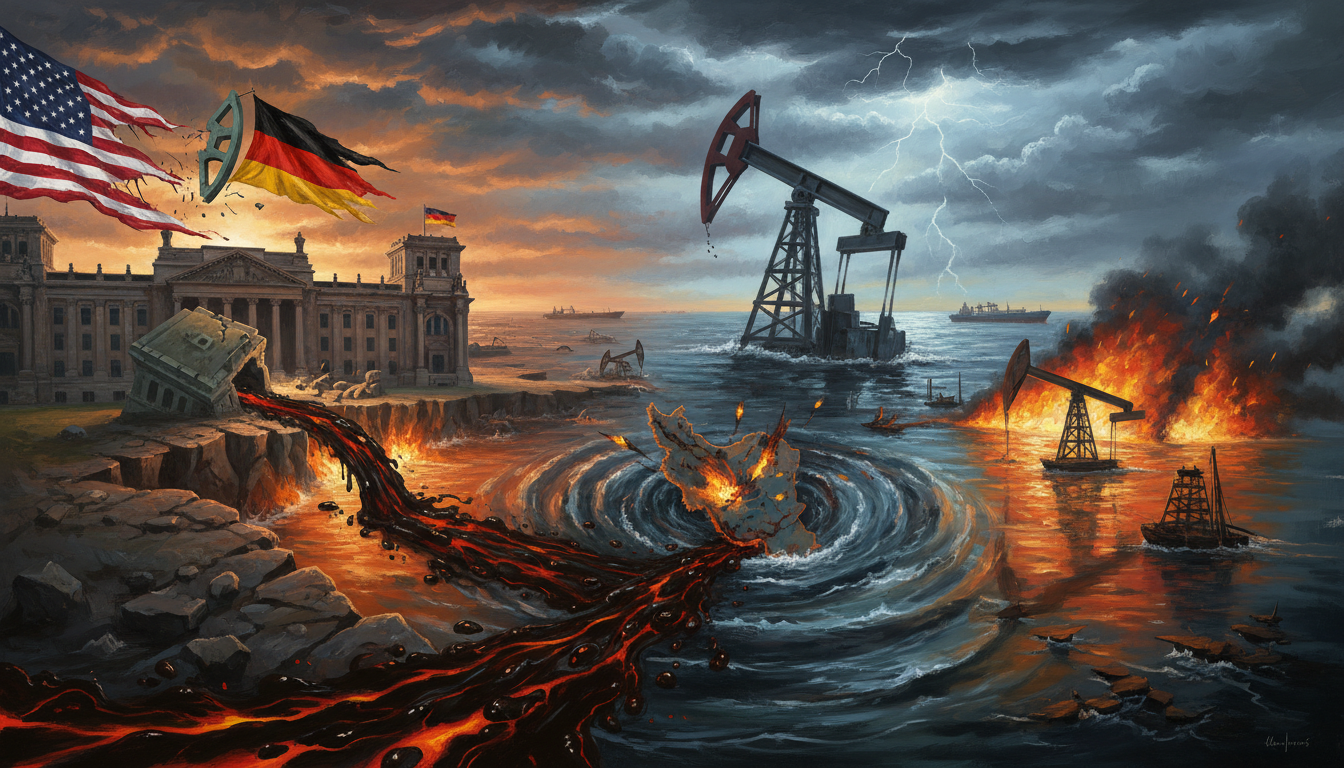
The geopolitical landscape impacting global energy markets is undergoing a significant realignment, as fissures in Western unity over the ongoing conflict with Iran deepen. Notably, German Chancellor Friedrich Merz has delivered a stark public rebuke, cautioning that Washington risks protracted entanglement in another Middle East quagmire. This unprecedented criticism from the leader of Europe’s largest economy signals a growing strategic divergence and heightens concerns among investors regarding energy security and market stability.
Germany’s Bold Stance on the Iran Conflict
Chancellor Merz’s statements represent one of the most direct challenges from a major U.S. ally to date. He asserted that Iran has demonstrated unexpected strength, proving “clearly stronger than one thought,” while suggesting the United States faces “humiliation” by Tehran’s leadership. Such blunt remarks, coming from Germany, carry substantial weight, underscoring private allied anxieties that the conflict could evolve into a drawn-out engagement reminiscent of the costly wars in Iraq and Afghanistan. For energy investors, this public dissent introduces a new layer of geopolitical risk, threatening to undermine the unified Western front crucial for maintaining pressure on critical oil and gas flows.
Economic Fallout and Market Volatility Intensifies
The strategic implications extend beyond diplomatic rhetoric, directly impacting European economies and global energy markets. Washington has heavily relied on allied cohesion to enforce military and economic pressure on Iran, but Merz’s intervention highlights escalating discomfort within Europe regarding both the strategic direction and the escalating economic costs of the conflict. Germany has already warned that the geopolitical strife is weighing heavily on its economic growth prospects. Furthermore, ongoing disruptions linked to the critical Strait of Hormuz continue to fuel significant volatility across crude oil, shipping, and liquefied natural gas (LNG) markets, creating an unpredictable environment for commodity traders and long-term investors alike.
The economic repercussions are already palpable across the European continent. Germany’s GfK consumer-climate index plummeted to an alarming minus 33.3 for May, marking the sharpest monthly deterioration since the severe energy shock of 2022 following Russia’s invasion of Ukraine. This sharp decline reflects how surging energy costs and the pervasive uncertainty surrounding the conflict are eroding income expectations among German consumers. Similarly, business sentiment has also fallen to its weakest level since 2020, painting a concerning picture for economic stability and future investment within the eurozone’s powerhouse economy.
Europe’s Energy Security Under Renewed Threat
In response to these mounting pressures, Berlin has taken decisive action to mitigate the immediate impact on its citizens. This month, emergency measures were enacted to curb fuel price spikes, limiting how frequently service stations can raise gasoline and diesel prices. Concurrently, antitrust scrutiny of energy suppliers has been tightened as pump prices have consistently climbed above €2 per liter. These measures underscore the acute vulnerability Europe faces regarding energy costs and supply chain integrity, a vulnerability now exacerbated by the Iranian situation.
Adding to Germany’s energy woes, renewed uncertainty surrounding Druzhba pipeline flows and Russia’s halt to Kazakh crude deliveries to Germany have revived deep-seated concerns over Europe’s broader energy supply resilience. Just as the continent grapples with these internal supply challenges, the Iran conflict threatens to unleash yet another external energy shock, potentially driving up crude benchmarks and LNG prices further. For investors in European energy infrastructure, these converging risks necessitate a careful reassessment of exposure and hedging strategies.
Strategic Shifts and the Hormuz Nexus
Beyond immediate economic impacts, a broader strategic shift is clearly underway across Europe. Berlin and Paris have intensified their coordination on nuclear deterrence, reflecting heightened security concerns stemming from the conflict. Furthermore, Germany has signaled its potential willingness to contribute minesweepers to safeguard navigation through the Strait of Hormuz once hostilities de-escalate. These discussions are intrinsically linked to global energy security, given that approximately one-fifth of the world’s total oil trade transits through this vital chokepoint. Any instability or disruption in Hormuz directly impacts global crude supply, refinery operations, and freight costs, sending ripple effects throughout the entire energy value chain.
For investors focused on the oil and gas sector, the confluence of German public dissent, European economic struggles, and the persistent threat to a critical maritime passage like the Strait of Hormuz underscores the urgent need for vigilance. The prospect of prolonged instability in the Middle East, coupled with Europe’s renewed energy vulnerabilities, suggests a sustained geopolitical premium embedded in crude oil prices and continued volatility in global energy markets. Companies with diversified supply chains, robust geopolitical risk management frameworks, and exposure to renewable energy or domestic supply sources may prove more resilient in this evolving investment climate. Navigating these turbulent waters will require astute analysis and a proactive approach to managing exposure to these complex, interconnected global risks.