Shell’s recent final investment decision (FID) on the Kaikias waterflood project in the U.S. Gulf of America marks a significant strategic move, underscoring a broader industry pivot towards maximizing value from existing deepwater assets. This initiative, aimed at extending the production life of the venerable Ursa hub, is more than just another capital expenditure; it’s a testament to Shell’s commitment to high-margin, low-carbon intensity barrels and a strategic response to evolving market dynamics. For investors, understanding this FID means looking beyond the immediate headlines and delving into Shell’s long-term production strategy, its resilience against market volatility, and how such projects fit into the wider energy landscape.
The Strategic Underpinnings of the Kaikias Waterflood
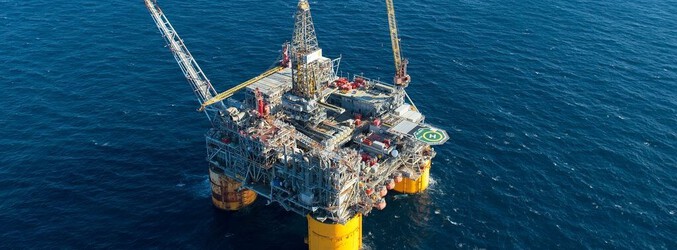
The Kaikias waterflood project represents a crucial phase of secondary recovery for Shell. By injecting water into the reservoir, the company aims to displace additional oil towards existing production wells while simultaneously restoring reservoir pressure. This method is a proven strategy for enhancing recovery rates in mature fields, and its application at Kaikias, a field discovered in 2014 and producing since 2018 via a subsea tieback to Ursa, is particularly insightful. First water injection is slated for 2028, with the project expected to extend the producing life of the Ursa platform by several years.
Crucially, this initiative is anticipated to add approximately 60 million barrels of oil equivalent (P50) in recoverable resources, currently classified as 2P under the Society of Petroleum Engineers’ resource classification system. Shell’s 100% working interest in Kaikias, coupled with its role as operator of the Ursa tension-leg platform, allows for full control and optimization of this value-add project. This FID follows Shell’s earlier decision to increase its ownership stake in Ursa, reinforcing a clear strategy: leverage established infrastructure to unlock incremental value. Shell’s upstream president has highlighted that this additional investment continues to maximize the value of the asset, aligning with the company’s focus on high-margin production and extending asset life in the U.S. Gulf of America. This focus also supports Shell’s broader objective, outlined at its 2025 Capital Markets Day, to sustain liquids production at around 1.4 million boed through 2030, all while maintaining its U.S. Gulf production among the lowest greenhouse gas-intensity barrels globally.
Navigating Volatile Markets: Deepwater’s Enduring Appeal
Shell’s commitment to a multi-year deepwater project like Kaikias comes amidst a period of significant market volatility, a factor that continuously shapes investment decisions across the oil and gas sector. As of today, Brent crude trades at $91.87, reflecting a notable 7.57% dip from its opening, with its daily range spanning $86.08 to $98.97. Similarly, WTI crude stands at $84, down 7.86% within a day range of $78.97 to $90.34. This intraday swing is part of a broader trend; over the last 14 days, Brent crude has seen a substantial decrease of $14, or 12.4%, moving from $112.57 on March 27th to $98.57 just yesterday, before today’s further declines.
In such a fluctuating environment, the Kaikias waterflood project stands out as a prudent, de-risked investment. Secondary recovery initiatives, particularly those leveraging existing infrastructure like the Ursa hub, typically boast competitive breakeven costs. This inherent cost efficiency makes them less susceptible to short-term price swings compared to greenfield developments. Shell’s emphasis on “high-margin production” is key here; by extending the life of an established asset, the company secures predictable, incremental volumes with well-understood economics. This strategy ensures a more stable revenue stream, buffering against the erratic nature of global crude markets and reinforcing the long-term viability of deepwater assets in a diversified portfolio.
What Investors Are Asking: Long-Term Outlook and Production Resilience
Our proprietary reader intent data reveals a consistent theme among investors this week: a hunger for clarity on long-term oil price predictions and the sustainability of production strategies. A common query, “What do you predict the price of oil per barrel will be by end of 2026?”, highlights the market’s ongoing search for future direction. Shell’s Kaikias FID offers a tangible response to such concerns, albeit through its actions rather than explicit forecasts.
By committing to a project with first injection in 2028 and an extended production life for Ursa, Shell is signaling its strong conviction in sustained demand and profitable deepwater operations well into the next decade. This decision effectively communicates that, despite short-term market noise and the energy transition narrative, high-quality, low-carbon intensity barrels from established deepwater hubs will continue to be a cornerstone of global energy supply. Furthermore, questions surrounding “What are OPEC+ current production quotas?” underscore investor focus on supply-side management. While OPEC+ decisions can certainly influence near-term market balances, Shell’s strategic investments in extending existing asset life, like Kaikias, demonstrate a robust, long-term production strategy that is less immediately dependent on month-to-month cartel policy shifts, providing a measure of resilience and predictability for its production profile.
The Road Ahead: Upcoming Events and Deepwater Strategy
The next two weeks are packed with events that could shape the near-term crude market, providing a dynamic backdrop for Shell’s deepwater strategy. On April 17th and 18th, the OPEC+ Joint Ministerial Monitoring Committee (JMMC) and the full Ministerial Meeting are scheduled. Any announcements regarding production quotas or market outlook from these meetings could significantly impact sentiment and short-term price trajectories. For Shell, while these decisions might influence the broader market context, the Kaikias waterflood project is a long-horizon initiative, less sensitive to immediate OPEC+ adjustments and more aligned with long-term supply-demand fundamentals.
Further insights into market balances will come from the API Weekly Crude Inventory reports on April 21st and 28th, followed by the EIA Weekly Petroleum Status Reports on April 22nd and 29th. These reports offer critical data on U.S. crude stocks, refining activity, and product demand, providing a pulse check on the immediate market tightness or surplus. Additionally, the Baker Hughes Rig Count on April 24th and May 1st will indicate drilling activity trends, particularly in U.S. shale, which remains a key swing producer. While these events predominantly influence short-to-medium term market dynamics, Shell’s Kaikias decision highlights a strategic approach that prioritizes stable, long-term production from high-quality assets. This deepwater investment underscores a belief that even amidst evolving market conditions and the energy transition, disciplined capital allocation to maximize value from existing infrastructure will remain a critical driver of profitability and energy security for years to come.