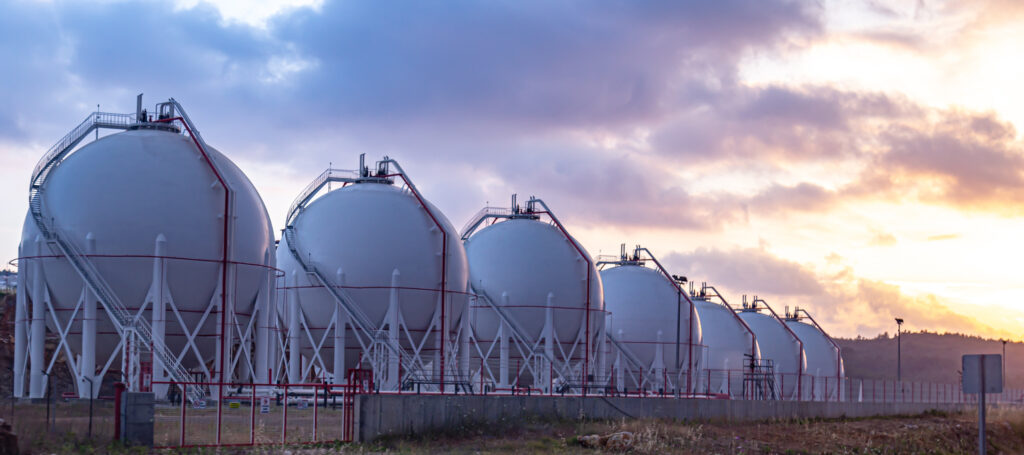
Shell’s strategic pivot towards Liquefied Natural Gas (LNG) as its primary value driver for the coming decade marks a significant evolution in the European energy major’s portfolio. CEO Wael Sawan’s renewed emphasis on natural gas, particularly LNG, signals a clear financial and environmental strategy: capitalize on robust global demand for a transitional fuel while aiming to improve the company’s financial performance relative to its peers. This shift, which has seen Shell scale back certain renewable energy ventures since January 2023, positions LNG as critical to both Shell’s bottom line and the broader global energy transition, especially in emissions reduction efforts in key Asian markets.
Shell’s LNG Ascent: A Decade of Value Creation
Shell’s commitment to LNG is not merely tactical; it’s a foundational pillar of its long-term value proposition. CEO Sawan explicitly stated that LNG will be the company’s largest contributor over the next ten years, driven by an anticipated 60% surge in global demand by 2040. This growth trajectory is expected to elevate LNG’s share of global natural gas sales from approximately 13% today to around 20%. The rationale extends beyond pure market capture; Shell views LNG as a critical enabler for lowering global emissions, particularly in regions like India and China, where it can effectively displace higher-carbon coal in power generation and industrial processes. Shell is actively pursuing new LNG projects in strategic locations such as Abu Dhabi and Nigeria, cementing its position at the forefront of the global LNG supply chain and underscoring its “absolute commitment” to the sector.
Navigating Volatility: Market Signals and Investment Decisions
While Shell’s long-term vision for LNG is clear, the current market landscape presents complexities that demand careful navigation. As of today, Brent crude trades at $90.38 per barrel, marking a notable 9.07% decline within the day, with its range spanning $86.08 to $98.97. Similarly, WTI crude has fallen by 9.41% to $82.59, moving between $78.97 and $90.34. This intraday volatility follows a broader trend; Brent has seen a nearly 20% contraction over the past two weeks, dropping from $112.78 on March 30th. This broader softening in crude prices, alongside a 5.18% dip in gasoline prices to $2.93, creates a more cautious environment for major capital expenditure decisions, even within the gas sector. Sawan himself expressed surprise at the number of recent final investment decisions (FIDs) for new LNG capacity, noting that many appear to be “at the higher end of the cost curve” and thus “not economically fully rational.” This perspective highlights a critical balancing act for Shell: seizing long-term demand opportunities while prudently timing investments to avoid oversupply in a potentially price-sensitive market.
Strategic Project Alignment: The LNG Canada Case Study
Despite broader market uncertainties, specific projects benefit from strong governmental backing and strategic alignment, offering compelling investment cases. Shell’s LNG Canada facility exemplifies this, particularly as the company evaluates an expansion for a second phase. CEO Sawan recently visited Vancouver, celebrating the initial success of Canada’s first major LNG export facility on the West Coast of North America. The project enjoys robust support, with Canadian Prime Minister Mark Carney including the expansion on a list of five key nation-building initiatives he seeks to expedite. Sawan noted the unprecedented alignment of provincial and national government support, remarking that “everyone is really keen on that project materializing.” This strong political will and perceived alignment of interests could de-risk future investments in the region, providing a critical advantage as Shell weighs its final investment decision against the backdrop of a massive wave of new LNG capacity expected to hit the market from the U.S. and elsewhere in the coming years. The timing of such decisions will be crucial, and market participants will be keenly watching for further developments.
Investor Focus: Navigating Energy Futures Amidst Strategic Shifts
Our proprietary data on investor intent reveals a consistent focus on market drivers and future price trajectories, especially concerning crude oil and natural gas. Investors are actively questioning “what do you predict the price of oil per barrel will be by end of 2026?” and “What are OPEC+ current production quotas?” These inquiries underscore the interconnectedness of the entire energy complex. While Shell is pivoting towards LNG, crude oil prices and OPEC+ decisions, such as the upcoming full ministerial meeting on April 19th, will undoubtedly influence broader sentiment and capital availability for all energy projects. Furthermore, critical data points like the API Weekly Crude Inventory (due April 21st and 28th) and the EIA Weekly Petroleum Status Report (April 22nd and 29th) provide short-term volatility indicators that influence trading strategies across the energy spectrum. For investors considering Shell’s long-term LNG strategy, understanding these macro oil market dynamics is essential. Shell’s move into LNG is a bet on sustained natural gas demand and its role in a decarbonizing world, but the profitability of this bet will still be influenced by the capital allocation decisions of major players, the overall health of the global economy, and the dynamic interplay of supply and demand across all hydrocarbon streams.