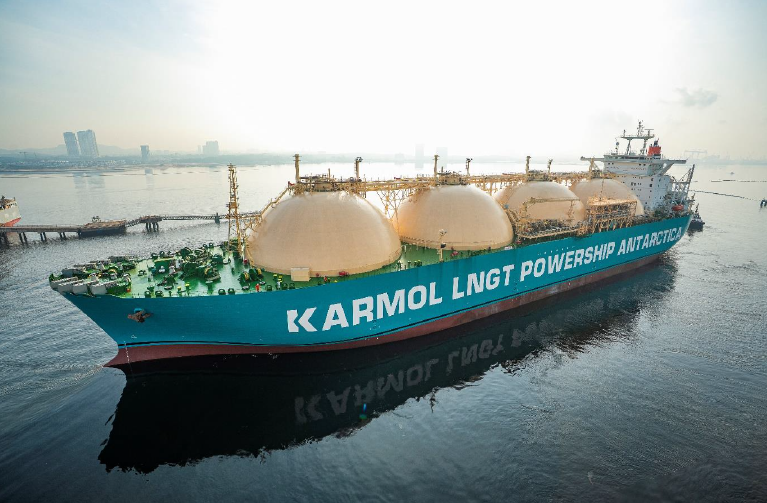
The global energy landscape continues to pivot towards flexible and resilient infrastructure, a trend underscored by the recent award of a Floating Storage Regasification Unit (FSRU) conversion contract to a market leader. This strategic deal, involving the transformation of an LNG carrier (LNGC) into an FSRU named LNGT Turkiye for Kinetics, an initiative by Karpowership, not only bolsters the recipient’s order book but also highlights the increasing demand for nimble LNG solutions worldwide. As nations prioritize energy security and seek pathways for cleaner power generation, FSRUs are emerging as a critical component of the global energy transition, providing rapid deployment capabilities and bridging critical supply-demand gaps.
Strategic Growth in Floating LNG Infrastructure
The latest FSRU conversion project marks a significant milestone, representing the seventh such award from Kinetics and affirming a robust strategic partnership. This particular contract materialized from an option confirmed in April 2024, following an initial agreement for three LNG carrier conversions into FSRUs. The scope of work for LNGT Turkiye is comprehensive, encompassing the installation of a regasification module, a sophisticated spread-mooring system, and the seamless integration of vital supporting systems for cargo handling, offloading, utilities, electrical components, and automation. This project, slated to commence in the third quarter of 2025, extends a proven track record that includes four successfully delivered FSRUs: Karmol LNGT Powership Africa, Asia, Europe, and Antarctica. With two more FSRU conversions currently in progress and scheduled for delivery later this year and in the first quarter of 2026, the company continues to cement its position as a dominant force in the specialized FSRU conversion sector, having completed 21 such projects since 2007.
Market Dynamics and Investor Sentiment on Energy Infrastructure
The broader energy market provides a dynamic backdrop for these infrastructure investments. As of today, Brent crude trades at $94.78, reflecting a minimal decrease of 0.01% within a daily range of $91 to $96.89. WTI crude similarly saw a marginal dip, settling at $91.22. This comes after a notable 14-day trend where Brent shed nearly 8.8%, moving from $102.22 on March 25th to $93.22 by April 14th. Despite this recent softening, crude prices remain at elevated levels historically, signaling persistent global energy demand and geopolitical risk premiums. Investors are keenly tracking global energy benchmarks, evidenced by frequent inquiries regarding base-case Brent price forecasts for the next quarter and consensus 2026 outlooks. This sharp focus underscores the macro environment impacting all energy sectors.
The demand for flexible LNG infrastructure, like FSRUs, is particularly resilient even as crude prices fluctuate. With investors also asking about the drivers for Asian LNG spot prices this week, it’s clear the market recognizes the distinct supply-demand dynamics within natural gas. FSRUs offer a quicker, more adaptable solution to energy security and transitioning away from more carbon-intensive fuels for power generation, especially in regions with limited or no existing onshore regasification facilities. This inherent flexibility in deployment and operation makes FSRUs an attractive proposition in an evolving energy mix, providing a faster path to market for LNG supply.
Upcoming Catalysts Shaping the Energy Outlook
The next two weeks present several critical data points that will influence market sentiment and potentially, global commodity prices. Key among these are the OPEC+ Joint Ministerial Monitoring Committee (JMMC) meeting on April 18th, followed by the Full Ministerial Meeting on April 20th. Any signals regarding production policy from these gatherings will directly impact crude supply expectations and global energy pricing, influencing the broader economic environment for energy investments.
Weekly API and EIA crude inventory reports, scheduled for April 21st/22nd and April 28th/29th, will offer granular insight into immediate supply-demand balances in North America, often setting the tone for short-term trading. Furthermore, the Baker Hughes Rig Count reports on April 17th and April 24th will provide a crucial pulse on upstream activity, signaling future production capacity. While these events primarily influence crude markets, their cumulative effect on overall energy price stability and economic growth directly impacts the investment thesis for midstream assets like FSRUs. A volatile or high-priced energy environment often accelerates the shift towards diversified and secure energy sources, benefiting LNG infrastructure that can quickly respond to regional energy deficits.
Investment Implications in Midstream Energy Infrastructure
The ongoing expansion of FSRU conversion projects reinforces the robust investment case for specialized midstream infrastructure providers. The award for LNGT Turkiye, being the seventh FSRU project from Kinetics, signals strong customer confidence and a robust, visible pipeline of work extending into 2026. This repeat business highlights the “stickiness” of such specialized contracts, where established expertise and a proven track record create significant barriers to entry for competitors. The company’s unique capability in FSRU conversions, with 21 successful projects since 2007, solidifies its market leadership in a niche but rapidly growing segment of the energy sector.
For investors, this trend underscores the strategic value of companies positioned at critical junctures of the global energy supply chain. FSRUs are not merely vessels; they are vital links in the LNG value chain, bridging the gap between gas supply and demand, particularly in regions where rapid energy solutions are paramount. These assets represent stable, long-term infrastructure plays that provide consistent revenue streams, driven by the ongoing global demand for natural gas as a reliable and cleaner alternative for power generation and industrial use.
The Evolving Role of FSRUs in Energy Transition
The strategic importance of FSRUs extends beyond immediate energy supply, positioning them firmly within the broader energy transition narrative. As an initiative of Karpowership, Kinetics’ focus on FSRUs is a testament to the role of natural gas as a crucial bridge fuel. These floating units enable countries to quickly access LNG, displace more carbon-intensive fuels like coal and heavy fuel oil for power generation, and reduce their carbon footprint without requiring extensive, time-consuming, and costly onshore infrastructure development. The flexibility and mobility of FSRUs are particularly valuable for developing economies or regions facing acute energy shortages, offering a fast-track solution to energy security and economic growth.
The conversion of LNG carriers into FSRUs represents an innovative approach to repurposing existing assets, aligning with principles of circularity and efficiency. This approach not only provides a cost-effective alternative to new build FSRUs but also accelerates project timelines. As the global energy mix continues to evolve, the ability to deploy flexible, scalable, and environmentally conscious energy solutions will be paramount. FSRUs stand out as a compelling example of how specialized infrastructure can support both immediate energy needs and long-term decarbonization goals, making them an increasingly attractive segment for forward-looking energy investors.