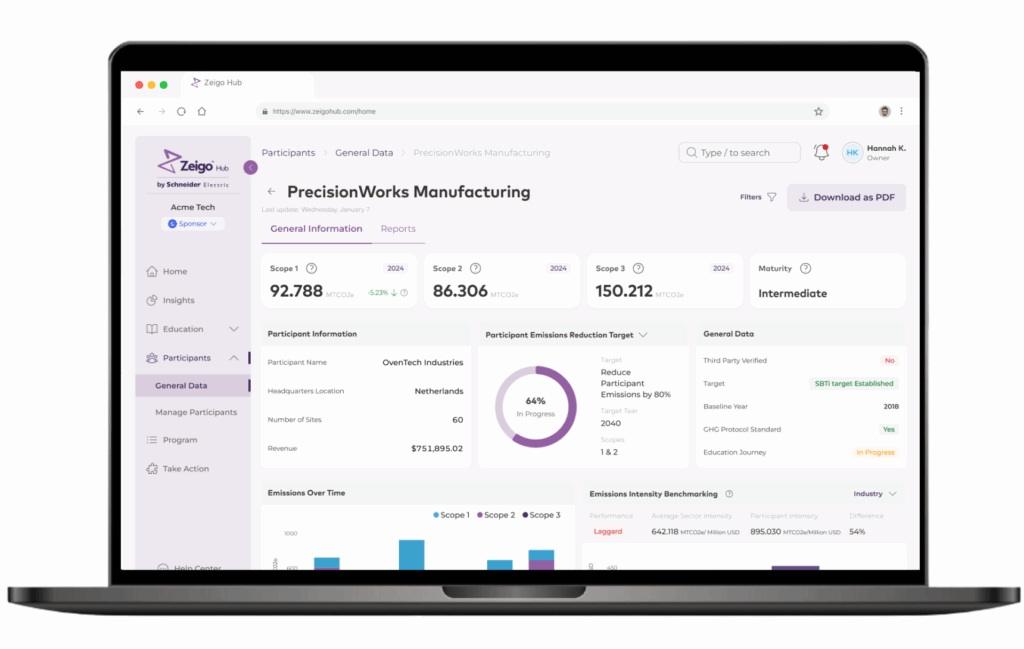
The energy landscape continues its multifaceted evolution, presenting both immediate volatility and long-term strategic shifts for oil and gas investors. While daily headlines often focus on supply-demand imbalances or geopolitical tensions, a quieter, yet profoundly impactful, trend is accelerating: the decarbonization of global supply chains. The recent launch of Zeigo Hub, a new AI-native digital platform designed to streamline supply chain decarbonization, serves as a powerful signal for investors. This isn’t merely a green initiative; it represents a growing imperative for corporations, driven by regulatory pressure and stakeholder demands, to reduce Scope 3 emissions. For oil and gas investors, understanding the proliferation of such solutions is critical. They signal a persistent, structural pressure on future fossil fuel demand and illuminate the pathways through which capital will increasingly flow towards lower-carbon solutions, even as traditional energy markets navigate their inherent cycles.
The Scope 3 Imperative: Reshaping Future Energy Demand
Corporations worldwide are facing intensifying scrutiny over their environmental footprint, with the focus increasingly shifting beyond direct operational emissions (Scope 1 & 2) to the vast and complex realm of Scope 3 emissions, primarily embedded within their supply chains. Zeigo Hub’s emergence directly addresses this challenge, offering tools for supplier engagement, emissions measurement, and progress tracking, with AI features simplifying data entry and customizing participation. This initiative underscores a fundamental shift in corporate strategy: a decarbonized supply chain is transitioning from a “nice-to-have” to a “strategic imperative.” For oil and gas investors, this trend is a crucial input for long-term models. When our readers ask for a base-case Brent price forecast for the next quarter or the consensus 2026 Brent forecast, they’re looking for insights into both immediate and future demand drivers. Platforms like Zeigo Hub, by enabling deep supply chain decarbonization, represent a systematic effort to reduce overall carbon intensity, which ultimately translates to reduced demand for carbon-intensive products and services, including traditional fossil fuels. The commitment of sponsoring organizations to cover supplier participation costs highlights the economic impetus behind this transition, signaling that major buyers are willing to invest significantly to achieve their emissions targets, thereby influencing the entire value chain.
Market Dynamics: Short-Term Swings Amidst Long-Term Pressures
While the strategic drive towards supply chain decarbonization builds momentum, the immediate oil and gas markets continue to display their characteristic volatility. As of today, April 15, 2026, Brent Crude trades at $94.7 per barrel, down 0.24% on the day, with WTI Crude at $90.97, down 0.35%. This daily fluctuation is part of a broader trend: over the past 14 days, Brent has experienced a notable decline, dropping from $102.22 on March 25 to $93.22 on April 14, marking an 8.8% decrease. This softness in crude prices, alongside a slight dip in gasoline futures to $3, reflects the continuous interplay of supply, demand, and macroeconomic sentiment. Investors grappling with these short-term movements, often focused on questions like how Chinese tea-pot refineries are running this quarter or what’s driving Asian LNG spot prices, must also keep an eye on the persistent, structural pressure exerted by initiatives like Zeigo Hub. While daily price action is dictated by immediate fundamentals, the long-term trajectory of global energy demand is being shaped by these widespread corporate decarbonization efforts. The strategic imperative to reduce emissions across global supply chains acts as a constant, underlying force, pushing for greater energy efficiency and a shift towards lower-carbon energy sources, irrespective of the day’s crude price movements.
AI’s Role in the Energy Transition: Efficiency or Erosion?
The integration of AI into sustainability solutions, as seen with Zeigo Hub’s AI-native ecosystem, represents a significant development for the broader energy sector. The platform leverages agentic AI to enhance supplier onboarding, simplify data entry through web scraping, customize invitations, and provide comprehensive program oversight. For oil and gas investors, AI’s expanding role presents a dual-edged sword. On one hand, AI offers immense potential for optimizing upstream and downstream oil and gas operations, improving efficiency, predictive maintenance, and reducing operational emissions (Scope 1 & 2) within the industry itself. Many major oil and gas players are already investing heavily in AI and machine learning to streamline their own processes. On the other hand, the deployment of AI in platforms like Zeigo Hub accelerates the ability of O&G customers to manage and reduce their Scope 3 emissions. By making it easier for industries across manufacturing, retail, and transportation to identify and act on emissions hotspots in their supply chains, AI-powered tools could indirectly accelerate the shift away from carbon-intensive inputs, thereby eroding long-term demand for traditional oil and gas products. Investors must critically assess how widespread AI adoption in decarbonization efforts will impact both the operational efficiency and the ultimate market size for fossil fuels.
Navigating Upcoming Catalysts and Strategic Shifts
Looking ahead, the next two weeks present several key events that will undoubtedly influence short-term oil market dynamics. The Baker Hughes Rig Count on April 17 and April 24 will offer insights into North American production activity, while the API and EIA Weekly Crude Inventory reports on April 21, 22, 28, and 29 will provide crucial data on crude and product stockpiles. Most notably, the OPEC+ Joint Ministerial Monitoring Committee (JMMC) meeting on April 18, followed by the Full Ministerial Meeting on April 20, will be closely watched for any signals regarding production quotas and market strategy. These events are fundamental for investors seeking to build a base-case Brent price forecast for the next quarter, as they directly impact supply. However, for a truly robust long-term investment strategy in oil and gas, these immediate catalysts must be contextualized within the larger, unwavering trend of decarbonization. While OPEC+ decisions might swing prices by several dollars in the coming weeks, the structural shift exemplified by platforms like Zeigo Hub indicates a fundamental re-evaluation of energy consumption across global industries. Investors must continue to balance the short-term trading opportunities presented by upcoming inventory reports and OPEC+ pronouncements with the long-term capital allocation decisions driven by the accelerating global imperative to decarbonize, ensuring their portfolios are resilient to both market volatility and strategic energy transitions.


