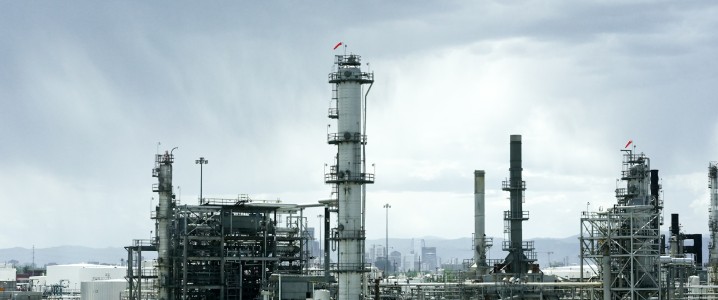
The global oil market is once again grappling with the ripple effects of geopolitical tensions, as recent UK sanctions against China’s newest major refiner, Shandong Yulong Petrochemical, send tremors through established crude supply chains. This development, impacting a facility with a substantial 400,000 barrels per day (bpd) processing capacity, highlights the escalating risks for international oil majors and underscores the inherent volatility investors face in the energy sector. Our proprietary data pipelines show market participants are intensely focused on how such disruptions will rebalance global flows and influence future pricing dynamics, especially in an already complex macroeconomic environment.
Immediate Fallout: Majors Reroute Crude and Payment Concerns Mount
The imposition of UK sanctions on Shandong Yulong Petrochemical has triggered an immediate and decisive response from some of the world’s largest oil players. Major international entities including BP and TotalEnergies, alongside national oil giants like Saudi Aramco and Kuwait Petroleum, as well as Chinese powerhouse PetroChina, have canceled spot cargo sales destined for Yulong. These cancellations primarily involve Middle Eastern and Canadian crudes, with the critical date being November 13, marking the start of the one-month wind-down period for the sanctions. The primary driver behind this swift action is the profound concern among Western banks regarding facilitating payments to a newly sanctioned entity. This financial apprehension effectively blocks traditional transaction pathways, forcing oil majors to reroute substantial crude volumes originally slated for Yulong’s state-of-the-art facility. For investors, this scenario highlights the immediate liquidity and counterparty risk that geopolitical actions can inject into even the most robust supply agreements.
Shifting Sands: Yulong’s Pivot to Sanctioned Barrels and Market Rebalancing
With conventional supply channels now curtailed, Shandong Yulong Petrochemical is expected to significantly pivot its crude sourcing strategy. Analysts anticipate the refiner, which previously sourced approximately half its crude from Russia, will now lean even more heavily on sanctioned Russian barrels. This mirrors the experience of Nayara Energy, an Indian refiner partially owned by Rosneft, which faced EU sanctions earlier and subsequently saw its imports of Saudi and Iraqi crude halted, leading to reduced run rates. While Yulong’s substantial 400,000 bpd capacity offers significant flexibility, a predominant reliance on sanctioned crude could introduce new logistical and operational challenges, potentially necessitating run cuts if suitable alternative barrels are not consistently available or if processing capabilities are constrained by the shift. For the broader market, this means a potential increase in demand for Russian crude, while non-Russian barrels originally destined for Yulong will now seek alternative buyers, possibly increasing competition and marginally impacting regional spot differentials.
Navigating Volatility: Market Prices Amid Geopolitical Risk
The sanctions against Shandong Yulong arrive at a time when crude markets are already exhibiting significant volatility. As of today, Brent Crude trades at $90.38 per barrel, a notable decline of 9.07% within the day’s range of $86.08 to $98.97. Similarly, WTI Crude stands at $82.59, down 9.41% from its previous close, fluctuating between $78.97 and $90.34. Gasoline prices have also seen a downturn, currently at $2.93, a 5.18% decrease. This downward pressure on prices is starkly contrasted with the Brent trend observed over the past 14 days, which saw the benchmark fall from $112.78 on March 30 to its current level of $90.38, a substantial drop of $22.4 or 19.9%. While broader macroeconomic concerns and demand outlooks likely dominate this recent price trend, the Yulong situation adds another layer of specific, supply-side uncertainty. Investors must consider how such targeted disruptions, even if localized, contribute to overall market instability and complicate price discovery, especially when weighing the balance between macro demand fears and micro supply chain shocks.
Investor Focus: Anticipating Future Moves and Data Needs
Our proprietary reader intent data reveals a keen investor focus on future oil price trajectories, with many asking “what do you predict the price of oil per barrel will be by end of 2026?” The Yulong situation, like other geopolitical developments, adds a significant variable to such long-term forecasts, emphasizing the need for robust analytical frameworks. Investors are also actively seeking clarity on “OPEC+ current production quotas” and the reliability of market data, questioning “What data sources does EnerGPT use? What APIs or feeds power your market data?” These questions underscore the heightened demand for accurate, real-time intelligence in a fragmented and sanction-heavy market.
Looking ahead, the next 14 days present several critical junctures for the energy market that will be influenced by ongoing geopolitical shifts and the Yulong situation. The upcoming OPEC+ Joint Ministerial Monitoring Committee (JMMC) Meeting on April 19, followed by the full OPEC+ Ministerial Meeting on April 20, will be crucial. Delegates will undoubtedly consider the implications of disrupted Chinese refining demand and increased Russian crude flows when assessing global supply-demand balances and deliberating on production quotas. Any decisions from OPEC+ will directly impact the supply side of the equation already complicated by these sanctions. Furthermore, the API Weekly Crude Inventory reports (April 21, 28) and the EIA Weekly Petroleum Status Reports (April 22, 29) will offer initial insights into whether the rerouting of crude to other refiners or storage facilities is creating discernible shifts in inventory levels. Finally, the Baker Hughes Rig Count on April 24 and May 1 will provide a pulse check on upstream activity, indicating how producers are reacting to current price levels and the overarching geopolitical risk landscape. For astute investors, these events are not just data points but critical indicators for navigating an increasingly complex and interconnected energy market.


