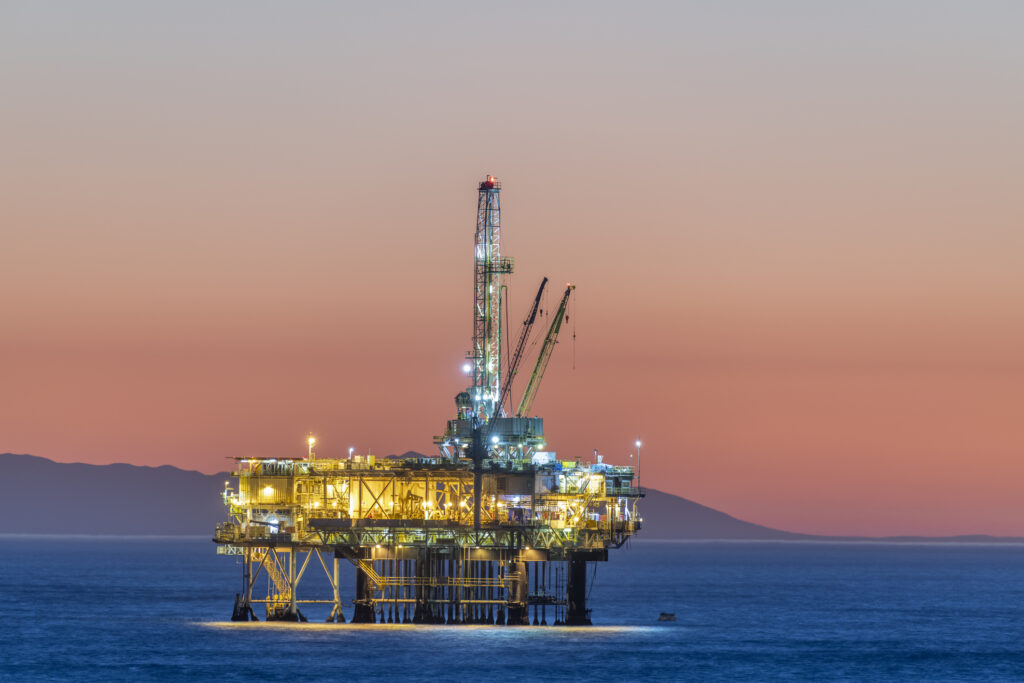
Sable Offshore Corp. finds itself at a critical juncture, navigating a complex web of state regulations, federal intervention, and environmental opposition as it strives to unlock hundreds of millions of barrels of crude off the coast of Santa Barbara, California. The Houston-based independent producer, having acquired the Santa Ynez Unit assets from ExxonMobil last year, successfully restarted oil production in May. However, the crucial onshore pipeline network required to transport this crude to California refineries remains shuttered, stalled by state regulatory resistance stemming from a 2015 pipeline incident. This standoff has forced Sable to explore drastic alternatives, including exporting crude via tanker, a move with significant implications for local energy supplies, state revenues, and, most importantly, investor confidence.
The Regulatory Maze and Federal Endorsement
The core of Sable Offshore’s challenge lies in California’s stringent regulatory environment. State authorities have consistently opposed the reopening of the Plains All American pipeline system, which is essential for funneling crude from the Santa Ynez Unit to refineries. This has put Sable, and its substantial oil reserves, in a state of operational limbo. Faced with this impasse, Sable CEO Jim Flores has directly appealed to the federal government, specifically engaging with the Trump administration’s National Energy Dominance Council, led by Interior Secretary Doug Burgum and Energy Secretary Chris Wright. Flores has emphasized the potential for California consumers to lose out on local fuel supplies if the crude is forced overseas, framing the issue as a matter of prioritizing domestic energy needs.
The federal government’s engagement, as confirmed by Flores, signals a potential high-level push to overcome state-level hurdles. However, environmental groups remain staunchly opposed, viewing Sable’s proposed pipeline restart and its tanker alternative as attempts to circumvent state oversight and environmental protections. Julie Teel Simmonds, senior counsel for the Center for Biological Diversity, explicitly stated that the tanker proposal “seems like a deliberate attempt to evade state oversight.” This political tug-of-war between state environmental mandates and federal energy independence objectives creates a high degree of uncertainty for Sable and its investors, highlighting the significant regulatory risk inherent in this project.
Market Headwinds and Investor Skepticism
Sable’s operational challenges are unfolding against a backdrop of significant volatility in the global crude oil markets. As of today, Brent Crude is trading at $90.38 per barrel, experiencing a notable decline of 9.07% within the day, with its range fluctuating between $86.08 and $98.97. Similarly, WTI Crude has seen a sharp drop, trading at $82.59 per barrel, down 9.41% today, moving within a daily range of $78.97 to $90.34. This downward pressure on prices, following a 14-day trend where Brent has fallen by nearly 20% from $112.78 on March 30, 2026, to its current level, adds another layer of complexity for projects with high capital expenditure and regulatory friction like Sable’s.
Such market conditions naturally amplify investor scrutiny. Our proprietary data on investor sentiment reveals a fluctuating, yet currently elevated, level of skepticism towards Sable Offshore. Short interest as a share of free-floating shares, which was as high as 21% in early May, dipped to roughly 4% in June, before climbing back to nearly 15% as of Wednesday. This resurgence in short positions suggests that a substantial portion of the market remains unconvinced about the project’s near-term viability or long-term profitability, particularly given the ongoing regulatory battles and the inherent risks of the proposed tanker strategy. Investors are clearly weighing the high potential reward against the very real and persistent operational and political headwinds.
The Tanker Alternative: A Risky Pivot
Sable’s consideration of using tanker ships to transport crude away from California refineries to other markets represents a significant strategic pivot. While Chief Executive Jim Flores views this as a definitive path forward if state approval remains elusive, it introduces a new set of risks and opportunities. Porter Collins, co-founder of Seawolf Capital and a long-position holder in Sable, asserts that “the oil is coming out of the ground one way or another,” underscoring the federal government’s desire for lower gas prices. However, this approach is not without its detractors. Environmental groups decry it as a deliberate evasion of state oversight, and even some investors worry about the potential economic impact on California through lost jobs and tax revenue if the crude bypasses local processing.
A key question on many investors’ minds, as evidenced by our reader intent data, is “what do you predict the price of oil per barrel will be by end of 2026?” This long-term price outlook directly impacts the economic viability of the tanker option. Exporting crude may incur higher logistical costs, potentially eroding margins compared to pipeline transport to local, often premium, markets. While it bypasses state pipeline restrictions, it subjects Sable’s crude to global market prices and potentially different regulatory frameworks in destination markets. Investors must carefully assess whether the tanker alternative provides a stable, profitable pathway or merely trades one set of challenges for another.
Upcoming Catalysts and Forward Outlook
For investors tracking Sable Offshore, the coming weeks and months will be crucial, with several external and internal catalysts potentially shaping the company’s trajectory. On the global stage, the upcoming OPEC+ Joint Ministerial Monitoring Committee (JMMC) meeting on April 19, followed by the full OPEC+ Ministerial Meeting on April 20, will be pivotal. Any decisions on production quotas could significantly impact global supply and crude oil prices, directly influencing the economics of Sable’s project, whether it utilizes pipelines or tankers. A decision to cut production, for instance, could bolster prices and improve Sable’s revenue outlook.
Domestically, a steady stream of data from the EIA and API, with weekly crude inventory reports on April 21, 22, 28, and 29, along with the Baker Hughes Rig Count on April 24 and May 1, will provide critical insights into US supply and demand dynamics. A tighter domestic market could strengthen the federal government’s argument for Sable’s project and potentially exert pressure on California regulators. Beyond these scheduled events, the most immediate catalysts for Sable will be any concrete developments regarding its appeal to the Trump administration. A definitive statement of federal support or, conversely, a firm rejection of the tanker plan by California, will be key indicators for investors to watch closely as Sable continues its battle to bring its significant offshore reserves fully to market.