The European Union’s relentless campaign to curtail Russia’s oil revenues through sanctions faces persistent challenges, as Moscow’s clandestine “shadow fleet” continues to operate with alarming impunity. Despite recent assertive measures by Brussels, including the blacklisting of hundreds of vessels, the illicit maritime network demonstrates a troubling resilience, prompting heightened security concerns across the continent.
EU Intensifies Sanctions Amidst Mounting Maritime Risks
In a significant move this week, the European Union’s foreign ministers formally adopted a fresh round of sanctions targeting Russia, directly impacting 189 vessels linked to the Kremlin’s shadow fleet. This latest action brings the total number of ships under restriction to nearly 350, underscoring the bloc’s commitment to tightening the economic noose on Moscow following its full-scale invasion of Ukraine. However, the efficacy of these measures is immediately put to the test by a series of concerning incidents at sea.
Just days after the EU’s declaration, Poland reported a serious security breach involving a Russian shadow fleet vessel. Prime Minister Donald Tusk disclosed that a sanctioned ship was observed conducting suspicious maneuvers in close proximity to the vital power cable connecting Poland and Sweden. Prompt intervention by Polish military forces compelled the vessel to retreat to a Russian port. This incident serves as a stark reminder of the broader risks posed by this opaque fleet, extending beyond mere economic circumvention to direct threats against critical European infrastructure.
The strategic importance of monitoring and disrupting Russia’s shadow fleet has gained considerable political momentum since June 2024, when Brussels first moved to designate Russian-operated oil tankers and deny them access to EU ports and services. Initially, the rationale behind these blacklists centered on preventing large-scale circumvention of Western sanctions. However, a series of unsettling events in the Baltic Sea has drastically broadened the scope of concern.
In December, Finnish authorities seized an oil tanker suspected of deliberately severing a crucial undersea cable, an incident that sent shockwaves through the region. More recently, Estonia issued a grave warning, asserting that Russia is now prepared to deploy military force to protect its aging fleet and maintain its illicit seaborne oil trade. This assertion followed an incident where Estonian authorities intercepted a suspicious vessel in its waters, operating without a discernible flag or insurance. Critically, a Russian military aircraft subsequently appeared on the scene, violating NATO airspace for approximately one minute. Estonian Foreign Minister Margus Tsahkna emphasized the seriousness of the situation, stating that Russia has now “officially tied and connected itself to the Russian shadow fleet,” a development with profound implications for regional stability and energy security.
The Genesis of a Clandestine Fleet
The emergence of Russia’s shadow fleet is a direct consequence of the G7 and Australia’s price cap mechanism on Russian seaborne oil, implemented in December 2022 after extensive international negotiations. This groundbreaking initiative prohibits Western companies from providing essential maritime services—such as insurance, financing, and flagging—to Russian tankers selling crude oil above a threshold of $60 per barrel. Subsequent caps were introduced for refined petroleum products, setting limits of $100 per barrel for premium-to-crude products and $45 per barrel for discount-to-crude products.
The primary objective of these price caps was twofold: to diminish Russia’s war chest by limiting its oil revenues, while simultaneously ensuring the continued flow of Russian crude to global markets, thereby preventing a destabilizing surge in international oil prices. In response, the Kremlin swiftly began assembling its own fleet of often decrepit, older tankers to bypass these stringent Western restrictions. This strategic move allowed Russia to continue exporting its oil without relying on Western maritime services, albeit at a significant operational and financial cost.
Navigating Opaque Waters: Scale and Economics
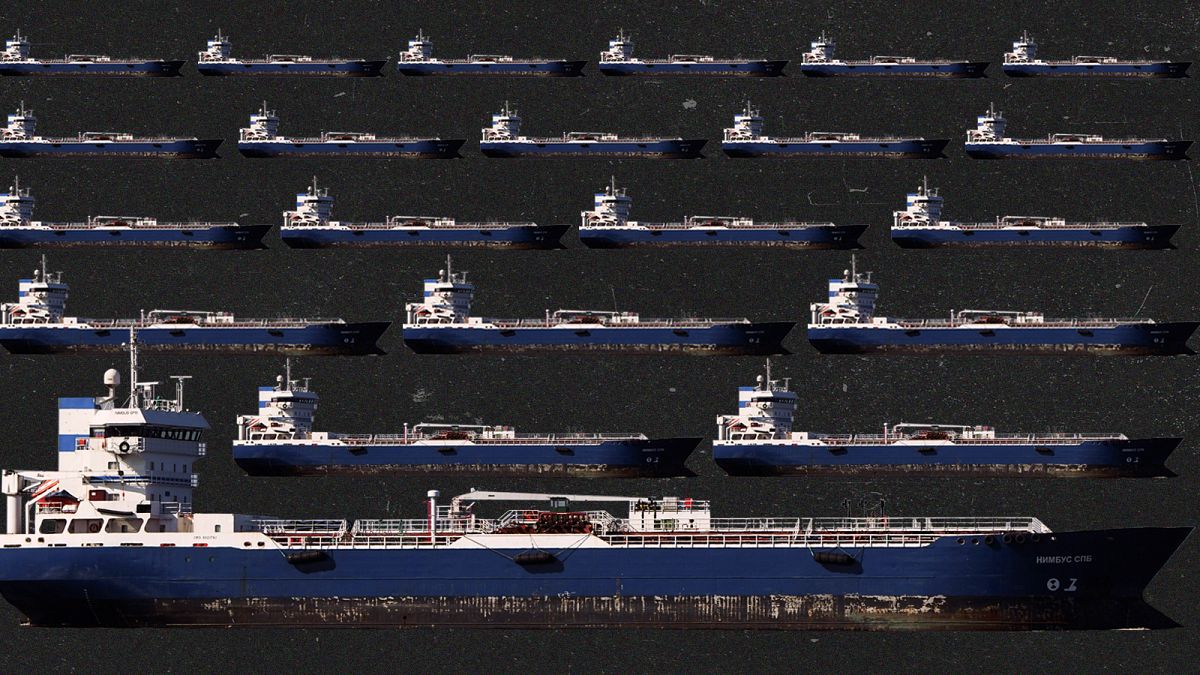
Estimates suggest Russia’s shadow fleet comprises anywhere from 600 to 1,000 vessels, predominantly older tankers acquired through opaque channels. These ships often operate under multiple flags of convenience, frequently changing their names and ownership structures to obscure their true origins and destinations. This elaborate web of shell companies and unclear registrations makes tracking and enforcement exceptionally challenging for international authorities.
While this fleet enables Russia to circumvent sanctions, it comes at a substantial price. Operating and maintaining aging vessels without access to standard Western insurance or maintenance services is inherently more expensive and riskier. Furthermore, Russia is often compelled to offer significant discounts on its crude to buyers willing to accept the increased risks and logistical complexities associated with the shadow fleet. This combination of higher operational costs and discounted sales ultimately erodes Russia’s net oil revenues, even as it maintains export volumes.
The Sanctions Dilemma: Effectiveness and Enforcement Challenges
The effectiveness of the EU’s sanctions regime against the shadow fleet remains a complex and debated topic for investors. While the price cap and associated restrictions have undoubtedly forced Russia to incur higher costs and sell its oil at a discount, Moscow has largely succeeded in maintaining its export volumes, continuing to generate substantial revenue to fund its war efforts. This mixed outcome highlights the formidable challenges in enforcing such a comprehensive sanctions regime on a global scale.
Key enforcement hurdles include the difficulty in precisely identifying the ultimate beneficial owners of vessels, the constant shifting of flags and corporate registrations, and the lack of universal jurisdiction over maritime activities. The ability of these vessels to operate outside standard regulatory frameworks, often without proper insurance or safety protocols, not only undermines sanctions but also poses significant environmental and safety risks to international waters.
Investment Implications and Outlook
For investors in the oil and gas sector, the persistence of Russia’s shadow fleet and the ongoing cat-and-mouse game with international sanctions introduce several critical considerations. The continued operation of this fleet contributes to the global oil supply, but its opaque nature and the associated geopolitical tensions inject considerable uncertainty into market dynamics. Any major disruption, whether due to increased enforcement, accidents involving aging vessels, or escalating military interactions, could trigger significant volatility in crude oil prices and tanker shipping rates.
Moreover, the heightened security risks in critical maritime corridors, exemplified by incidents in the Baltic Sea, underscore the broader geopolitical fragilities impacting global trade and energy security. Investors should closely monitor the evolving landscape of sanctions enforcement, Russia’s adaptive strategies, and the potential for these maritime tensions to escalate. The interplay between energy supply, geopolitical stability, and the integrity of international shipping lanes will remain a dominant theme, influencing investment decisions across the energy value chain for the foreseeable future.