The European Union has unequivocally declared the definitive end to its era of reliance on Russian fossil fuels, sending a clear signal that reverberates across global energy markets. This firm stance, articulated by European Commission President Ursula von der Leyen, marks an irreversible break from a decades-long energy partnership, carrying profound implications for investors navigating the oil and gas landscape.
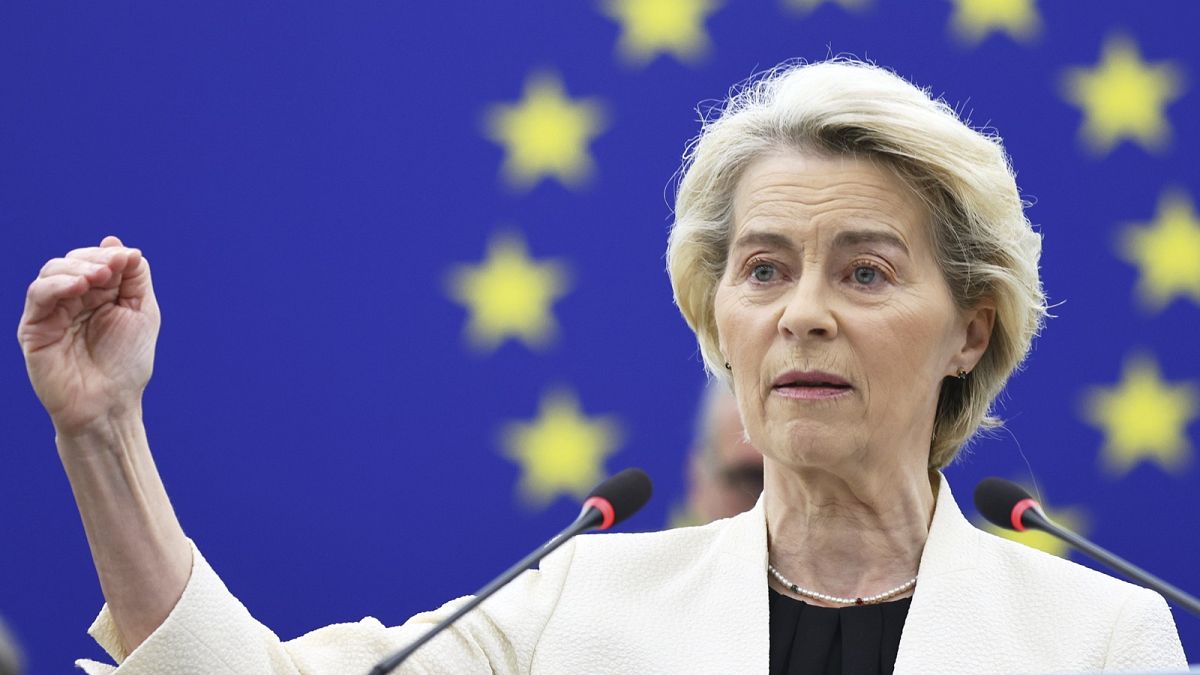
Speaking to lawmakers in Strasbourg, von der Leyen delivered a categorical rejection of any future resumption of Russian energy purchases, even in a post-conflict scenario for Ukraine. She characterized such a move as a “mistake of historic dimensions,” emphasizing that Europe’s “era of Russian fossil fuels is coming to an end.” This powerful declaration solidifies the EU’s long-term energy strategy, compelling investors to critically re-evaluate existing supply chain dependencies and identify emerging opportunities within the rapidly evolving European energy matrix.
Geopolitical Crosscurrents and European Resolve
This resolute position from the EU emerges against a complex geopolitical backdrop, which includes ongoing discussions surrounding a potential peace settlement for Ukraine. Speculation has surfaced, particularly from certain U.S. political circles, suggesting that Russian energy exports might be leveraged in future negotiations. The rationale often cited points to their critical role in Moscow’s budget and the Kremlin’s desire to bolster a fragile economy. Reports have even indicated that Russian Foreign Minister Sergey Lavrov touched upon the future of the Nord Stream pipelines in discussions, hinting at an aspiration for American influence to persuade Europe back towards Russian gas.
However, von der Leyen has drawn an unmistakable red line. “Some are still saying that we should reopen the tap of Russian gas and oil. This would be a mistake of historic dimensions. And we will never let it happen,” she asserted. Her remarks underscore a deep-seated distrust, citing Russia’s repeated weaponization of energy supplies. This pattern of disruption includes significant gas flow interruptions in 2006, 2009, 2014, 2021, and consistently throughout the current conflict. For oil and gas investors, this translates into an extraordinarily high geopolitical risk premium associated with Russian energy, particularly pipeline gas. This makes long-term capital allocation into such infrastructure an absolute non-starter for projects targeting the EU market.
Dismantling Decades of Dependency: A Supply Chain Overhaul
For many decades, the EU stood as Russia’s largest energy client. That multi-billion-euro commercial relationship, however, experienced a dramatic collapse in early 2022 following the full-scale invasion of Ukraine. Since then, the 27-member bloc has implemented unprecedented measures, including sweeping bans on Russian coal and seaborne oil. These actions have fundamentally reshaped global energy trade flows, prompting a massive and complex re-routing of supplies worldwide. Investors in shipping, refining, and alternative energy sources have felt the ripple effects, adapting to new logistical paradigms and shifting demand centers.
Despite these extensive sanctions and the overarching goal of decoupling, a notable anomaly persists within the EU’s energy import portfolio: Russian liquefied natural gas (LNG). Data reveals that EU member states collectively spent a staggering €23 billion on Russian energy in the past year. What is particularly striking for investors is that this amount surprisingly exceeded the bloc’s military assistance to Ukraine during the same period. A significant portion of this expenditure was directed towards Russian LNG. This paradox highlights an ongoing challenge for the EU in fully extricating itself from Russian energy, especially in specific market segments. For LNG infrastructure investors and traders, this presents a nuanced environment where Russian supply, despite political rhetoric, continues to find routes into the European market, though likely under increasing scrutiny and pressure for diversification.
Strategic Implications for Oil and Gas Investors
The definitive pronouncement from the European Commission signals a long-term structural shift in global energy markets. For investors in the oil and gas sector, several key takeaways emerge. First, the emphasis on energy security and diversification will continue to drive significant capital expenditure into new supply sources and infrastructure outside of Russia. This includes investments in new LNG import terminals, pipelines from alternative suppliers, and expanded renewable energy capacity across Europe.
Second, the geopolitical risk associated with Russian energy assets, particularly those with exposure to the European market, remains prohibitively high. Any investment thesis predicated on a return to pre-2022 energy trade patterns between the EU and Russia should be dismissed. This impacts not only direct investments in Russian companies but also any European entities with residual dependencies that could expose them to future sanctions or market volatility.
Third, the continued, albeit anomalous, flow of Russian LNG into Europe underscores the complexities of rapid energy transition and supply chain re-alignment. While the political will to cease all Russian fossil fuel imports is clear, practical market realities, particularly for gas, can lag. This creates both short-term arbitrage opportunities for traders and long-term uncertainty for investors in European gas infrastructure, who must weigh the evolving regulatory landscape against current import patterns.
Finally, the “mistake of historic dimensions” declaration should be interpreted by investors as a permanent policy pivot. The EU is committed to a future free from Russian energy, driving accelerated investments in renewables, energy efficiency, and a diversified portfolio of non-Russian oil and gas. This creates substantial opportunities for companies positioned to deliver these solutions, from renewable project developers to LNG producers and infrastructure providers in regions like the United States, Qatar, and Norway. Investors should position their portfolios to capitalize on these new vectors of growth and mitigate exposure to the declining era of Russian fossil fuel dominance in Europe.