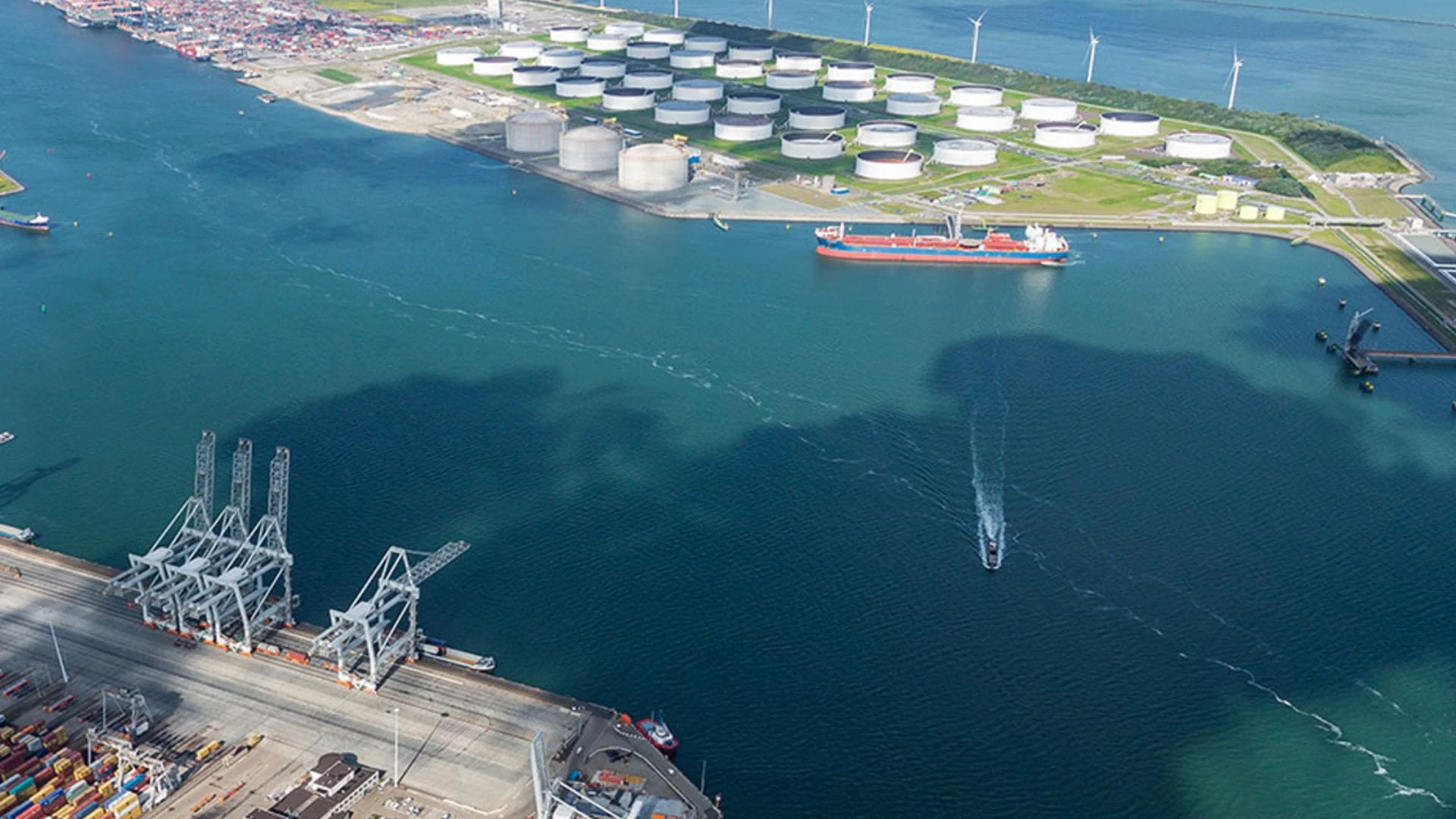
The energy investment landscape is undergoing a profound transformation, and a recent development from the Port of Rotterdam Authority marks a pivotal moment. With the successful issuance of the world’s first corporate bond exclusively dedicated to Carbon Capture and Storage (CCS), securing €50 million ($55 million) for the Porthos project, a new template for transition finance has emerged. This landmark transaction signals a maturing market for decarbonization infrastructure, offering investors a targeted avenue into the critical, hard-to-abate industrial sectors. For oil and gas investors navigating an increasingly complex market, this move by Europe’s largest port provides crucial insight into where institutional capital is flowing and the evolving risk-reward profiles within the broader energy sector.
A Groundbreaking Structure for Transition Finance
The significance of the Port of Rotterdam Authority’s €50 million bond cannot be overstated. Unlike traditional green or sustainability-linked bonds which often allocate proceeds to a broad array of environmental projects, this instrument is meticulously structured to funnel capital *solely* into CCS activities. This specificity, pioneered with HSBC as Sustainability Structurer, addresses a growing demand from institutional investors for transparent, ringfenced financing mechanisms dedicated to tangible climate solutions. The bond’s proceeds will directly fund the port authority’s equity stake in the Porthos project, a large-scale system designed to capture and store approximately 2.5 million tonnes of CO2 annually for 15 years. This level of targeted deployment is a game-changer, providing clarity and direct impact that resonates deeply with investors committed to quantifiable environmental, social, and governance (ESG) objectives. The involvement of major industrial players like Shell, ExxonMobil, Air Liquide, and Air Products as initial participants underscores the project’s foundational role in decarbonizing a critical European industrial hub.
Navigating Volatility: CCS as a Stable Investment Anchor
In a period characterized by significant market fluctuations, the appeal of stable, long-term infrastructure investments like CCS becomes particularly pronounced. As of today, Brent Crude trades at $90.35, reflecting a -0.09% movement, while WTI Crude stands at $86.82, down -0.69% for the day. This daily oscillation is just a snapshot of a broader trend; our proprietary data indicates Brent crude has shed nearly 20% over the last two weeks, plummeting from $118.35 on March 31st to $94.86 just yesterday. Such volatility fuels investor apprehension, with many of our readers keenly asking “is wti going up or down” and “what do you predict the price of oil per barrel will be by end of 2026?” These questions highlight a clear desire for predictability in an unpredictable market. In this context, the Rotterdam CCS bond offers a compelling counter-narrative: a long-term, de-risked asset class driven by regulatory imperatives and industrial necessity rather than the cyclical whims of global commodity markets. Anchor investors like Japanese insurer Dai-ichi Life are clearly recognizing the value in projects with contractual revenue streams and a clear decarbonization mandate, offering a degree of insulation from the immediate pressures facing conventional oil and gas plays.
Porthos: De-Risking the Industrial Decarbonization Playbook
The Porthos project itself is a testament to the viability and strategic importance of large-scale CCS. Situated within Europe’s largest industrial port cluster, it targets emissions from hard-to-abate sectors that lack immediate alternative decarbonization pathways. By collecting CO2 from hydrogen producers, refineries, and chemical plants, and then transporting it via pipeline for permanent storage in depleted North Sea gas fields, Porthos provides a tangible solution to a pressing environmental challenge. Construction commenced in 2024, with operations slated to begin by 2026. This operational timeline, coupled with the 15-year storage commitment, offers a long-term, predictable asset base. For investors, this project presents a compelling case: it’s backed by robust industrial demand, supported by a novel, dedicated financing structure, and addresses a critical component of global climate goals. The involvement of major energy and industrial giants further de-risks the project, signaling strong corporate commitment and ensuring a reliable revenue stream for the infrastructure.
The Road Ahead: Upcoming Catalysts and the Future of CCS Funding
Looking forward, the energy market will continue to be shaped by a confluence of factors, with upcoming events poised to inject further volatility into traditional oil and gas prices. The OPEC+ JMMC Meeting scheduled for April 21st, followed by the EIA Weekly Petroleum Status Reports on April 22nd and 29th, and the Baker Hughes Rig Counts on April 24th and May 1st, will each provide fresh data points that can swing market sentiment. The EIA’s Short-Term Energy Outlook on May 2nd will offer a more comprehensive view of future supply-demand dynamics. While these events dictate the immediate future of crude prices and the performance of conventional energy stocks, they also underscore the need for diversification and stability. The Rotterdam CCS bond serves as a bellwether, demonstrating that sophisticated investors are actively seeking opportunities that are less correlated with these conventional market drivers. We anticipate this model of targeted, project-specific financing for CCS and other critical energy transition technologies will gain significant traction, particularly as institutional mandates increasingly prioritize ESG and long-term climate resilience. The success of this bond is likely to inspire similar structures, opening new avenues for capital deployment in the rapidly evolving energy investment landscape.


