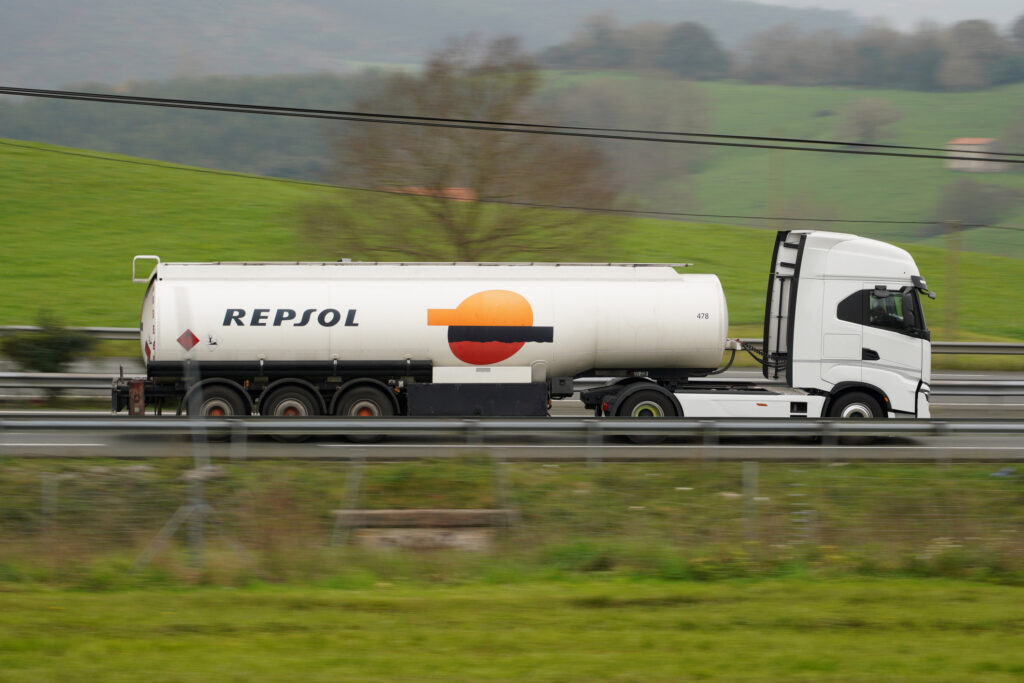
Repsol’s Upstream Strategy: A New York Listing Amidst Market Volatility
In a strategic maneuver poised to reshape its upstream portfolio, Repsol SA is actively exploring options for its exploration and production unit, with a reverse merger into a U.S.-listed entity like APA Corp. emerging as a prominent pathway. This move underscores Repsol’s ambition to unlock value and secure a New York listing for its upstream assets by 2026, a timeline executives have repeatedly emphasized. For investors tracking the global energy landscape, this potential consolidation represents a significant development, particularly against a backdrop of pronounced market volatility that demands strategic agility and robust capital allocation.
The Strategic Imperative: Value Unlocking and US Expansion
Repsol’s drive to list its upstream division is a culmination of a multi-year strategy aimed at optimizing its portfolio and channeling capital towards low-carbon initiatives. The journey began in 2022 when the Spanish energy giant divested a 25% stake in its upstream business to private equity firm EIG Global Energy Partners LLC, a transaction that valued the unit at a substantial $19 billion, including debt. This initial deal was explicitly designed to fuel the unit’s expansion, particularly within the lucrative U.S. market, while simultaneously generating funds for Repsol’s broader energy transition goals. The CEO, Josu Jon Imaz, recently confirmed to analysts that a public listing, a reverse merger, or a new private investor are all on the table for this “liquidity event” planned for 2026. This focus on a U.S. listing is critical, offering access to deeper capital markets and potentially higher valuations for oil and gas assets than those typically seen in European markets, which are increasingly pressured by ESG considerations.
APA Corp.: A Synergistic Partner in a Tumultuous Market
The discussions with APA Corp., formerly Apache Corp., highlight a compelling potential partnership. APA, with a current market capitalization of approximately $8.6 billion, brings a strong U.S. footprint, deriving the majority of its production from established basins like the Permian and the Gulf of Mexico. Its international portfolio is characterized by natural gas growth, with oil accounting for 51% of its total output. This profile complements Repsol’s upstream division, which produced 551,000 boed in the third quarter, with significant operations in Brazil, Mexico, and the U.S., including the development of the Pikka project in Alaska. A reverse merger with APA would not only provide Repsol’s upstream unit with a faster route to public trading but also immediately enhance its scale and geographic diversification, creating a more robust, diversified, and resilient entity. As of today, Brent crude trades at $90.38 per barrel, experiencing a sharp 9.07% decline within the day, while WTI crude sits at $82.59, down 9.41%. This significant daily drop follows a broader trend, with Brent having shed nearly 20% of its value over the past two weeks, falling from $112.78 on March 30 to its current level. This volatile market environment, marked by sudden price corrections, underscores the increasing appeal of consolidation for operators seeking greater efficiencies and reduced operational risk.
Investor Focus: Navigating Price Swings and Upcoming Catalysts
Our proprietary reader intent data reveals a keen investor focus on both the immediate trajectory of oil prices and the strategic implications for individual companies like Repsol. Many investors are asking about the short-term performance outlook for companies like Repsol and the broader direction of WTI crude prices. This intense scrutiny is particularly relevant in the current market, where significant daily swings are becoming more common. For a potential combined Repsol-APA entity, navigating these price fluctuations will be paramount. Looking ahead, the energy calendar is packed with events that could significantly influence crude prices and, consequently, the attractiveness and valuation of such a merger. The upcoming OPEC+ Joint Ministerial Monitoring Committee (JMMC) and Ministerial Meetings on April 19th and 20th, respectively, are critical. Any signals regarding production policy could trigger further market shifts. Additionally, the weekly API and EIA crude inventory reports on April 21st/22nd and April 28th/29th will provide vital insights into supply-demand dynamics in the U.S., directly impacting WTI pricing. Investors will be closely watching these events, as positive inventory data or a hawkish OPEC+ stance could provide a much-needed lift to prices, potentially enhancing the valuation prospects for a merged upstream entity. Conversely, a bearish outlook could temper enthusiasm, emphasizing the need for a strong, resilient combined operation.
Synergies, Scale, and the Path to 2026
The financial implications of a Repsol upstream and APA merger are substantial. Repsol’s upstream division, with its $19 billion valuation (including debt), would represent a significant acquisition for APA, which has an $8.6 billion market cap. This suggests a transaction structure where Repsol’s shareholders would likely hold a controlling stake in the combined, US-listed entity. The synergies are clear: a merged company would boast a more diversified geographic footprint, combining APA’s strong Permian and Gulf of Mexico positions with Repsol’s high-impact projects in Alaska (Pikka), Brazil, and Mexico. This expanded scale could unlock significant operational efficiencies, reduce per-barrel costs, and enhance access to capital for future development projects. While discussions are exploratory and other options, including a standalone IPO or further stake sales, remain under consideration, the reverse merger path offers speed and an immediate market presence. The consolidation trend in the U.S. upstream sector, driven by the need for scale and efficiency in mature shale plays, further validates this strategic direction. For investors seeking exposure to a growing, diversified upstream player with a strong U.S. presence and international reach, the potential Repsol-APA combination presents a compelling long-term thesis, contingent on the successful navigation of current market volatility and the realization of strategic synergies.