The global energy landscape is perpetually in flux, a dynamic interplay of geopolitics, technological innovation, and shifting policy agendas. Recent signals from the United States, particularly concerning a potential rollback of clean energy initiatives under a future Trump administration, have sent ripples through the renewable sector. Esteemed pioneers of the wind power industry, Henrik Stiesdal and Andrew Garrad, have voiced significant alarm, describing a “change of mood” that threatens the momentum of the energy transition. For astute oil and gas investors, this isn’t merely a headline about renewables; it represents a critical inflection point that could profoundly reshape demand forecasts, investment strategies, and the long-term outlook for traditional hydrocarbon assets. Understanding these potential shifts, informed by real-time market data and forward-looking event analysis, is paramount to navigating the evolving energy investment terrain.
Political Headwinds and Their Impact on the Energy Transition Narrative
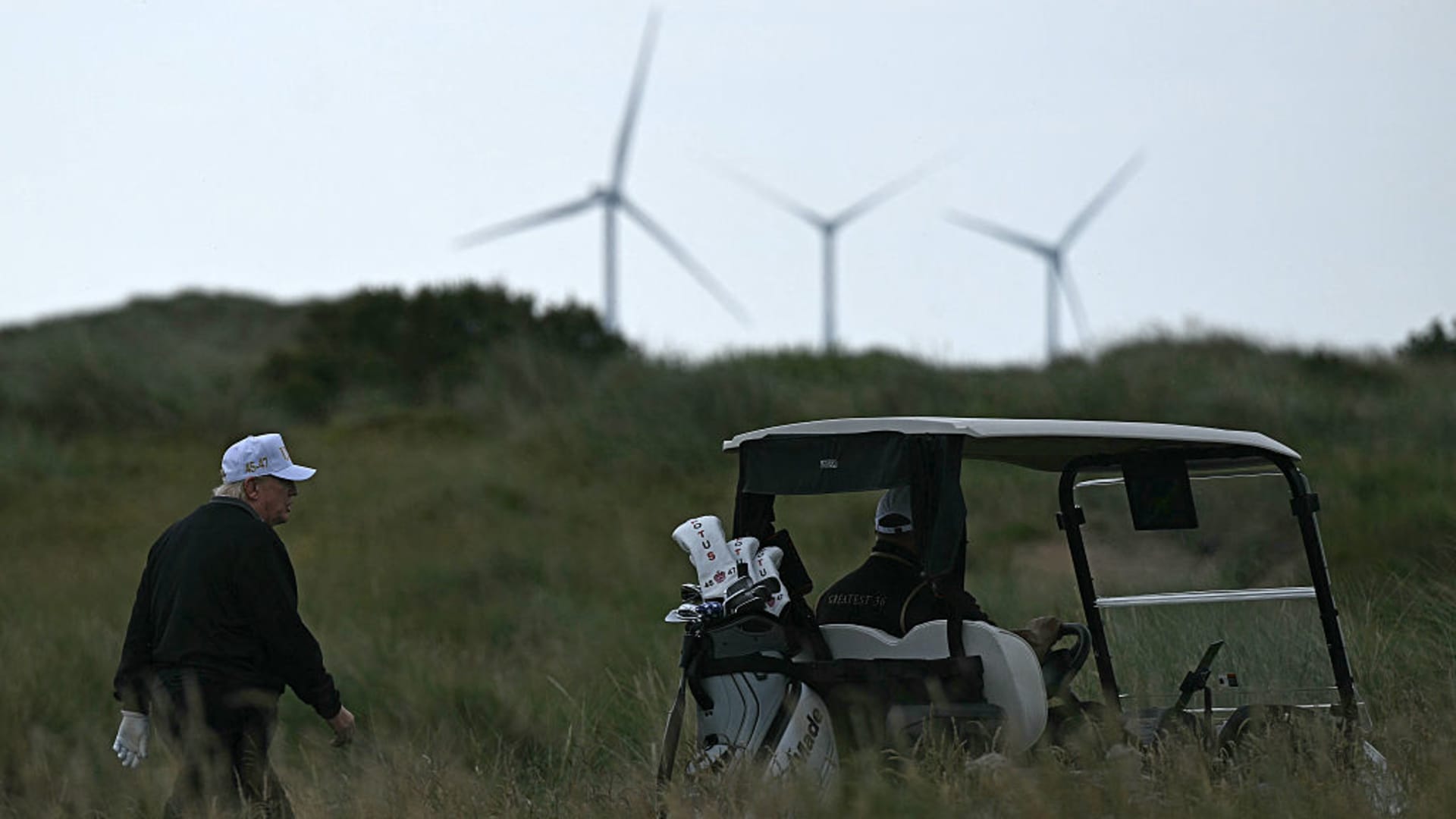
The “war on wind” and broader anti-climate agenda championed by former President Trump, and the potential for its re-implementation, signals a tangible risk to the established trajectory of the energy transition. While the commitment to decarbonization remains strong in many parts of the world, a significant pivot in a major economy like the United States could have cascading effects. The removal of green incentives, as seen with previous actions against the Inflation Reduction Act’s provisions, directly challenges the economic viability of renewable projects. This isn’t a minor setback; it’s a structural threat to the business models of renewable energy giants, exemplified by Denmark’s Orsted, which reported a net loss of $261.8 million for the July-September period. Such financial challenges, leading to an over 80% drop in Orsted’s shares from their 2021 peak, underscore the profound sensitivity of the renewable sector to political will. For oil and gas investors, this scenario prompts a re-evaluation: does a decelerated energy transition in the US imply a longer runway for hydrocarbon demand, potentially altering the perceived peak oil timeline?
Navigating Market Volatility Amidst Policy Uncertainty
The broader energy market is already grappling with considerable volatility, and policy uncertainty only compounds this challenge. As of today, Brent crude trades at $90.38 per barrel, marking a significant 9.07% decline within the day, with prices ranging from $86.08 to $98.97. Similarly, WTI crude sits at $82.59, down 9.41% within a range of $78.97 to $90.34. This recent dip comes after Brent shed $22.4, or nearly 20%, from $112.78 just two weeks ago. Gasoline prices have also seen downward pressure, currently at $2.93, a 5.18% drop. This pronounced market fluctuation is influenced by a confluence of macroeconomic factors, geopolitical tensions, and, increasingly, the evolving narrative around energy policy. A potential US shift away from aggressive renewable deployment could, paradoxically, introduce another layer of demand-side uncertainty for oil and gas, even as it appears to remove competitive pressure. Investors must weigh how reduced domestic renewable capacity might interact with global supply dynamics, especially when considering the significant recent declines in crude benchmarks. The question becomes: how much of this current volatility is organic market movement, and how much is already pricing in the potential for significant policy shifts and their downstream effects on both supply and demand for all energy sources?
Key Upcoming Events to Watch for Market Signals
Forward-looking analysis demands close attention to scheduled market-moving events, especially when policy paradigms are in flux. Investors should keenly observe the upcoming OPEC+ Joint Ministerial Monitoring Committee (JMMC) Meeting on April 19th, swiftly followed by the full OPEC+ Ministerial Meeting on April 20th. These meetings are pivotal for understanding global supply intentions. If the US were to significantly slow its renewable build-out, how might OPEC+ interpret this for their own production strategy? Could it embolden them to maintain current quotas or even consider adjustments, given a potentially longer horizon for global oil demand? Furthermore, the regular pulse of supply data from the US remains critical. The API Weekly Crude Inventory reports on April 21st and April 28th, alongside the EIA Weekly Petroleum Status Reports on April 22nd and April 29th, will provide crucial insights into domestic stock levels and refining activity. These reports will offer early indications of how existing US energy policy, and the anticipation of future changes, are impacting current supply-demand balances. Finally, the Baker Hughes Rig Count, released on April 24th and May 1st, will reveal the health and outlook of US domestic production, a key factor in global supply equilibrium. Each of these events, when viewed through the lens of potential US policy shifts, takes on added significance for oil and gas investors.
Addressing Investor Concerns: Long-Term Outlook and Strategic Positioning
Our proprietary market intelligence reveals a clear focus among investors on the long-term trajectory of energy prices, with frequent inquiries such as “what do you predict the price of oil per barrel will be by end of 2026?” and “What are OPEC+ current production quotas?”. These questions underscore the deep uncertainty surrounding future energy demand and supply. A potential slowdown in US renewable expansion directly influences these forecasts. If the world’s largest economy scales back its transition efforts, it could extend the period of robust demand for traditional fossil fuels beyond previous projections. This would, in turn, influence OPEC+’s strategic decisions regarding production quotas, as they balance market share against price stability. While the “Godfathers of wind” express concern over the “worm turning” against renewables, for oil and gas investors, this turning offers a complex but potentially advantageous scenario. It suggests that the competitive pressure from certain renewable sectors might ease, providing a longer window for return on investment in conventional energy projects. However, this must be balanced against the inherent political risk and the global imperative to decarbonize. Strategic positioning in this environment requires a nuanced understanding of these geopolitical shifts, integrated with a rigorous analysis of market fundamentals and the potential for a prolonged reliance on traditional energy sources.