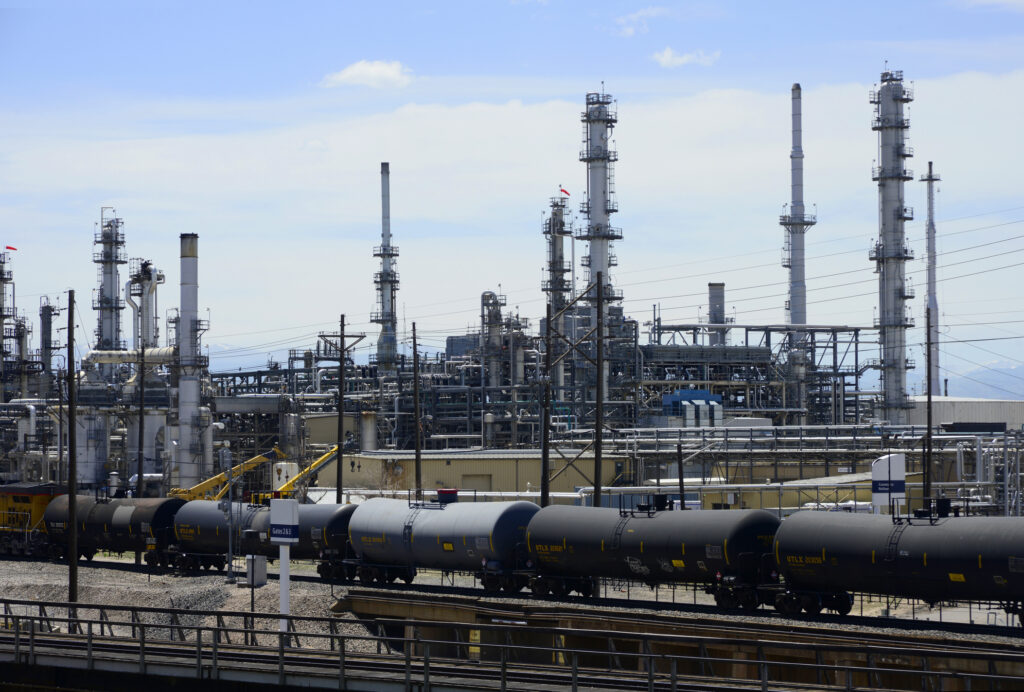
While crude oil markets have shown recent volatility, the global refining sector continues to deliver robust profitability, with margins reaching multi-year highs. This divergence highlights a structural shift in the downstream segment, presenting unique opportunities and challenges for energy investors. Far from being a short-term anomaly, the strength in refining is fundamentally driven by a confluence of geopolitical pressures, persistent supply disruptions, and a significant lack of new processing capacity in key Western economies. This analysis delves into the underlying factors sustaining these elevated margins, leveraging proprietary market data and forward-looking insights to provide a comprehensive outlook for investors navigating the complex energy landscape.
Refining Resilience Amidst Crude Softness
The resilience of refining profitability is striking, especially when juxtaposed against recent crude oil price movements. As of today, Brent crude trades at $90.17 per barrel, marking a significant 9.28% decline within the day, while WTI crude follows a similar trajectory at $82.21, down 9.83%. This recent softening is part of a broader trend, with Brent having shed over 12% from its late March peak of $112.57 to $98.57 by mid-April. Despite this downturn in feedstock costs, refining margins have largely held their ground, and in many cases, strengthened, demonstrating a profound disconnect between upstream and downstream fundamentals.
In the U.S., the critical 3-2-1 crack spread, a key indicator of refining profitability, registered $32.13 per barrel in mid-November, hovering near levels not seen since March 2024. European diesel margins, a bellwether for middle distillates, climbed to $33.90, their highest since September 2023. Even with recent fluctuations, such as gasoline prices easing slightly to $2.92 per gallon today, down 5.5% within the day, the overall picture suggests deep-seated support for refined products. This sustained strength, particularly for diesel, is not merely a post-maintenance surge but reflects underlying market tightness that provides refiners with a strong incentive to maximize throughput, a trend confirmed by the International Energy Agency’s forecast for increased European refining activity.
Structural Imbalances and Geopolitical Pressures Fueling Margins
The underlying drivers of this refining squeeze are multifaceted, extending beyond transient market dynamics to encompass significant structural imbalances and persistent geopolitical pressures. Sanctions targeting Russian oil and refined products continue to reshape global trade flows, forcing longer shipping routes and creating regional supply deficits, particularly for middle distillates in Europe. This has been exacerbated by operational disruptions, including Ukrainian drone attacks on Russian refineries and critical pipelines, alongside planned and unplanned maintenance at facilities worldwide.
Beyond geopolitical events, a fundamental problem persists: the lack of new refining capacity, especially in Western economies. Key facilities like Nigeria’s Dangote refinery have undergone maintenance, while others in Asia and the Middle East, such as Kuwait’s Al-Zour, have experienced outages, further tightening global supply. Industry analysts widely agree that without substantial investments in new plant construction, a highly improbable scenario given current environmental policies and capital expenditure trends, this refining squeeze is set to persist. The International Energy Agency acknowledged this strong incentive, raising its forecast for European refining throughput by 290,000 barrels per day for November and December as refineries ramp up production post-maintenance, highlighting the market’s response to these elevated profit signals.
Investor Sentiment: Navigating the Crude-Product Disconnect
Our proprietary reader intent data reveals a keen investor interest in navigating these divergent market signals. Many are asking about the trajectory of crude oil prices, with common queries like ‘what do you predict the price of oil per barrel will be by end of 2026?’ and ‘What are OPEC+ current production quotas?’. This highlights a focus on both macro crude forecasts and the potential impact of supply-side policies. Additionally, questions such as ‘How well do you think Repsol will end in April 2026?’ underscore investor attention on specific integrated energy companies with significant refining exposure.
The sustained strength in crack spreads, even with crude prices oscillating, underscores the importance of refining segments for companies like Repsol or TotalEnergies, whose downstream profits jumped 76% in recent quarters. Investors are clearly weighing the impact of potential crude oversupply, driven by OPEC+ production and non-OPEC increases, against the undeniable tightness in refined product markets. The growing differential between crude and product prices suggests that, for the foreseeable future, companies with robust refining assets are well-positioned to capture significant value, potentially offsetting some of the volatility inherent in upstream earnings.
Upcoming Events and the Forward Trajectory of Refining
Looking ahead, several key events on the energy calendar will shape the short-to-medium term outlook for both crude markets and, by extension, refining profitability. The upcoming OPEC+ Joint Ministerial Monitoring Committee (JMMC) meeting today, April 17th, followed by the Full Ministerial meeting tomorrow, April 18th, will be critical. Any decision on supply adjustments could significantly impact crude price stability. A continued commitment to production cuts could provide a floor for crude, while any increase might further widen the crude-product differential, bolstering refining margins by keeping feedstock costs lower.
Beyond OPEC+, the regular API and EIA Weekly Petroleum Status Reports (scheduled for April 21st, 22nd, 28th, and 29th) will offer crucial insights into U.S. inventory levels for crude and refined products. Persistent drawdowns in product inventories would reinforce the tightness in the downstream market, providing further incentive for refiners to maintain high run rates. Similarly, the Baker Hughes Rig Count on April 24th and May 1st will indicate the future trajectory of U.S. crude supply. While these events primarily impact crude, their influence on feedstock costs will indirectly dictate the magnitude of refining profitability in the coming weeks, suggesting that the current robust margin environment is likely to persist through the second quarter.
Strategic Implications for Integrated Energy Players
For integrated energy majors, the current market dynamic represents a significant windfall, validating the strategic value of their downstream assets. Companies that had expressed caution about refining prospects earlier in the year are now reaping substantial benefits. TotalEnergies CEO Patrick Pouyanne explicitly stated that recent U.S. sanctions on Russian producers would further push refining margins and oil prices higher in the fourth quarter, indicating confidence in continued strong performance. This validates the integrated model, where strong downstream earnings can provide a crucial hedge against upstream volatility and contribute significantly to overall corporate profitability.
The high margins are not merely a temporary phenomenon; they are fundamentally driven by an insufficient global refining capacity to meet persistent product demand. This structural shortage, particularly acute in Europe for diesel, incentivizes refiners to maximize throughput and optimize their operations. As such, investors should continue to evaluate energy companies based on their refining exposure, operational efficiency, and geographical footprint, as this segment is poised to be a key driver of profitability and shareholder returns well into 2026, offering a compelling narrative amidst broader market uncertainties.