Escalating Geopolitical Strikes Introduce Significant Upside Price Risk Amidst Market Volatility
The global oil market is grappling with a new layer of uncertainty following a series of sophisticated Ukrainian drone strikes deep within Russia’s energy infrastructure. These attacks, particularly targeting the Kirishi refinery and the Primorsk oil terminal, represent a critical escalation that promises to tighten supply for both crude and refined products. While market sentiment can be volatile day-to-day, the structural implications of these disruptions point towards an inherent upside price risk that investors must carefully factor into their strategies. Our analysis indicates these incidents are not merely isolated events but a strategic campaign designed to impact Russia’s export capabilities, directly challenging the global supply balance as we head into periods of seasonal demand.
Key Infrastructure Hits Signal Persistent Supply Constraints
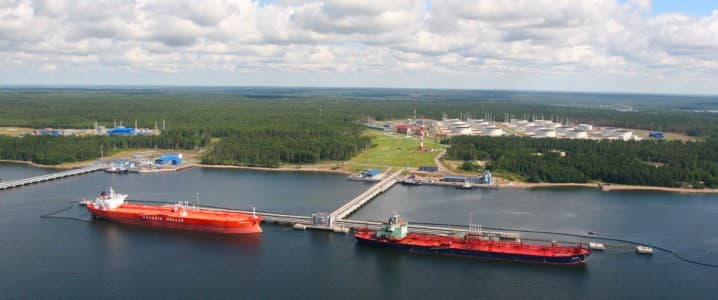
The recent strikes have inflicted tangible damage on vital components of Russia’s energy complex. The Kirishi refinery, a colossal facility near St. Petersburg, has been forced to shut down a major processing unit after fires erupted. This unit alone represents roughly six percent of Russia’s total refining capacity, handling 355,000 barrels per day. Such an outage immediately constrains Russia’s ability to produce refined products, notably diesel, which is a critical export commodity. Concurrently, the Primorsk oil terminal, a key Baltic Sea crude export hub shipping up to 1 million barrels per day, suffered damage to on-shore pumping equipment and saw two Aframax tankers, the Kusto and the Cai Yun, impacted. While some reports suggest partial resumption of operations, proprietary maritime tracking data indicates both vessels remain berthed since Friday, with ship-to-ship movements limited and loading capacity potentially cut by as much as 50%. This dual blow to refining capacity and crude export logistics underscores a significant and ongoing threat to Russian supply flows, creating a tangible bottleneck in the Baltic system that traders are actively assessing.
Market Reacts to Shifting Fundamentals and Broader Headwinds
Despite the clear implications of tightening supply from a major producer, the immediate market reaction has been complex, reflecting broader macroeconomic forces and short-term trading dynamics. As of today, Brent crude trades at $90.38 per barrel, registering a notable 9.07% decline, with its daily range spanning from $86.08 to $98.97. WTI crude similarly saw a sharp retreat, now priced at $82.59, down 9.41%. Gasoline prices also softened, currently at $2.93, a 5.18% decrease. This daily sell-off contrasts with the inherent bullishness one might expect from supply disruptions. It suggests that while the geopolitical risk premium from the Russian strikes is real, it’s currently being overshadowed by other factors such as profit-taking after recent highs, broader demand concerns, or a market reassessment of the immediate duration of these outages. However, examining the 14-day trend reveals Brent had already softened from $112.78 on March 30th to $91.87 on April 17th, indicating a pre-existing bearish sentiment that today’s geopolitical events might be accelerating rather than fully reversing. Investors should recognize that while today’s prices reflect a pullback, the underlying supply tightening from these strikes remains a significant forward-looking risk that could quickly reverse sentiment.
Upcoming Events to Watch for Market Direction
The coming weeks are packed with critical energy events that will interact with the evolving situation in Russia, providing fresh catalysts for price action. This weekend, the OPEC+ Joint Ministerial Monitoring Committee (JMMC) and the Full Ministerial Meeting (April 18-19) take center stage. Against the backdrop of these unexpected Russian supply disruptions, any statement or decision from OPEC+ regarding current production quotas will be scrutinized for its impact on global balances. Will the group acknowledge the tightening risk from Russia, or will they maintain their current cautious stance? Following this, the API Weekly Crude Inventory (April 21, April 28) and the EIA Weekly Petroleum Status Report (April 22, April 29) will offer crucial insights into U.S. inventory levels. Persistent disruptions to Russian exports could begin to manifest as tighter global balances, potentially leading to drawdowns in key inventories, especially for refined products. Furthermore, the Baker Hughes Rig Count on April 24th and May 1st will provide a read on North American production activity, though the immediate impact of the Russian strikes is likely to dominate short-term market narratives. These scheduled events, now imbued with the added geopolitical uncertainty, become essential checkpoints for investors seeking to gauge market direction and potential supply-demand shifts.
Investor Focus on Long-Term Price Trajectory and Portfolio Resilience
Our proprietary reader intent data highlights that investors are keenly focused on the forward trajectory of oil prices, with many asking about predicted prices per barrel by the end of 2026 and the performance of key industry players. This longer-term outlook is now significantly influenced by the escalating geopolitical risks to Russian energy infrastructure. While the market digested today’s price movements, the sustained tempo of Ukrainian strikes, targeting not only export terminals but also critical refining units, introduces a structural reduction in effective supply capacity from one of the world’s largest energy exporters. This inherently supports higher prices over the medium term. For investors, this means evaluating portfolio exposure across the energy value chain. Integrated oil majors and refiners, in particular, face a dynamic landscape. Reduced Russian product exports could boost crack spreads for refiners in other regions, while the overall tightening crude market could support upstream segments. The direct impact on ‘shadow fleet’ tankers, such as the Kusto and Cai Yun, also raises questions about shipping capacity and costs. Prudent investors should assess the resilience of their holdings against potential prolonged supply disruptions and be prepared for continued volatility as geopolitical events reshape fundamental supply and demand dynamics.


