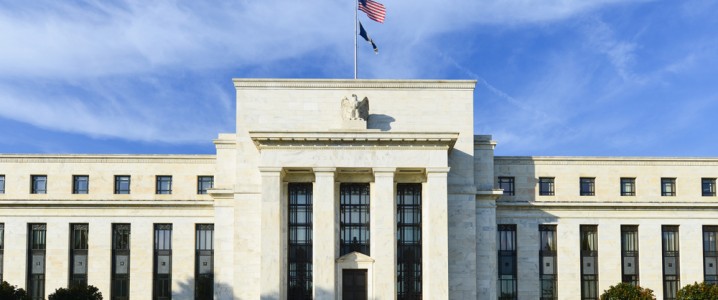
The financial markets are signaling an almost undeniable shift in monetary policy, with traders now assigning a 99.9% probability to a quarter-point interest rate cut by the Federal Reserve at its September 16–17 policy meeting. This aggressive pricing reflects recent U.S. economic data, including a moderate rise in July’s Consumer Price Index and revised labor figures showing significantly weaker job growth from May through July. For oil and gas investors, this impending dovish pivot presents a complex but largely bullish outlook, potentially stimulating global economic activity and, consequently, crude demand. However, the path to easing is not without its internal disagreements within the Fed, and the broader market is currently navigating immediate headwinds, making strategic positioning crucial.
Monetary Easing: A Tailwind for Global Demand
The overwhelming market consensus for a September rate cut stems from a confluence of factors pointing to an economy that could benefit from looser monetary conditions. Treasury Secretary Scott Bessent, a prominent voice within the administration, has even advocated for a more aggressive half-point reduction, stating that current rates are “too constrictive” and should be 150 to 175 basis points lower. Bessent argues that if weaker job numbers had been available earlier, cuts could have commenced in June or July. This sentiment suggests that the underlying economic momentum, particularly in the labor market, is softer than previously understood, demanding a proactive response from the central bank. For the energy sector, lower interest rates typically translate into reduced borrowing costs for producers and increased consumer and industrial spending, both of which are foundational drivers of oil and gas demand. Companies can more easily finance expansion projects, while a healthier economy encourages travel, transportation, and manufacturing, directly boosting fuel consumption.
Current Market Dynamics: A Pullback Amidst Future Optimism
Despite the strong signals for future rate cuts, the immediate picture for crude oil shows a significant pullback. As of today, Brent crude trades at $90.38, reflecting a substantial 9.07% decrease on the day, with its range fluctuating between $86.08 and $98.97. Similarly, WTI crude is priced at $82.59, down 9.41%, trading within a daily range of $78.97 to $90.34. This sharp correction follows a period of higher prices, with Brent having shed $20.91, or 18.5%, from $112.78 on March 30th to $91.87 just yesterday. Gasoline prices have also seen a notable decline, currently standing at $2.93, a 5.18% drop. This recent volatility suggests that while the prospect of rate cuts is long-term bullish, the market is currently digesting other factors, perhaps profit-taking after a run-up, or a short-term focus on the economic deceleration that necessitates the cuts in the first place. Investors must distinguish between short-term price action and the longer-term demand stimulus expected from sustained monetary easing.
Navigating Fed Divisions and Investor Concerns
While the market largely anticipates cuts, the Federal Reserve itself is not entirely unified. Chicago Fed President Austan Goolsbee, a voting member of the FOMC, has cautioned against “lurching” into rate reductions, citing a pickup in core inflation from 2.9% to 3.1% in July as a concern for reaching the Fed’s 2% target. Conversely, Fed Governor Michelle Bowman advocates for a more proactive stance, warning that maintaining a “moderately restrictive” policy could lead to “unnecessary erosion in labor market conditions.” This internal debate highlights the delicate balancing act the Fed faces. Our proprietary data indicates that investors are keenly focused on the implications of these macroeconomic policy shifts for future energy prices. Questions like “what do you predict the price of oil per barrel will be by end of 2026?” and inquiries about the performance of specific companies such as “How well do you think Repsol will end in April 2026?” underscore the deep interest in how these policy decisions will translate into tangible returns. The political backdrop, with President Trump criticizing current Fed Chair Jerome Powell and signaling plans for a successor, adds another layer of uncertainty, as future Fed leadership could alter the pace and extent of easing.
Upcoming Catalysts and Forward-Looking Strategy
The next two weeks are packed with critical energy-specific events that will shape market sentiment and provide further clarity for investors ahead of the Fed’s September decision. The upcoming OPEC+ Joint Ministerial Monitoring Committee (JMMC) meeting on April 18th, followed by the full Ministerial Meeting on April 19th, will be paramount. Our proprietary reader intent data shows a high interest in “OPEC+ current production quotas,” indicating that investors are keenly watching how the cartel will respond to both current price weakness and the anticipated global demand boost from future rate cuts. Will OPEC+ maintain current production cuts to stabilize prices in the short term, or will the prospect of increased demand from a stimulated economy give them room to consider adjustments later in the year? Further insights into market fundamentals will come from the API Weekly Crude Inventory reports on April 21st and 28th, and the EIA Weekly Petroleum Status Reports on April 22nd and 29th. These inventory figures will reveal the immediate supply-demand balance, offering clues on whether current economic conditions are already impacting consumption. Finally, the Baker Hughes Rig Count reports on April 24th and May 1st will indicate how U.S. producers are reacting to the current pricing environment and the broader economic outlook. Investors should monitor these events closely, as they will provide crucial context for positioning portfolios to capitalize on the bullish potential of an easing monetary policy cycle.


