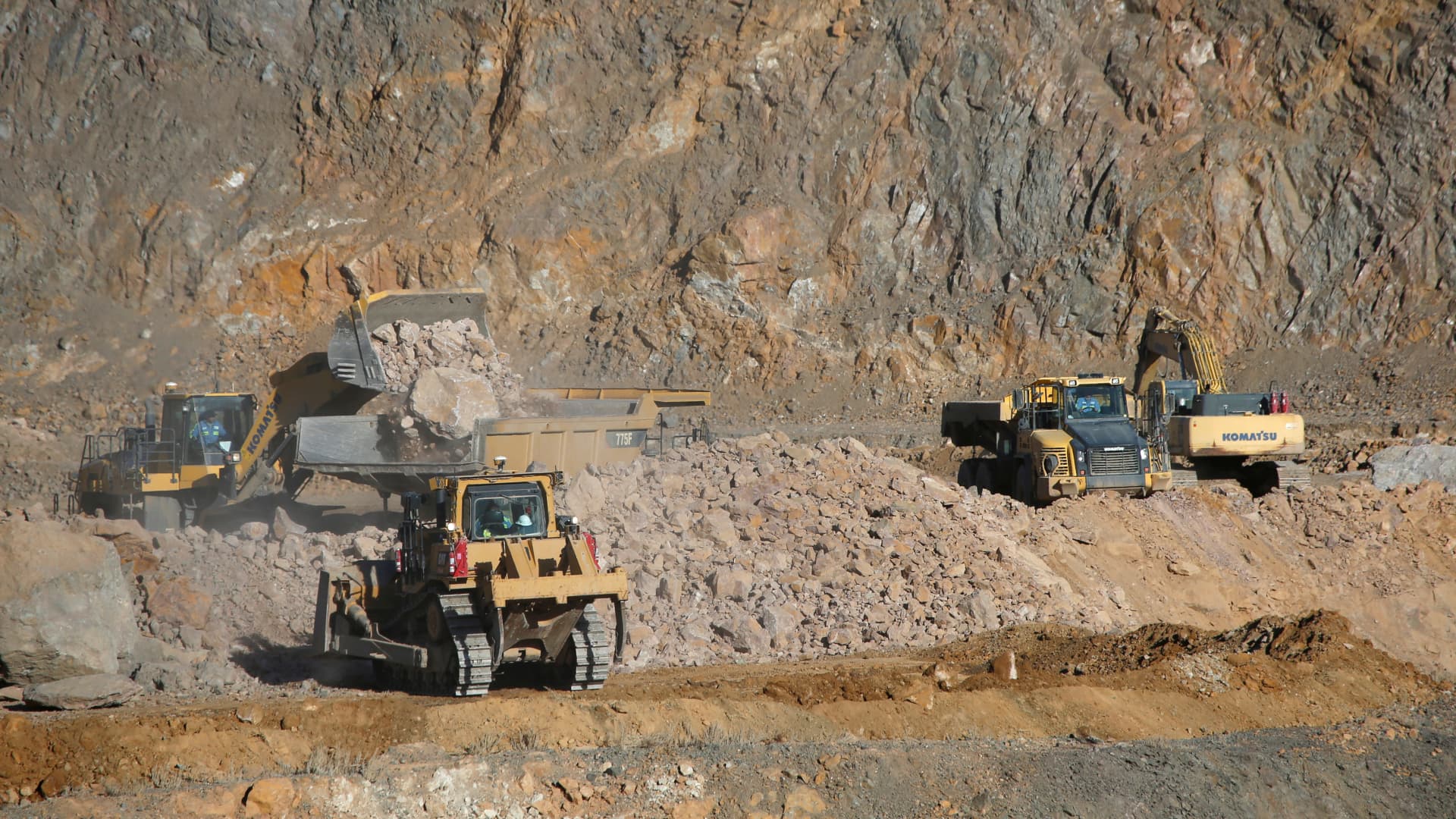
The global pivot towards a sustainable energy future has ignited fervent investor interest in critical minerals, none more so than rare earths, essential components for everything from electric vehicle motors to wind turbines. Yet, amidst the excitement and speculative surges, a stark warning has emerged from a leading player: the economics of rare earth projects are inherently challenging, and caution is paramount. As energy investors increasingly diversify into the foundational elements of the transition, understanding the deep structural realities of this nascent industry is critical to distinguishing viable opportunities from speculative pitfalls.
The Sobering Reality of Rare Earth Economics
Despite the significant growth observed in rare earth investment vehicles, such as a prominent Rare Earth and Strategic Metals ETF surging 60% this year, the underlying economics of most projects remain profoundly difficult. The CEO of the only active rare earth miner in the United States recently cautioned investors against getting “burned” by unchecked speculation. His firm’s perspective, rooted in direct operational experience, highlights that the vast majority of proposed rare earth ventures simply lack a sustainable economic model, regardless of commodity price levels. This is a critical distinction for investors who might be drawn to the sector’s growth narrative without fully appreciating the complex and capital-intensive nature of extraction and processing.
Developing a rare earth mine and processing facility is not a short-term endeavor; it demands years, if not a decade, and billions in capital to achieve stable, normalized production. This lengthy gestation period, exemplified by the ten years it took for Australia’s Lynas to ramp up and the projected three years for another major U.S. producer to reach full commissioning, stands in stark contrast to the rapid-fire trading that has characterized some of the recent speculative surges in related stocks. Investors must look beyond promotional narratives and scrutinize the actual operational timelines and financial requirements of these projects.
Geopolitical Imperatives Meet Market Volatility
The strategic importance of rare earths, particularly in securing a domestic supply chain independent of dominant foreign producers, has spurred significant government interest and support. The U.S. Defense Department’s equity stake, price floor agreements, and offtake contracts with a key American rare earth and magnet maker underscore this national security imperative. This “national champion” approach aims to foster resilience and reduce reliance on external supply, creating a unique layer of government-backed stability for select players.
However, this strategic stability exists within a broader commodity landscape that remains inherently volatile. As of today, Brent Crude trades at $87.49 per barrel, reflecting a sharp decline of nearly 12% in a single day, and a 12.4% drop over the past two weeks from $112.57 to $98.57. WTI Crude followed suit, plummeting over 12% to $79.99, while gasoline prices fell almost 8% to $2.85. This immediate and significant movement in traditional energy markets serves as a stark reminder that even strategically critical commodities are subject to macro-economic forces and swift market corrections. While rare earths may operate on different supply/demand fundamentals, the broader energy transition narrative that underpins their value is not immune to shifts in capital flows and investor sentiment driven by wider market dynamics.
Investor Focus: Long-Term Structure vs. Short-Term Swings
Our proprietary reader intent data reveals that a significant portion of investor queries this week revolves around immediate concerns in the traditional energy sector. Questions such as “What do you predict the price of oil per barrel will be by end of 2026?” and “What are OPEC+ current production quotas?” highlight a focus on short-to-medium term price drivers and established market mechanisms. For rare earth investors, however, the questions must pivot towards long-term structural advantages and the viability of developing a genuine industrial ecosystem.
The rare earth industry, by its very nature, tends towards a “structural oligopoly” where only a few major players can achieve true vertical integration and economies of scale. Simply funding numerous small projects will not, on its own, create a robust and independent supply chain. The key lies in nurturing a few highly capable, vertically integrated entities that can achieve the years and billions in investment necessary to compete globally. This necessitates a fundamental shift in investor mindset from seeking quick returns on speculative plays to committing patient capital towards long-term industrial build-out, recognizing that the “structural advantages” of established players are formidable barriers to entry for newcomers.
Policy Support and Private Capital: A Necessary Alliance
While government intervention is crucial for de-risking strategic sectors, it cannot be the sole driver of a sustainable rare earth industry. The optimal approach involves government incentives — such as loans, grants, and strategic partnerships — that effectively stimulate a much larger influx of private capital. The goal is not for the government to invest in dozens of sites, but rather to create an environment where every dollar of public capital can catalyze two or three times that amount in private investment.
Upcoming events, such as the OPEC+ JMMC and Full Ministerial meetings scheduled for April 17th and 18th, demonstrate how established energy markets manage supply and demand through policy decisions. In contrast, the rare earth sector requires a different kind of policy intervention: one focused on long-term industrial policy and infrastructure development. While the administration might not replicate every aspect of its landmark deal with the current U.S. national champion, continued encouragement for private capital, alongside strategic support, is essential. For the structural challenges of the rare earth industry to truly shift and allow for a broader, non-China-dependent market, materially higher prices and sustained policy backing will be required to attract and retain the necessary private investment.