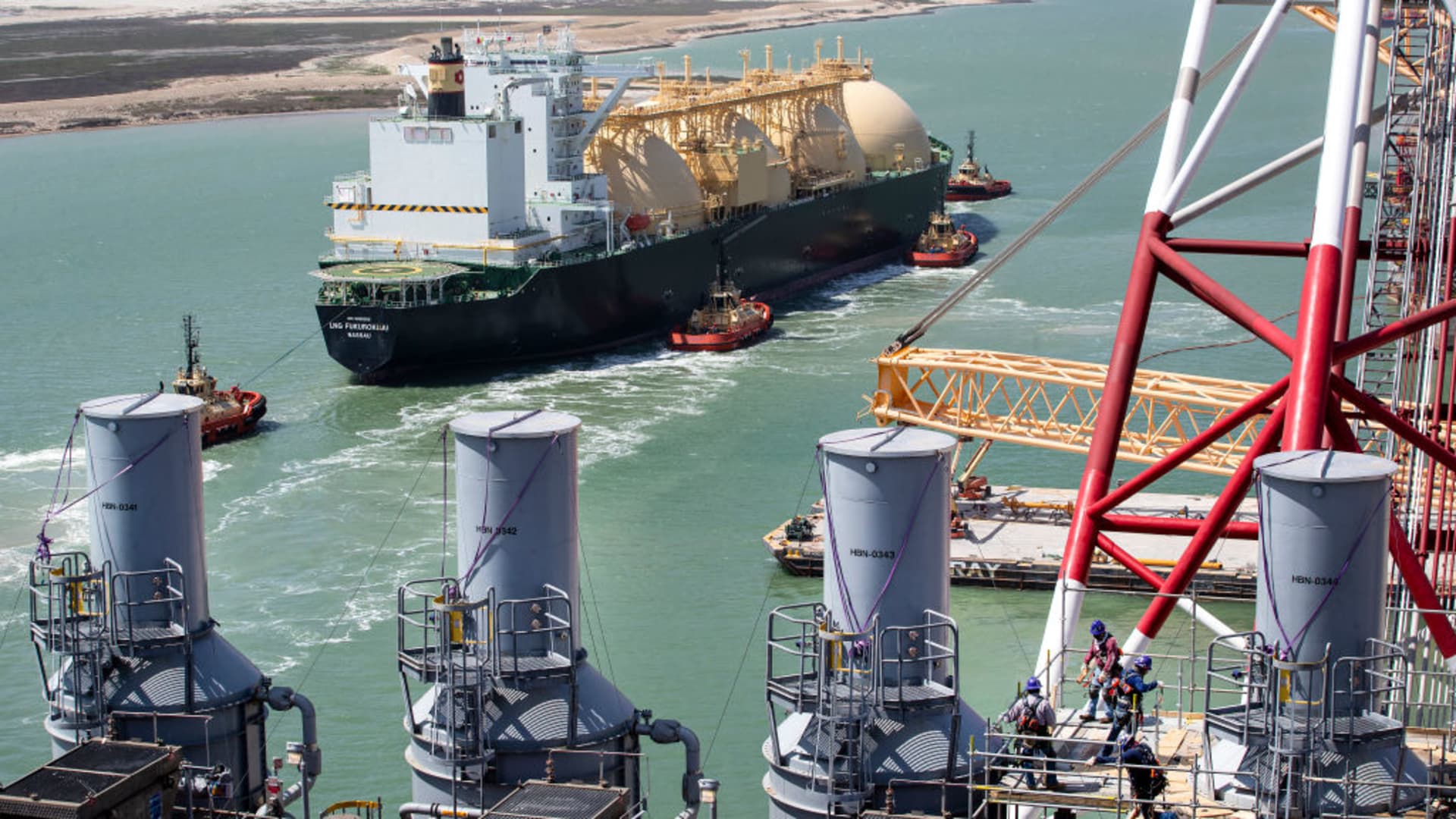
The global energy landscape has been abruptly reshaped by escalating geopolitical tensions, placing a renewed spotlight on the critical role of liquefied natural gas (LNG) in maintaining supply stability. A significant disruption in global LNG flows, triggered by recent events in the Middle East, has created an immediate vacuum, prompting investors to reassess market dynamics and identify potential beneficiaries. With Qatar, the world’s second-largest LNG exporter, halting production, an estimated 20% of global supply has been taken offline. This seismic shift is poised to underscore the strategic importance of U.S. natural gas exporters, whose flexible capacity is now more crucial than ever.
U.S. LNG Exporters: Navigating a Supply Shortfall
The decision by Qatar to halt its LNG production following Iranian strikes on key facilities has sent ripples across energy markets. This sudden withdrawal of such a substantial volume from global supply leaves a considerable void, particularly for major importing regions like Asia and Europe. While approximately 90% of Qatar’s LNG exports typically flow to Asian markets, the broader impact on global LNG benchmarks is undeniable, with European natural gas futures already soaring over 80% this week. This scenario immediately benefits U.S. LNG producers such as Cheniere and Venture Global. These companies have seen their shares surge significantly this week, with Venture Global experiencing a nearly 24% increase and Cheniere seeing a roughly 7% uptick, reflecting investor confidence in their ability to capitalize on the acute supply contraction. Although U.S. producers are largely operating at maximum capacity, their unique contractual flexibility allows them to reroute shipments to where demand, and critically, prices, are highest. This strategic advantage enables the U.S. to act as a vital stabilizing force in times of crisis, a role previously demonstrated during the 2022 European energy crunch.
Broader Market Dynamics: Crude’s Nuanced Reaction
While the immediate focus remains on natural gas, the broader energy market is also contending with heightened geopolitical risk, particularly concerning the Strait of Hormuz. Iran’s order to close this vital chokepoint, through which a significant portion of the world’s oil and LNG transits, has introduced considerable uncertainty for all energy commodities. Despite this, crude oil markets have shown a somewhat mixed reaction, reflecting a complex interplay of factors beyond immediate supply disruptions. As of today, Brent crude trades at $94.09 per barrel, marking a modest 0.91% increase within its daily range of $93.52 to $94.21. Similarly, WTI crude is priced at $90.59 per barrel, up 1.03%, within a daily range of $89.71 to $90.7. However, zooming out reveals a different picture for crude investors: Brent has actually declined by 7% over the past two weeks, dropping from $101.16 on April 1st to its current level. This trend suggests that while geopolitical tensions remain high, the market is distinguishing between the acute, localized impact on LNG and the broader, more complex supply-demand dynamics influencing crude, potentially factoring in other global economic signals or existing inventory levels. Gasoline prices, at $3.13, remain stable for the day, indicating that the immediate impact on refined products has yet to fully materialize.
Forward-Looking Analysis: Key Data Points on the Horizon
In this volatile environment, investors will be scrutinizing upcoming energy reports for critical insights into market stability and future price direction. Over the next two weeks, a series of key data releases will provide fresh perspectives on U.S. energy inventories and production trends. The EIA Weekly Petroleum Status Report, scheduled for release on April 22nd, April 29th, and May 6th, will offer crucial updates on crude oil, gasoline, and distillate stockpiles, providing a clearer picture of domestic supply and demand. These reports are particularly vital as they will indicate how the U.S. market is absorbing any spillover effects from global disruptions. Additionally, the Baker Hughes Rig Count, due on April 24th and May 1st, will reveal shifts in drilling activity, signaling potential changes in future U.S. oil and gas production capacity. For a broader outlook, the EIA Short-Term Energy Outlook (STEO), set for release on May 2nd, will provide updated forecasts for global and domestic energy markets, a report that will be keenly watched for its assessment of the ongoing Middle East crisis and its projected impact on prices and supply through the rest of the year. Investors should monitor these releases closely, as they will likely influence trading strategies and investment decisions in a rapidly evolving market.
Addressing Investor Concerns: WTI, Oil Prices, and Investment Strategy
Amidst the current turmoil, investors are keenly focused on the trajectory of key energy benchmarks. A predominant question circulating among our readers this week revolves around the direction of WTI crude, with many also seeking predictions for oil prices by the end of 2026. Given the unprecedented halt in Qatar’s LNG production and the broader geopolitical instability, the outlook remains complex. For U.S. LNG pure-plays, the short-to-medium term appears robust. The inherent flexibility of U.S. LNG exports, coupled with a significant global supply deficit, positions companies like Cheniere and Venture Global to command premium prices for their output. However, investors must also consider the potential for demand destruction if prices climb too high, as well as the long-term implications of sustained geopolitical tensions. For crude oil, while the immediate impact of the Strait of Hormuz threat is being weighed against other market factors, the possibility of escalation remains a significant risk premium. Predicting year-end 2026 prices for oil requires a holistic view of global economic growth, OPEC+ decisions, and the continued evolution of geopolitical flashpoints. While the current environment presents compelling opportunities for U.S. LNG exporters, a diversified approach, coupled with diligent monitoring of both supply-side shocks and demand-side fundamentals, will be essential for navigating the energy market’s inherent volatility.